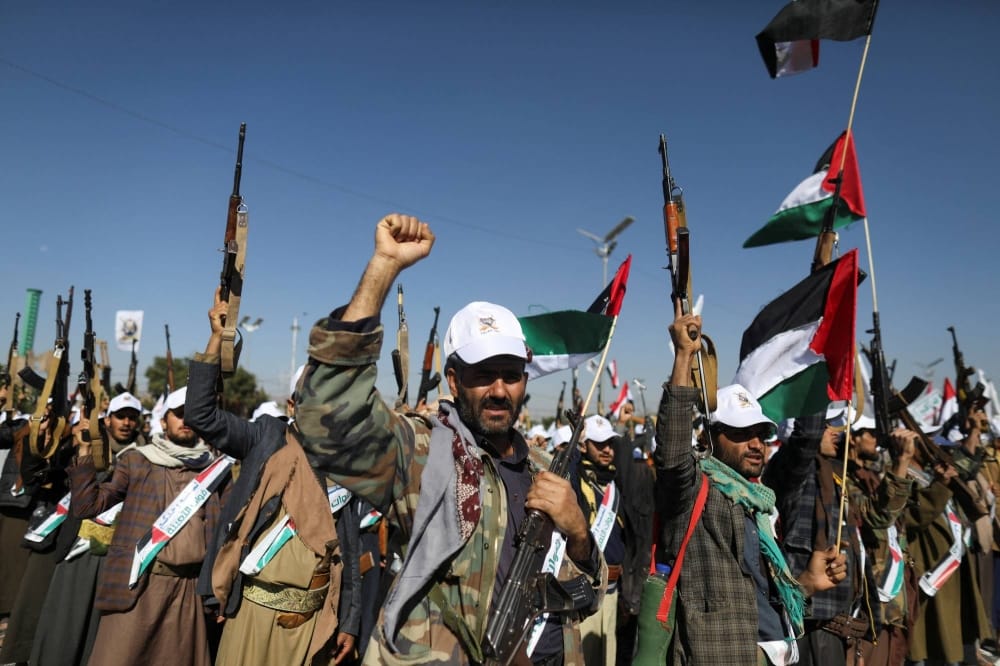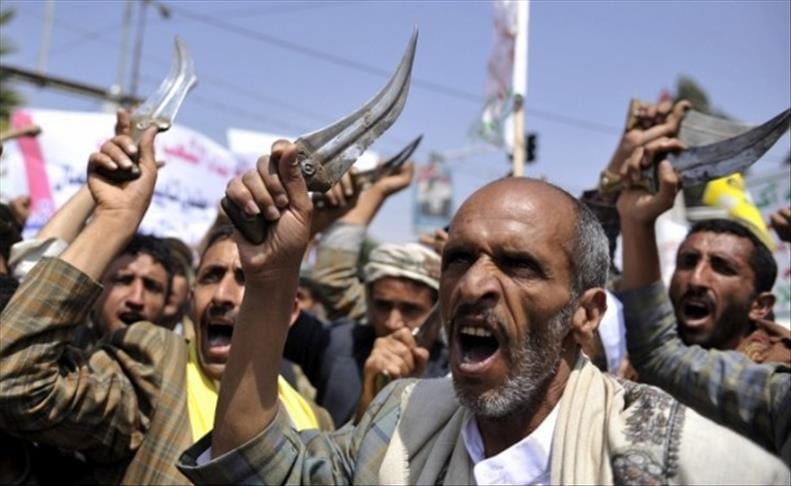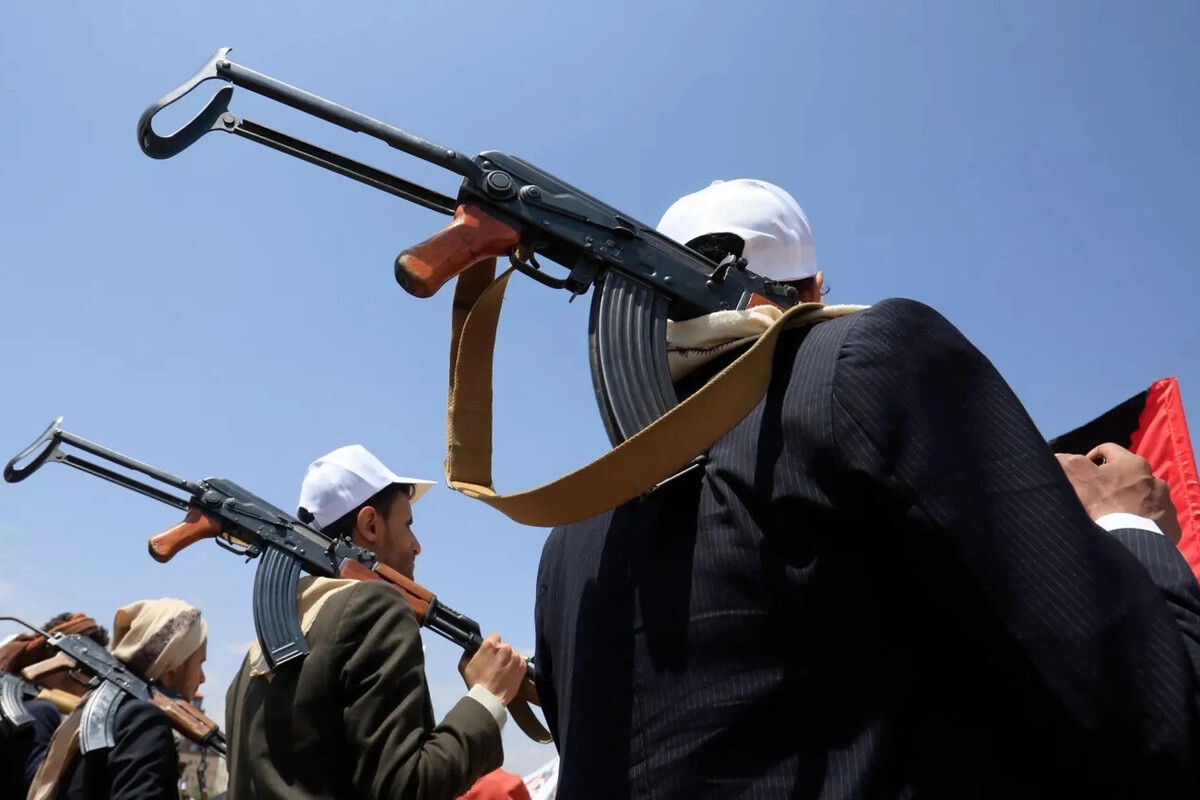

On Nov. 19, a missile allegedly launched by Yemen’s Houthis hit the tallest skyscraper in Riyadh, Saudi Arabia. The group has been attacking Saudi cities and infrastructure since the frozen civil war in Yemen resumed this past July amid the ongoing U.S.-Israeli war with Iran. The Houthis have achieved significant progress, seizing Yemen’s Red Sea coast and effectively gaining control over shipping in the area. The Yemeni government in Aden — despite its advantages in weaponry and its financial support from Saudi Arabia — is unable to gain the upper hand in its fight with the Houthis. Among the reasons are the Houthis’ decentralized structure, which makes it hard to inflict serious damage on them, writes Antonio Giustozzi, senior research fellow at the Royal United Services Institute (RUSI).
The Yemeni Ansar Allah movement, better known as the Houthis, continues to surprise observers with its successes on the battlefield. After all, Yemen is blockaded, and it should be very hard for Ansar Allah to receive supplies. Moreover, the Saudi air force is (on paper at least) large and well-endowed with modern jets, and Saudi funding allowed the Provisional Leadership Council based in Aden to mobilise a large armed force that should outnumber that of Ansar Allah.
Nevertheless, neither the large-scale Saudi bombing campaign nor the large armed forces Riyadh funds are stopping Ansar Allah’s advances, nor is Saudi Arabia fully able to protect its airspace from Ansar Allah’s drones and missiles, which continue striking at infrastructure and cities. Ansar Allah, moreover, recruits the bulk of its forces in Yemen’s remote northern mountains, where the population is mostly poorly educated and the economy backwards. How does Ansar Allah do it, then?
Decentralization and outside support: the Houthis’ advantages
Although the Houthis are ideologically and doctrinally very far from Afghanistan’s Taliban (despite the fact that both are Shi’a), they resemble the way the Taliban achieve resilience by adopting a decentralised “network of networks” mode of organisation that features a significant amount of redundancy when it comes to command and control. Ansar Allah’s decentralised system suits Yemen’s rugged geography well, especially in the north. In a country where networks are everything, Ansar Allah mastered the art of making networks work together in a comparatively cohesive way, similarly to what the Taliban managed in Afghanistan.
Ansar Allah mastered the art of making networks work together, similarly to what the Taliban managed in Afghanistan
For years the Houthis have benefited from a transfer of know-how and of extensive supplies from Iran. At one point, in 2015, there were hundreds of trainers and advisers sent by Iran’s Revolutionary Guards and by Iran’s allies and proxies, working to expand the capabilities of Ansar Allah. That effort is largely past now, but it clearly left a strong legacy. Without Iran’s earlier support, the Houthis would not be manufacturing weapons and ammunition in Yemen — including drones and ballistic missiles. The Iranians helped the Houthis build the factories and set up logistical supply lines, but these are now functioning largely autonomously. The Revolutionary Guards are no longer able to transfer significant amounts of supplies to Yemen, in part due to the financial conundrum created by the U.S. blockade, but more importantly due to the impact of the blockade itself, which makes it very hard for Iran to export anything. The blockade of Yemen itself, on the other hand, is still quite inefficient, due also to the very large number of small boats crossing that area of the sea.
The Houthis can still dodge the blockade; therefore, even if they do lose a portion of their supplies en route. The Iranians have wired them up with smugglers and manufacturers of parts and components for weapons all the way to China, adding a new layer to the Houthis’ resilience.
These are Ansar Allah’s two strengths. However, much of the Houthis’ success has come due to their enemies’ weaknesses. The Saudi air force, for example, while well-equipped by regional standards, lacks the ability to conduct precise ground strikes and is poorly coordinated with the forces of the Provisional Leadership Council in Aden. Its extensive air campaign has caused a lot of damage, but little of this has had any tactical (let alone strategic) impact. The “state” overseen by the Houthis is primitive enough not to be much affected, and indiscriminate strikes have little impact on a movement that does not aspire to democratic legitimacy and pays little attention to what the wider Yemeni public might or might not think.
Disunity and inefficiency: problems of the group’s opponents
The biggest weakness within the anti-Houthi camp derives from the Saudi-UAE rivalry and its impact on the Yemeni political landscape. After the start of the U.S.-Israeli war against Iran, the Saudis and the UAE have appeared to mend fences, and especially in Yemen they worked together to re-form an anti-Houthi coalition, which brings together the UAE-supported southern secessionists and the Saudi-supported Muslim Brothers (Islah), Salafis and Wahhabis, plus various tribal groups. However, this coalition has turned out to be deeply dysfunctional, seemingly only kept together by generous Saudi funding.
The southern groups appear especially wary of committing seriously to a war that risks ceding full control over crucial coastline territory to the Houthis, who already use their positions facing the Bab al Mandab to control traffic in and out of the Red Sea. Keeping the Houthis away from this stretch of land is what the Saudis pay the Aden government for, but the southern secessionists have no direct interest in this war aim and essentially fight as mercenaries for the Saudis.
Saudi Arabia funds the anti-Houthi coalition to prevent the group from taking control of the passage into the Red Sea
The southern secessionists gathered back together after the southern transition council was dismantled in January 2026 due to its attempt to challenge the pro-Saudi factions. They provide the majority of the fighting force of the Aden government — between 50,000 and 60,000 armed men. Even this force, however, is by no means cohesive – in comparison to Ansar Allah, they are a loose coalition of networks that cannot coordinate effectively among themselves, let alone with the wider coalition led by the Aden government. By September, at least three internal factions could be identified, and only one of them fully accepts the terms of the Saudi-UAE sponsored coalition agreement and is willing to fight the Houthis alongside the pro-Saudi forces. Another favours peace or at least non-belligerence with the Houthis, and many of the groups making up the larger faction surrendered to the Houthis during the latter’s successful advances in September. The third faction is against support for the “Yemeni” Aden government and opposes allying with pro-Saudi groups, but it is also actively hostile to the Houthis, leaving it with a fight on two fronts. This faction is strongest in the east – in Hadramut and Shabwah, but also has influence in Aden and Lahij.
To the extent that the southerners have any serious motivation to fight the Houthis (other than money), it is due to the perception that the Houthis threaten Aden. The southerners’ cohesion is harmed by the lack of major leaders, and given their widely diverging strategies, it is questionable whether they can be really considered a single entity. Even the “factions” described above are not stable entities, but fluctuating networks of groups of various sizes, which themselves often move between the various southern “sides.”
How will the conflict develop?
The Houthis are very aware of these fault lines within the coalition that opposes them, and they naturally seek to exploit them. They see the Presidential Leadership Council as the “real enemy” and are thus less interested in fighting the southern secessionists. In fact, the Houthis have repeatedly been able to negotiate local deals with southern groups, resulting in their surrender (or at least their agreed withdrawal).
The Aden government’s position on the battlefield suffered badly due to the diverging behaviour and attitudes of the different components of its “army,” as well as from corruption fuelled by Saudi cash. There is a widespread problem of “ghost soldiers” — fighters the Saudis pay for who exist only on paper and whose pay is pocketed by Yemeni authorities.
The Aden government’s position on the battlefield suffered badly due to corruption and the diverging behaviour of the different components of its “army”
When some groups surrendered, fled, or negotiated withdrawals with the Houthis, the rest of the “army” was often left in unsustainable predicaments, and collapses of the front occurred repeatedly. In mid-November, negotiated withdrawals between the Houthis and the southerners allowed the former to consolidate their positions around Bab al Mandab, taking control of all the high ground around the waterway. At this point, the Houthis seem to believe that the southerners are largely a defeated force: those defeated in Taiz and Lahij were aligned with the two movements still willing to fight the Houthis, and presumably they were allowed to withdraw from the encirclement on condition of re-aligning with the third tendency, which sometimes looks favorably on accommodation with the Houthis. The Houthis’ leadership council, according to sources within Ansar Allah, agreed just after the latest victories in mid-November to halt their advance towards Aden, citing their unwillingness to ‘shed the blood of fellow Yemenis’, while at the same time stating the desire for intra-Yemeni negotiations, free from Saudi influence.
An advance on Aden would take the Houthis through an area where air strikes against them would be more effective, and the southerners would be doubly motivated, as they would be defending their own turf. By contrast, it is hard to see the forces of the Provisional Leadership Council dislodging the Houthis from their very strong positions on the Bab al Mandab coastline anytime soon. In short, it makes perfect sense for the Houthis to stay clear of Aden for now, especially while the rival coalition centered around the Aden government frays.
It makes perfect sense for the Houthis to stay clear of Aden for now, as the rival coalition centered around the Aden government frays
The rest of the story remains to be written. Houthi sources are adamant that the movement rejects federalism (which was already proposed in the past as a solution to the conflict) and believes in a centralised government for Yemen. They are also adamant that Yemen’s future leader should come from Ansar Allah’s ranks, which made terrible sacrifices in this struggle. Ansar Allah will engage with other Yemenis, but their preference is for approaching each group and each tribe separately in order to negotiate local deals, rather than a grand deal involving a (non-existent) southern secessionist leadership, the Presidential Leadership Council, or the Islah leadership. Without a Houthi agreement with the Saudis, however, the war will continue indefinitely. The Houthis demand the end of the blockade, but also Saudi reconstruction funds and the end of Saudi interference in Yemen. Since all these demands could easily be reneged on once a deal is made, the Houthis are determined to retain control over the coastline facing Bab al Mandab in order to retain their ability to block the Red Sea if necessary. For the same reason, they have no intention of dismantling their missile and drone industry.