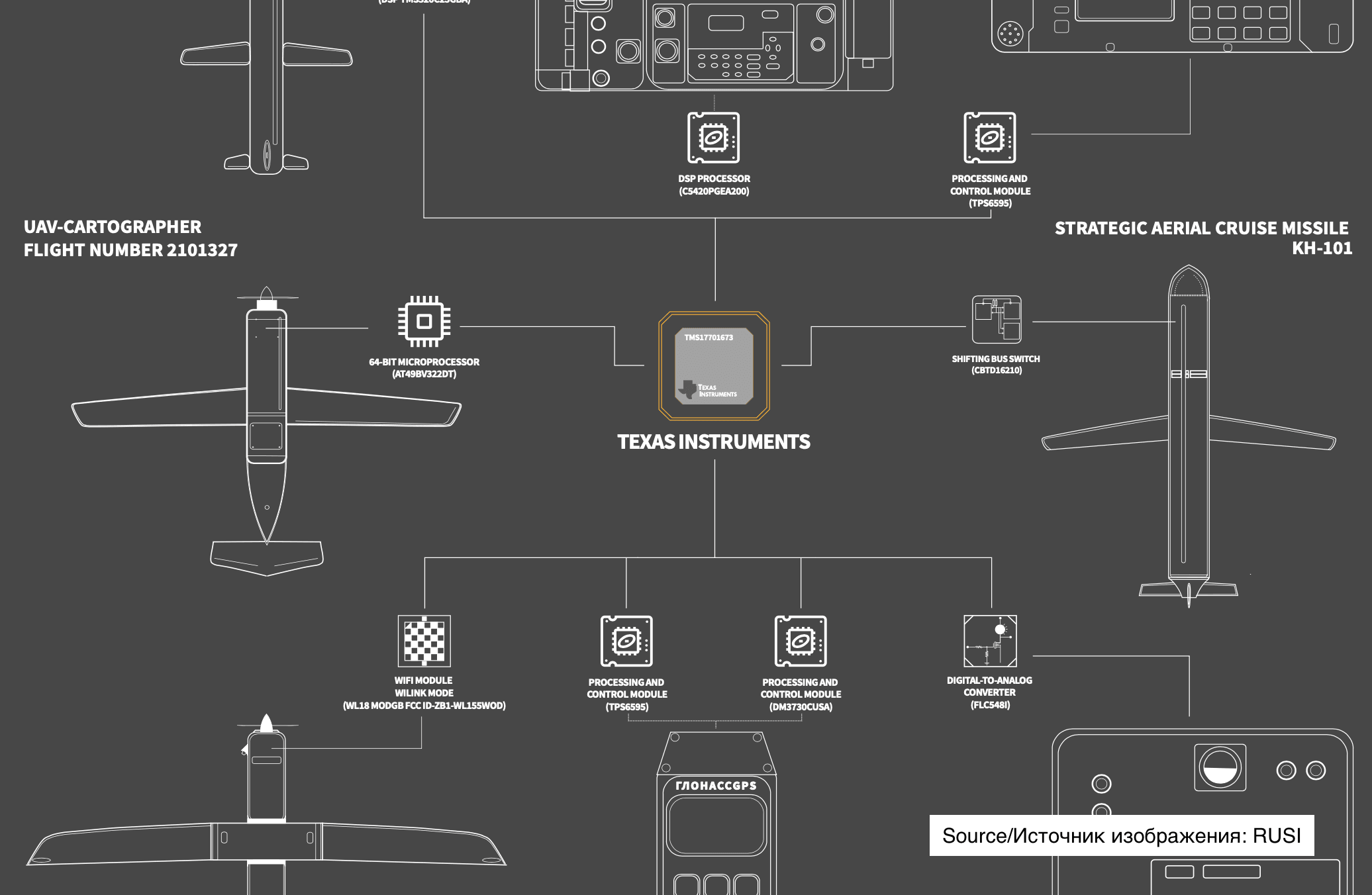
Russia is moving to mass-produce drone motors, with production lines worth millions of dollars now arriving in the country. The shift could allow Russia to begin producing millions of FPV drones in the coming months. Until recently, Russia bought drone motors from China and was entirely dependent on those imports — but that situation appears to be changing rapidly. The Insider and Nordsint traced the supply chain by posing as a fictitious company based in the drone-producing Alabuga special economic zone and using a name that suggested a military connection. The Chinese manufacturer Nide said it was prepared to export a complete motor production line to Russia, adding that it had already supplied large quantities of similar equipment to other Russian buyers. As with many other transactions involving sanctioned goods, VTB Bank’s Chinese branch appeared in the supply chain.
The Achilles’ heel of Russian attack and reconnaissance drones
Production of electric motors for drones is being actively moved to Russia, evidenced by Russian customs data from 2024 and 2025, which show imports worth millions of dollars of machines used to wind coils for electric motors. Recipients of the coil-winding machines included companies based in the Alabuga special economic zone. The Insider also confirmed the large-scale supply of production lines when investigators contacted one Chinese manufacturer while posing as prospective Russian buyers.
Should the sector manage to take off, Russia’s military-industrial complex will no longer need to buy motors from China
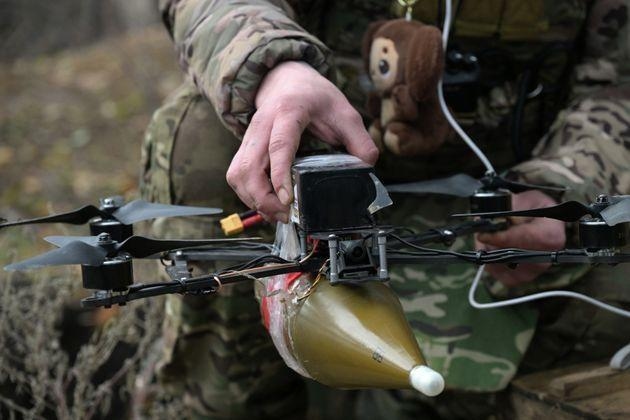
Should the sector manage to take off, Russia’s military-industrial complex will no longer need to buy motors from China and could reduce its dependence on imports in drone production by at least one-third. According to the Conflict Intelligence Team, weaponized first-person view (FPV) drones, which are piloted through a live video feed, account for 70% to 80% of losses at the front in Ukraine.
As The Insider previously reported, almost all Russian FPV drones are assembled in Russia but are made entirely from Chinese parts. Cheap drone motors have remained a critical product feeding Putin’s war machine in recent years, as Russia has long been unable to master commercial production of the component, which consists of copper wire coils, magnets, iron for the stator base, ball bearings, and simple electronics (here’s how drone motors are produced). As a result, the small motors are still purchased from China.
Two years ago, reports said Russia had opened its own engine plant in Ufa.
“Electric motors are the Achilles’ heel of all our attack and reconnaissance drones, from FPV drones to Lancets. Until recently, this was 100% imported, and supplies could be cut off at any moment. Delivery problems have already occurred. Customs authorities in some ‘friendly’ countries in Southeast Asia have sometimes turned around entire containers of components. Manufacturers lost significant money, and the front did not receive these important tools of modern warfare. But now a full-cycle microelectric motor plant has begun operating in Russia,” the report on the launch read.
However, the company described in that report has shown no publicly available sign that it actually exists. Similarly, Russian robotics firm NPO Androidnaya Tekhnika (“Android Technics”) also reported in 2023 that it had begun producing motors, but no advertising for motors made by the company could be found.
Who has already imported equipment to produce drone motors in Russia
Nevertheless, in 2026, Russia appears to be moving actively towards solving the problem of mass production. The process of conveyor assembly for a motor is not particularly complex, according to the website of Pro Technology, a Russian company that sells winding machines. In 2025, the firm imported Ningbo Nide Mechanical Equipment winding machines purchased from the Chinese firm Danyang Hongli Equipment.
Russia, however, still does not produce modern or efficient winding machines for electric motors. An industry expert told The Insider that Russia has almost no specialists left who can create a modern stator-winding machine. That means if motors are to be produced in Russia in the required quantities — millions a year — production will have to rely on imported winding machines — which is why Russia is buying such equipment from China.
Example of a winding machine
In February 2026, the Russian state news agency TASS reported that Motorsky, a company that is resident at the Skolkovo innovation center, had launched production of coils with a capacity of 10,000 units a month. The Kremlin-aligned newspaper Kommersant had earlier reported about the company’s production site in the city of Perm. That report and Russian corporate registry data show that the business is linked to businessman Yevgeny Poshvin. Arbitration court records show that another company linked to Poshvin, Ormiga LLC, imported winding machines made by Tianjin Grewin Technology.
Customs data confirm that Eurasia-Group supplies machines for producing FPV-666 drone motors. In 2025, Kompaniya Eurasia LLC imported a two-station stator winding machine. On the Chinese side, the supplier was Shanghai Fuhuiwang Supply Chain Management.
Among the Russian buyers of industrial units for motor production is Flytechnology LLC, which bought a winding machine made by Shenzhen Jhy Technology in 2023 and is likely involved in organizing production.
How Chinese companies sell the technology
A researcher from the Nordsint project, posing as a nonexistent Russian company, contacted major winding-machine manufacturer Ningbo Nide International through the official email address listed on its website.
The company does business around the world, including in the United States as Nide USA LLC and in Europe as Wintech SRL. In the production lines it supplies, it uses technology belonging to Siemens (for servo drives), Hikvision, Airtac (for pneumatics), Hiwin, Autonics (for photoelectric sensors), Schneider Electric (for low-voltage equipment), NSK (for bearings), ABB (for robots), Sick, and Mitsubishi Electric (for servo drives). According to Nide’s own materials, its clients include Almaz-Antey, the Russian state defense concern that makes air defense systems, and the Alabuga special economic zone.
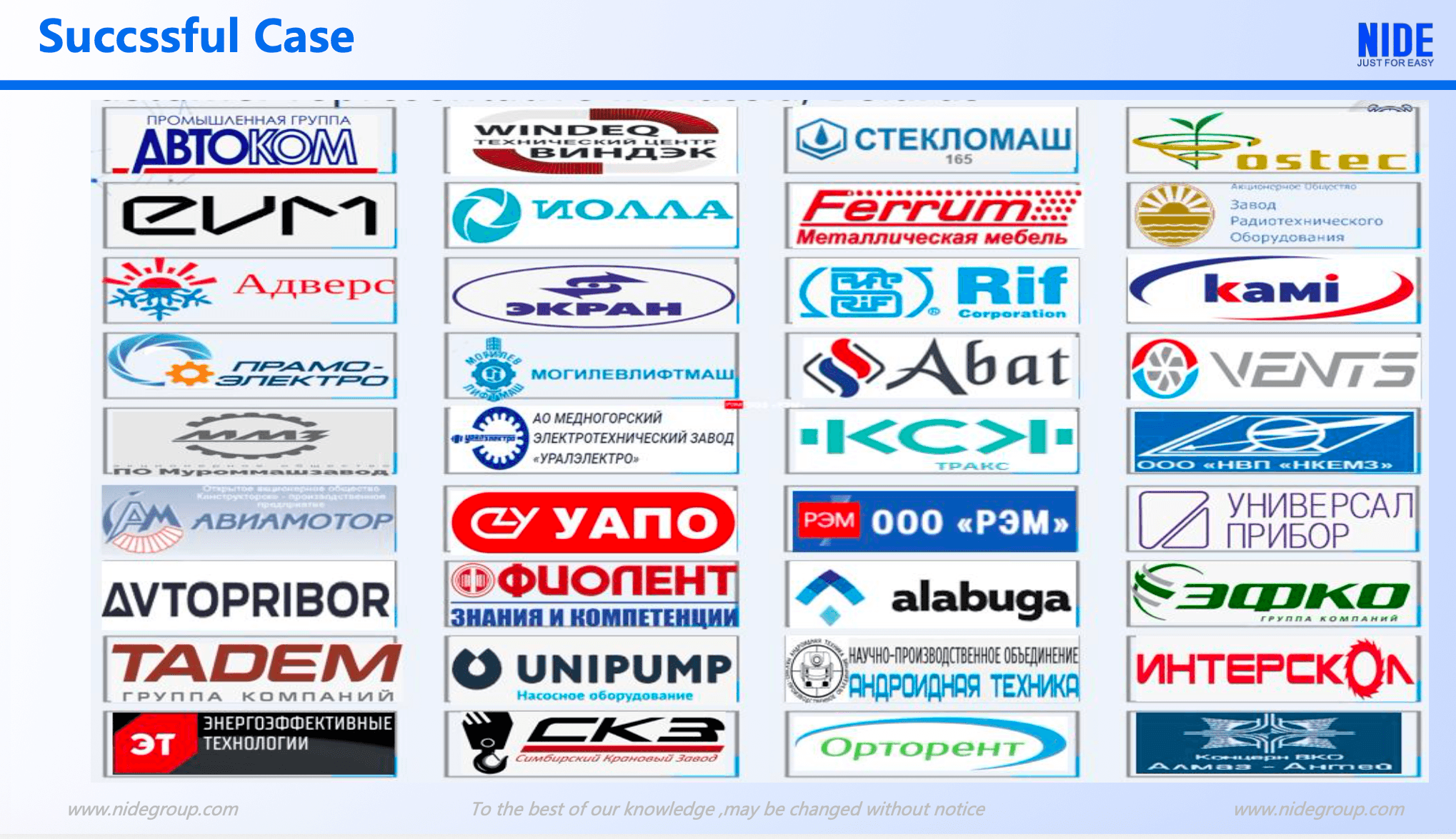
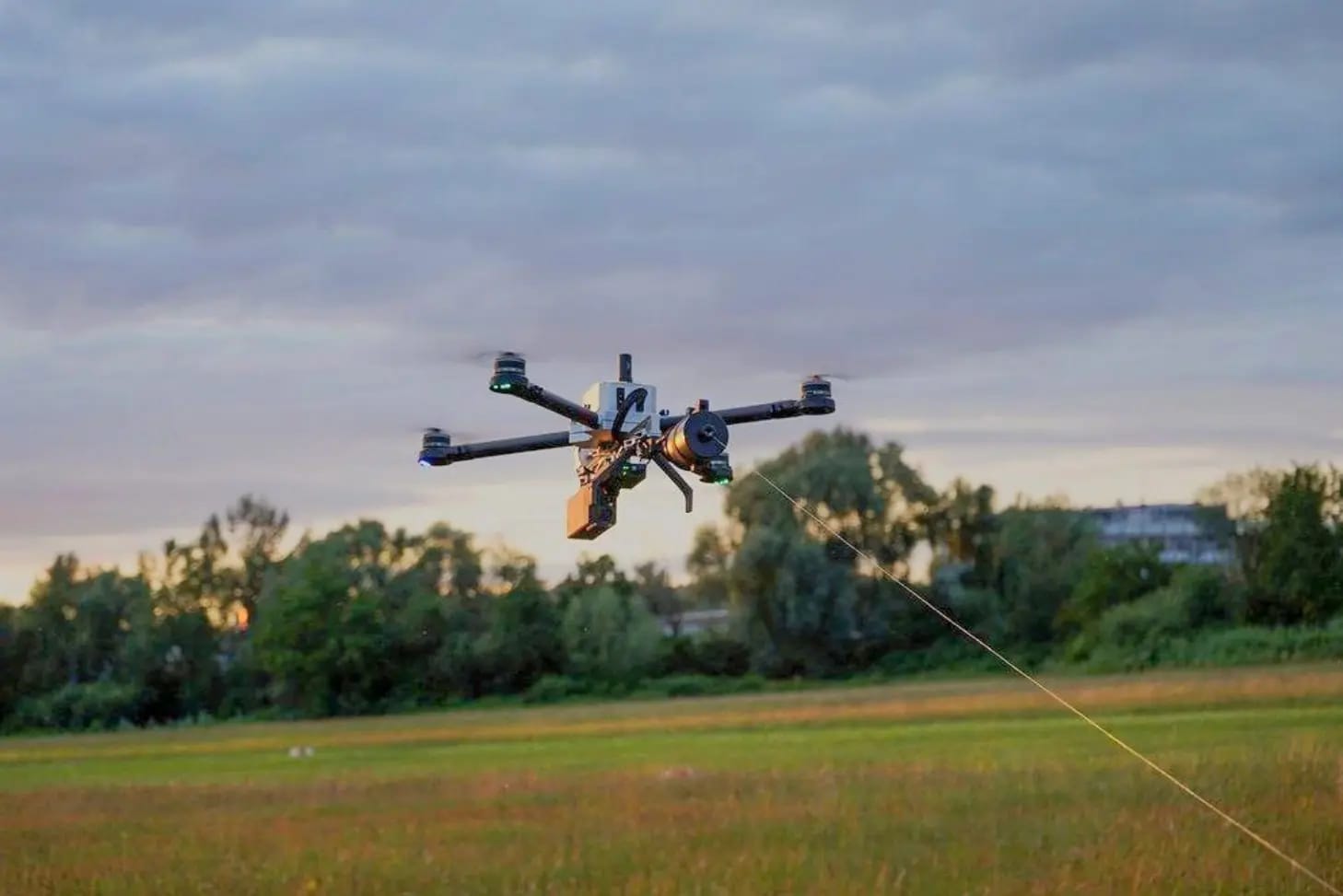
In correspondence with Nide, Nordsint said its “company” wanted to assemble an analogue of the KVN drone, short for Knyaz Vandal Novgorodsky, or “Prince Vandal of Novgorod.” The drone is known for its widespread use in Russia’s war against Ukraine. Nide was ready to sell production lines even after being told the drones were intended for military use, in violation of Chinese export restrictions.
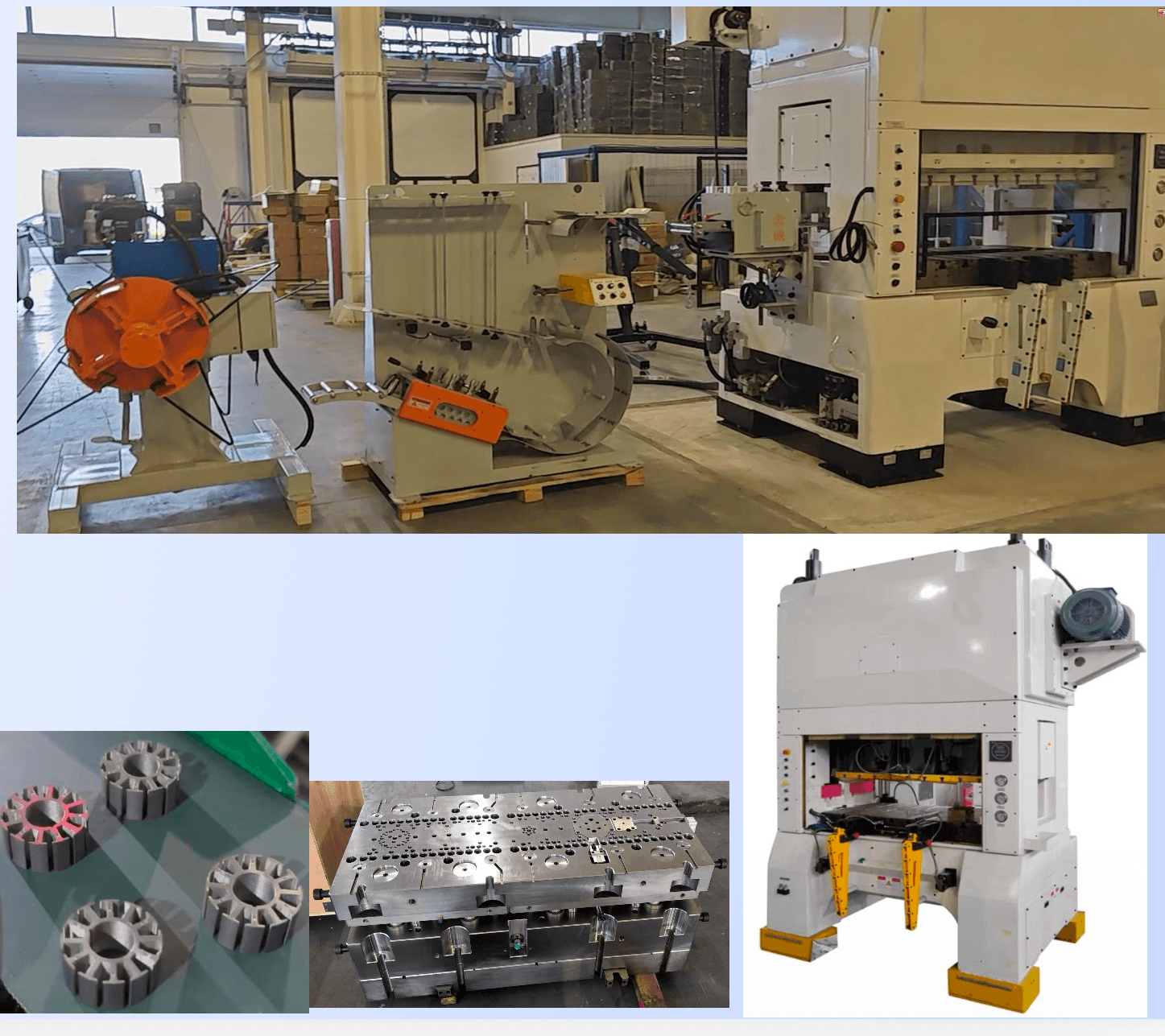
A Nide representative named Dima Zhao replied from the company’s official nide-group.com domain, sending Nordsint a booklet describing drone assembly lines and a price offer. The company offered to supply an entire assembly line, not just stator winding machines.
Zhao also said the company had already supplied “many” production lines to Russia and that the proposed assembly line was identical to one Nide was currently supplying to “a Moscow company.” Zhao invited the buyers to visit the company’s stand at a drone expo in Kazan in July. The price offer exceeded 16 million yuan — $2.3 million.
According to customs data, in 2025 Nide supplied motor-making equipment, including winding machines, stamping presses, and parts for them, to the Russian companies Flytechnology, Eurasia, Pro Technology and Powertech.
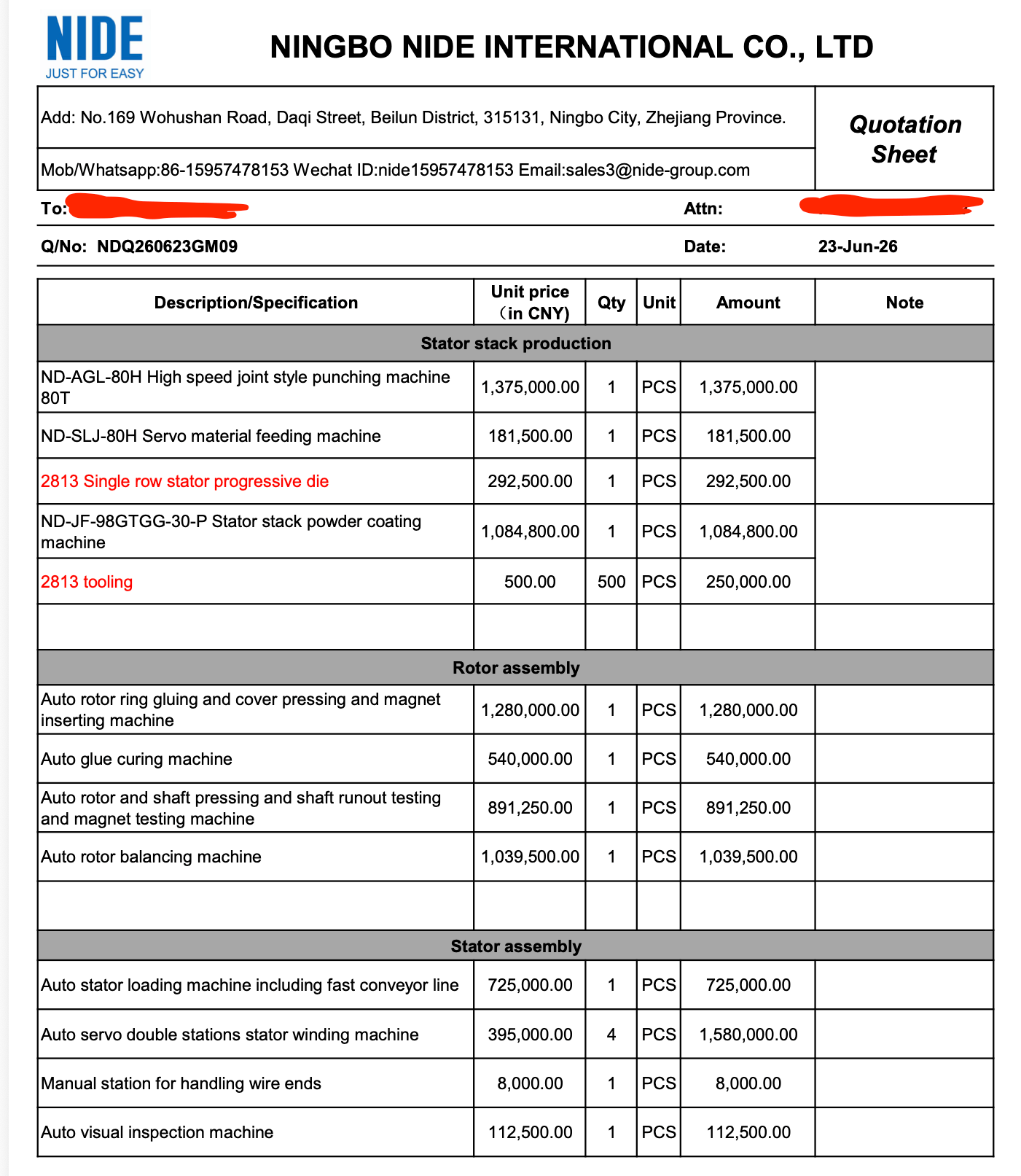
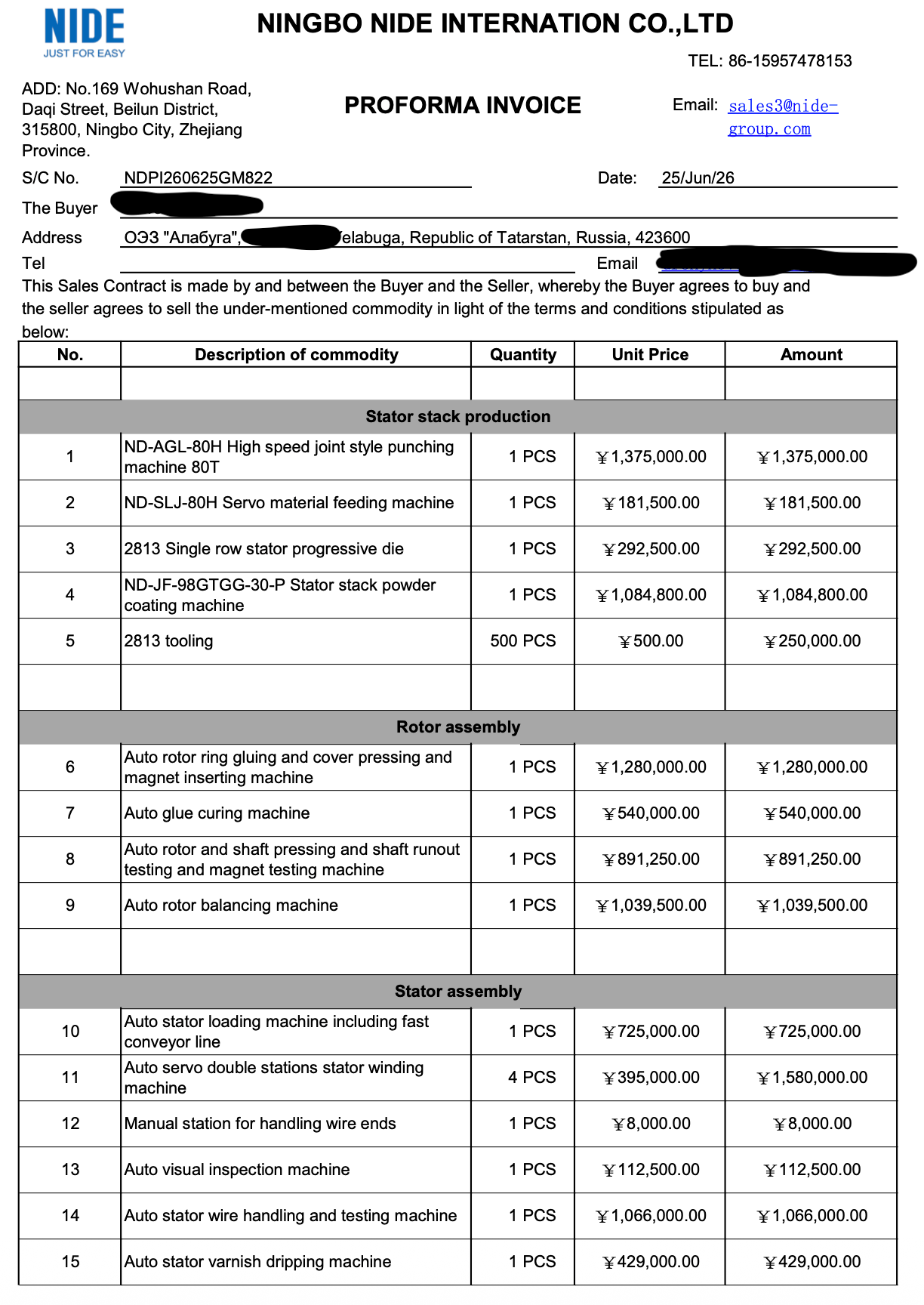
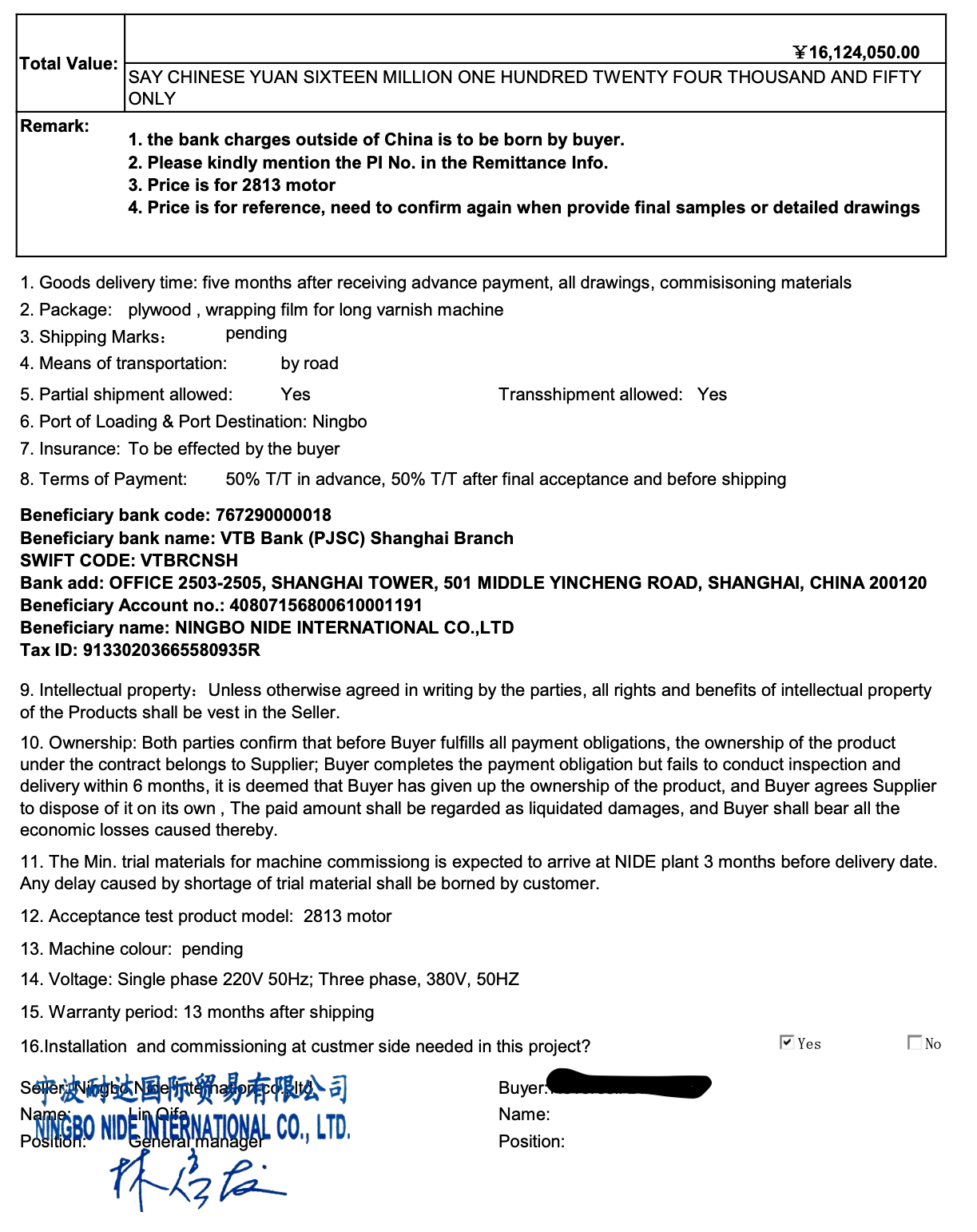
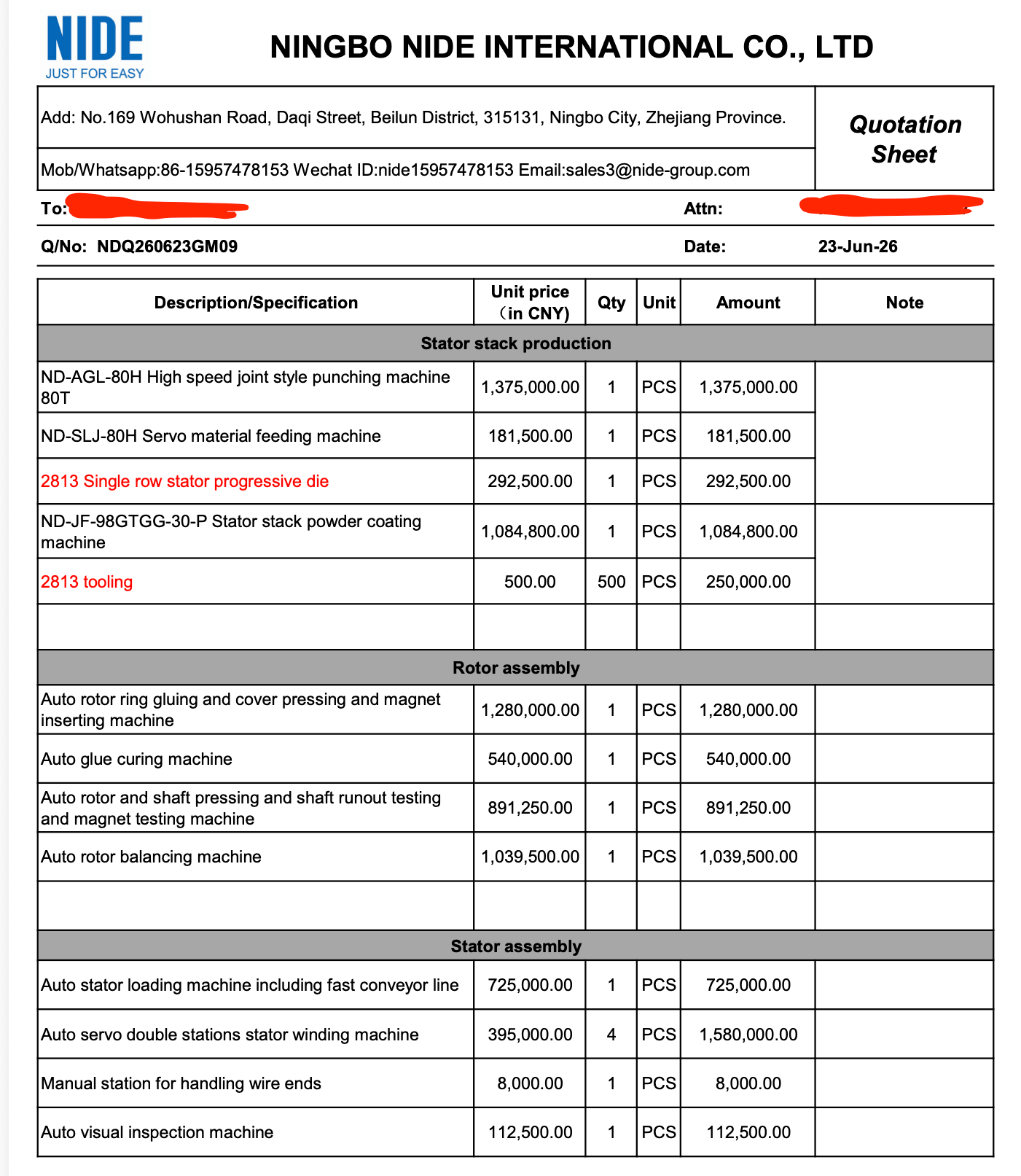
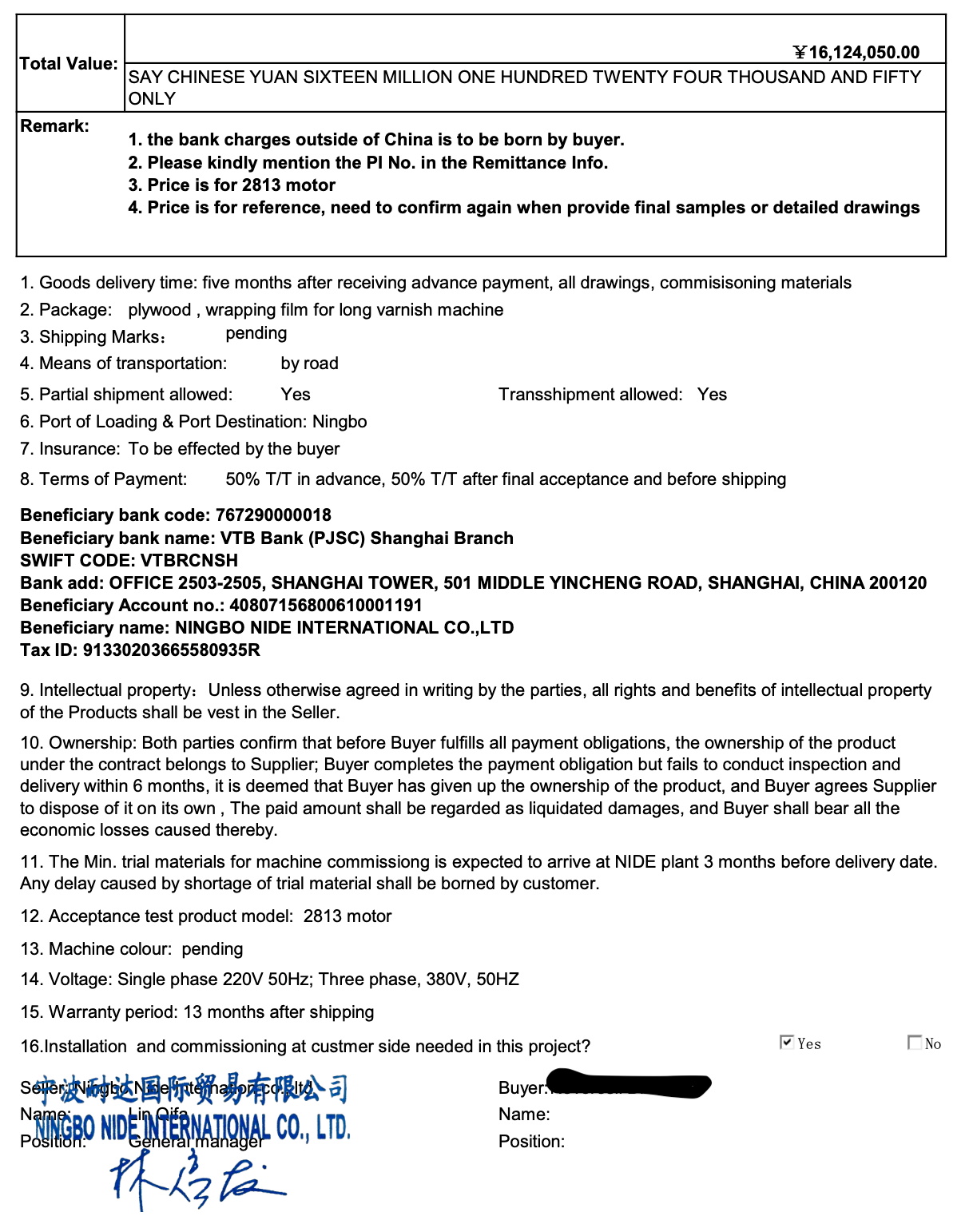
In its offer to Nordsint, Nide said it was ready not only to supply the equipment, but also to install it for an extra 379,000 yuan ($56,000). The company would cover hotel accommodation, airline tickets, visas, and insurance, while the customer would pay for meals, local transportation, and interpreters. Payment was proposed through VTB’s branch in Shanghai.
What the production line includes
Production of stator blanks:
- High-speed punching machine
- Material feeding machine
- Machine for applying powder to stators
Rotor assembly:
- Machine for automatic ring gluing, cover pressing, and magnet insertion
- Glue curing machine
- Machine for pressing in the shaft and rotor, checking shaft imbalance, and inspecting magnets
- Automatic rotor balancing machine
Stator assembly:
- Automatic stator loading machine
- Automatic winding machine
- Workstation for processing wire ends
- Automatic visual inspection machine
- Automatic stator testing machine
- Stator varnishing machine
- Robot for automatic loading and unloading
Motor assembly:
- Stator assembly machine
- Bearing press-fitting machine
- Machine for automatic washing and nut tightening
- Laser marking machine
- Machines for shrinking insulating tubes
- Semi-automatic soldering machine
- Conveyor
Other equipment:
Testing machines for water resistance, salt spray, aging, and thrust checks.
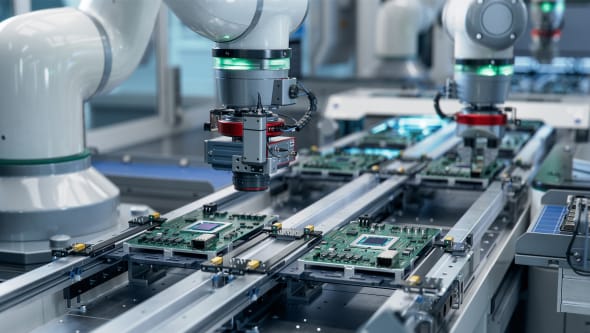
At full capacity, the production line offered by Nide could turn out one motor every 15 seconds. A recent video from the manufacturer explains how a conveyor for drone motors works.
The mass rollout of military drone production in Russia could be stopped by imposing sanctions on those supplying industrial lines to Russian weapons producers and by shutting down the Chinese branch of VTB. That branch, as this and other investigations by The Insider have repeatedly demonstrated, is one of the key participants in the payment process for deliveries of sanctioned parts, at the same time constantly violating Chinese laws, which prohibit export of dual-use goods, drone parts in particular.