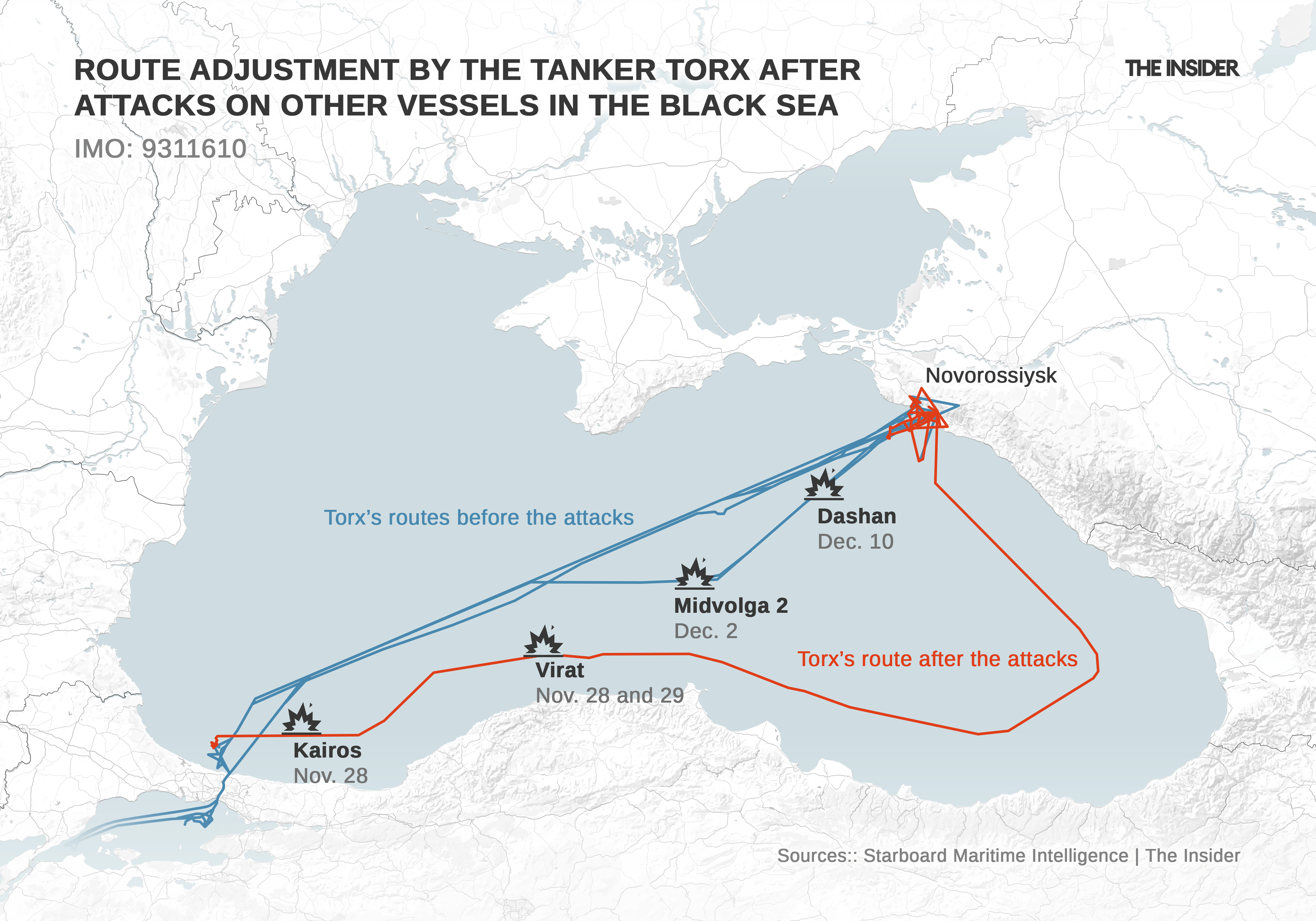
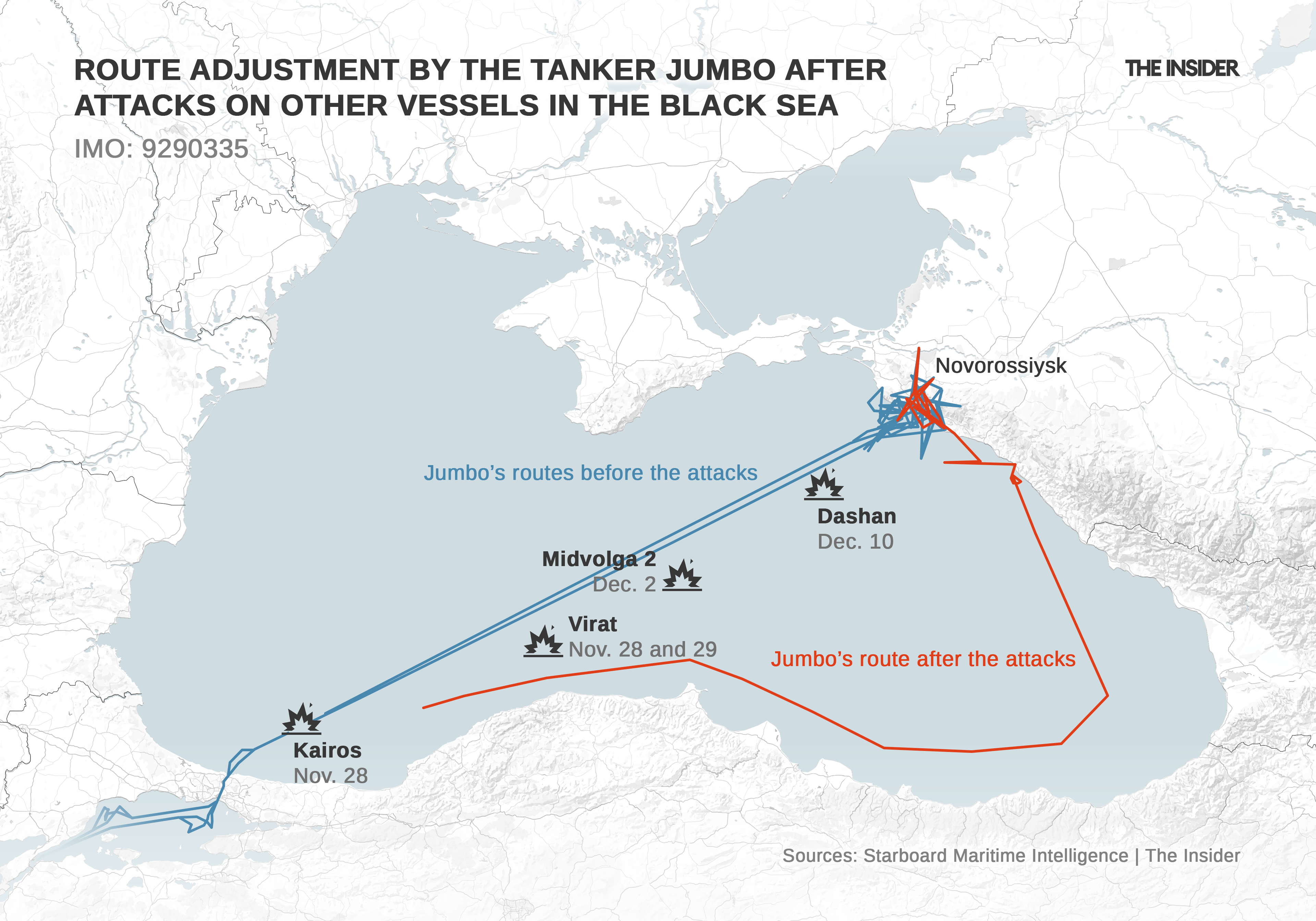
Tankers belonging to Russia’s so-called “shadow fleet” have changed their routes when transiting the Black Sea following a series of recent attacks on vessels carrying Russian commodities, The Insider has found. Instead of crossing the Black Sea directly when sailing between the Russian port of Novorossiysk and the Bosphorus, the tankers are now staying closer to Turkey’s coastline, at times even entering Turkish territorial waters.
Over the past week, the routes of at least two tankers have changed:
- Torx (IMO: 9311610; sanctioned by the UK, the EU, and Switzerland)
- Jumbo (IMO: 9290335; sanctioned by the UK, the EU, Switzerland, Canada, Australia and New Zealand)
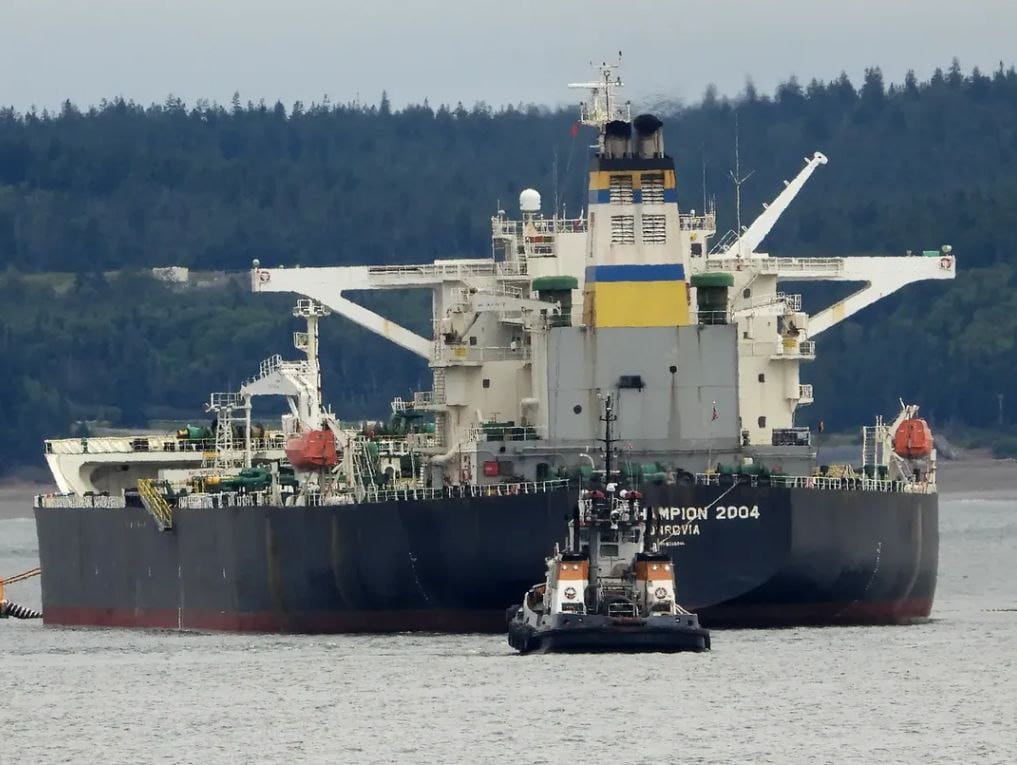
Both vessels are part of what is known as Russia’s “shadow fleet,” a collection of aging tankers that are used to transport Russian oil in contravention of the G7 and EU price cap policy that was implemented in December 2022. According to Ukrainian intelligence, Torx was used in 2025 to export Russian oil and petroleum products from Russian ports in the Black Sea and the Pacific region, primarily to China and India. The tanker sails under the Panamanian flag, according to GISIS IMO data current as of February.
The vessel is affiliated with Crest Maritime Pte Ltd of Singapore, which provides technical management for the tanker. As of Sept. 16, 2025, the same company was also the technical manager of two other sanctioned tankers from Russia’s “shadow fleet,” IMO 9308950 and IMO 9389100.
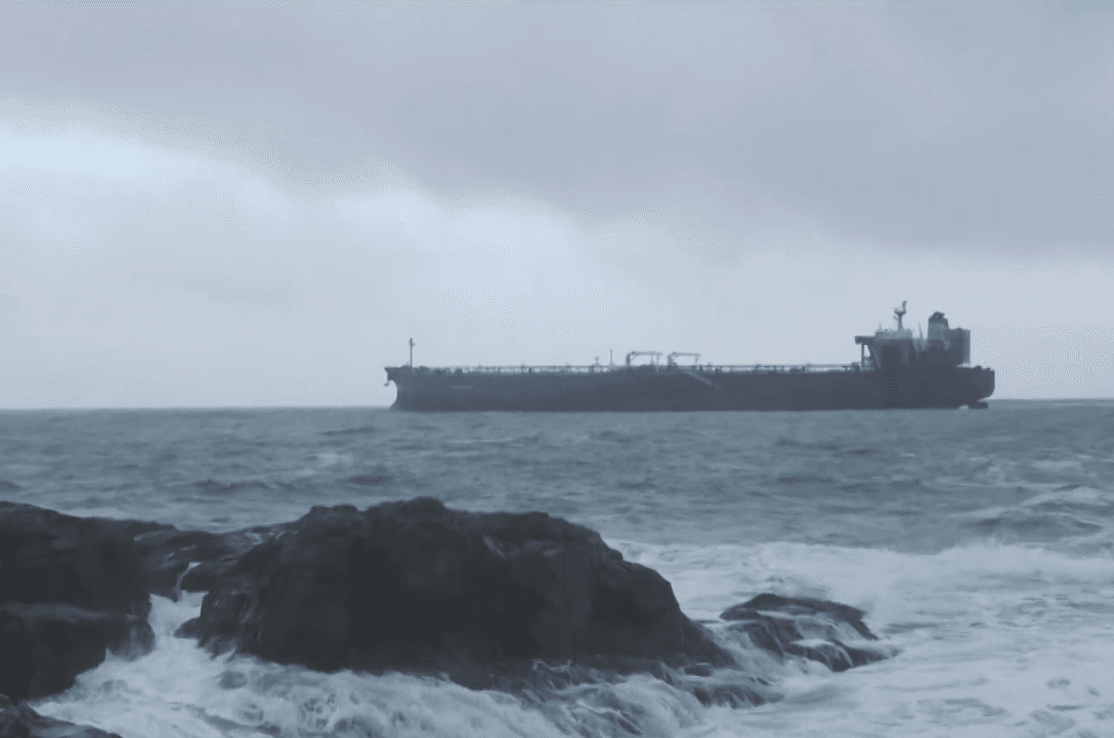
The tanker Jumbo sails under the flag of Sierra Leone, according to GISIS IMO data current as of August. However, the existence of a valid registration has not been confirmed. The international environmental organization Greenpeace classifies Jumbo as part of the “shadow fleet” of tankers transporting Russian oil worldwide — and posing a threat to the environment due to lax safety standards.
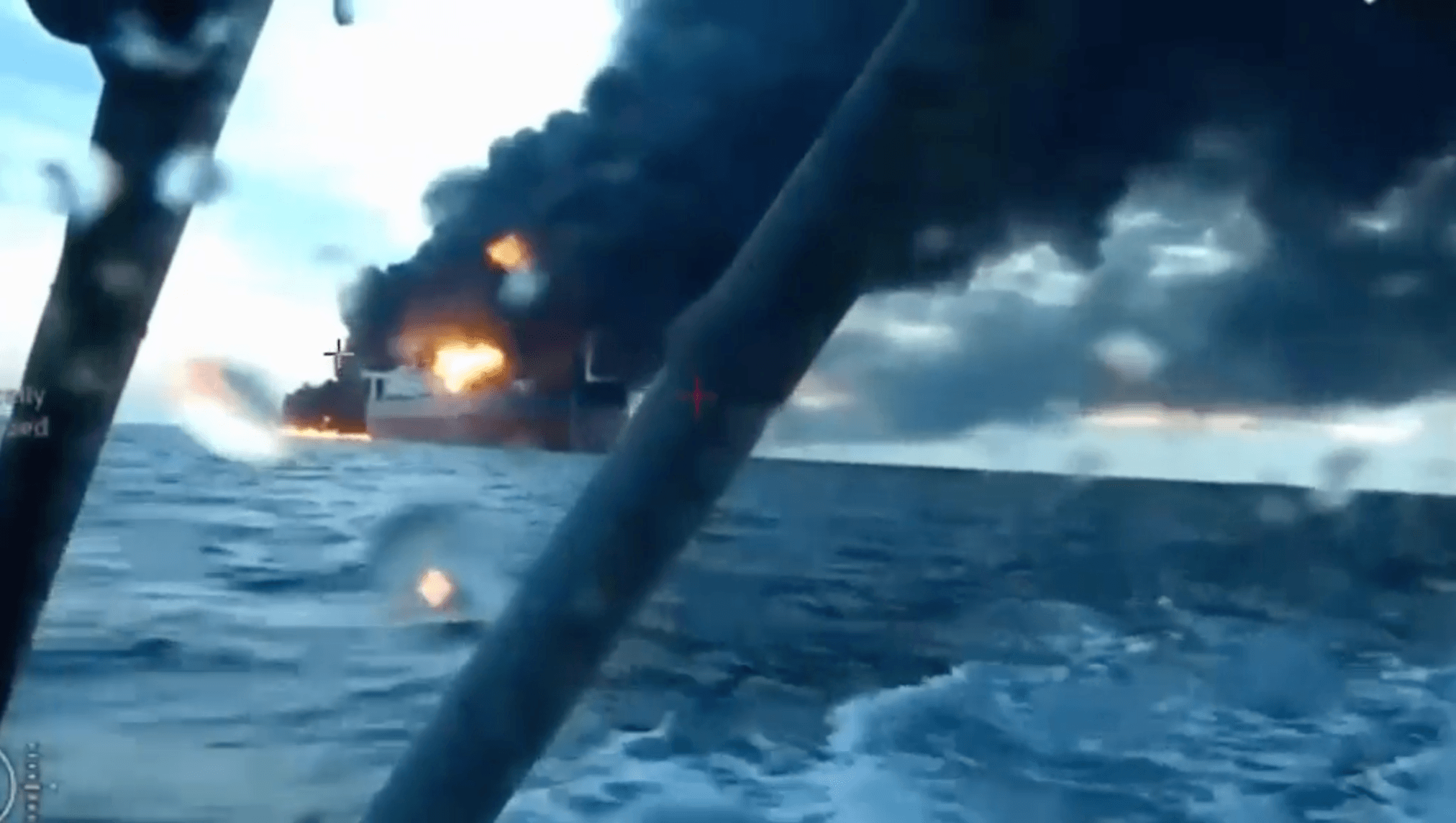
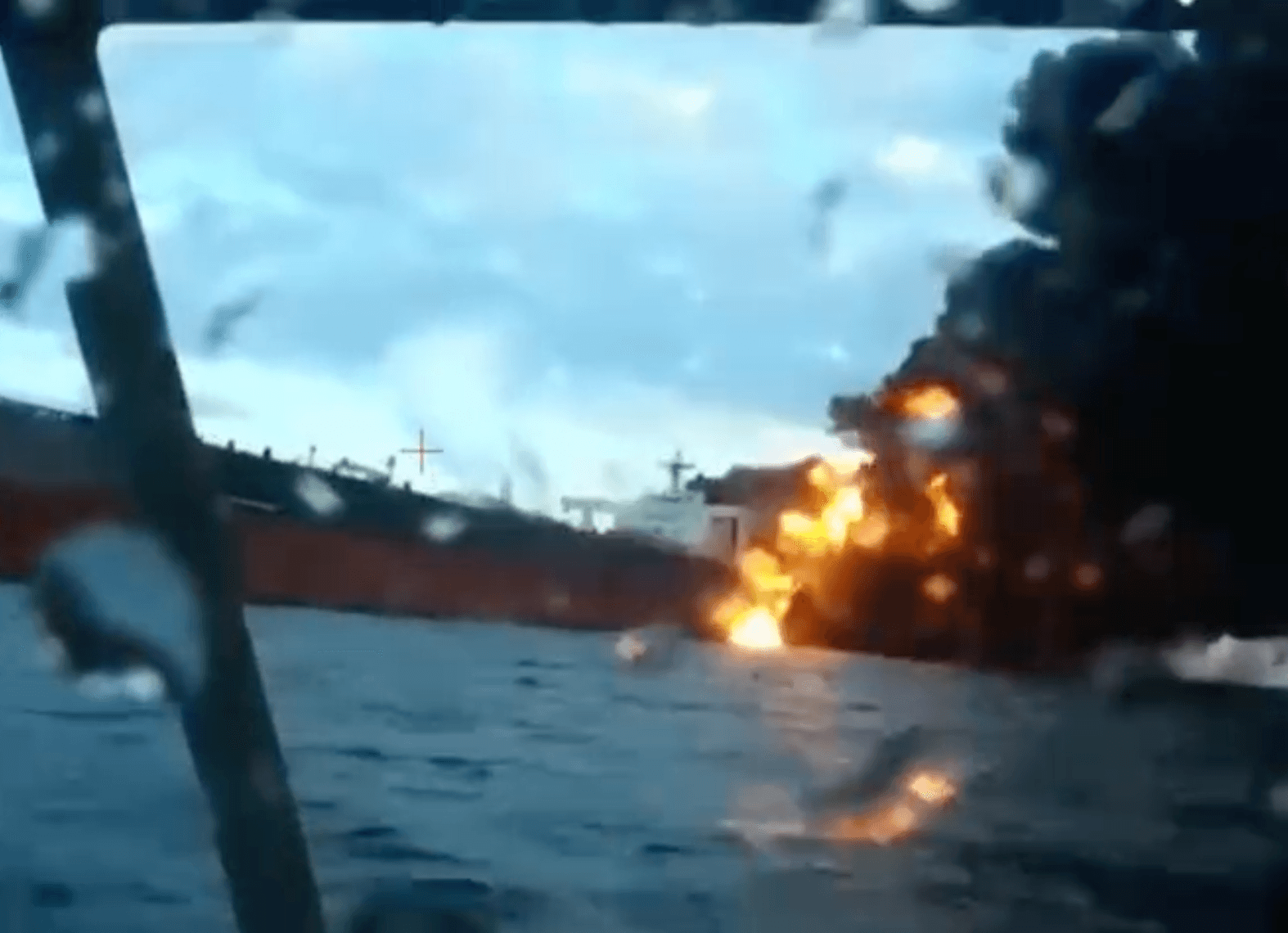
Since late November, attacks in the Black Sea on tankers linked to Russia’s “shadow fleet” have intensified. The strikes have been attributed to Ukrainian maritime drones.
On Nov. 28, the tankers Kairos (IMO: 9236004) and Virat (IMO: 9832559), both sailing under a false Gambian flag, were attacked almost simultaneously by maritime drones several dozen nautical miles off Turkey’s coast. Ukrainian media, citing sources in the Security Service of Ukraine (SBU), reported that the attacks were part of an SBU operation using upgraded naval drones. Virat was attacked again on Nov. 29. It later changed its flag to that of Russia and is now located in the port of Tuzla. Kairos was later towed toward Bulgaria, where it ran aground.
The Kremlin described the incident as a “flagrant case.” Putin’s spokesman Dmitry Peskov said those responsible for the attack had “encroached on the sovereignty of the Republic of Turkey and the security of vessel owners.” Turkish authorities said the incidents posed a “serious threat to navigation, human life, property, and the environmental safety of the region.”
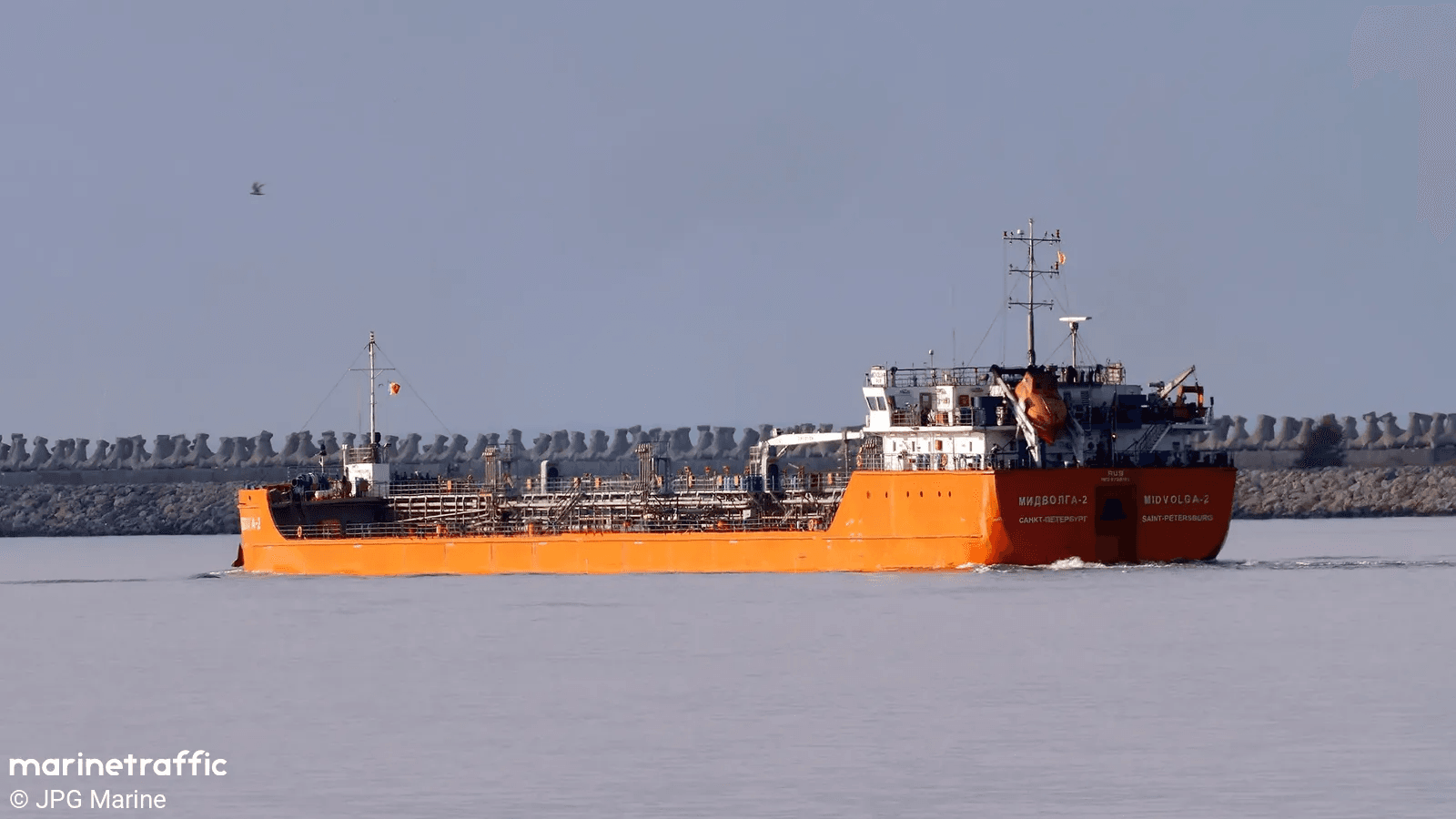
On Dec. 2, the vessel Midvolga 2 (IMO: 9735139) was attacked approximately 80 nautical miles (roughly 148 kilometers) off the Turkish coast. The ship was traveling from Russia to Georgia carrying a cargo of sunflower oil. It sails under the Russian flag and is owned by the Srednevolzhsk Shipping Company, registered in Moscow. The company is under Ukrainian sanctions.
On Dec. 10, Sea Baby maritime drones used by the SBU attacked the tanker Dashan in the Black Sea south of Feodosia, a port city located in the eastern part of Russian-occupied Crimea. The tanker, sailing under the flag of the Comoros Islands, was traveling at maximum speed with its transponder switched off as it made its way through Ukraine’s exclusive economic zone toward the Russian port terminal in Novorossiysk. The SBU said the operation was conducted jointly between its 13th Main Directorate of Military Counterintelligence and the Ukrainian Navy.
The attack on the oil tanker was also confirmed by Russian pro-war sources, including the Telegram channel Rybar, which is close to Russia’s Defense Ministry.