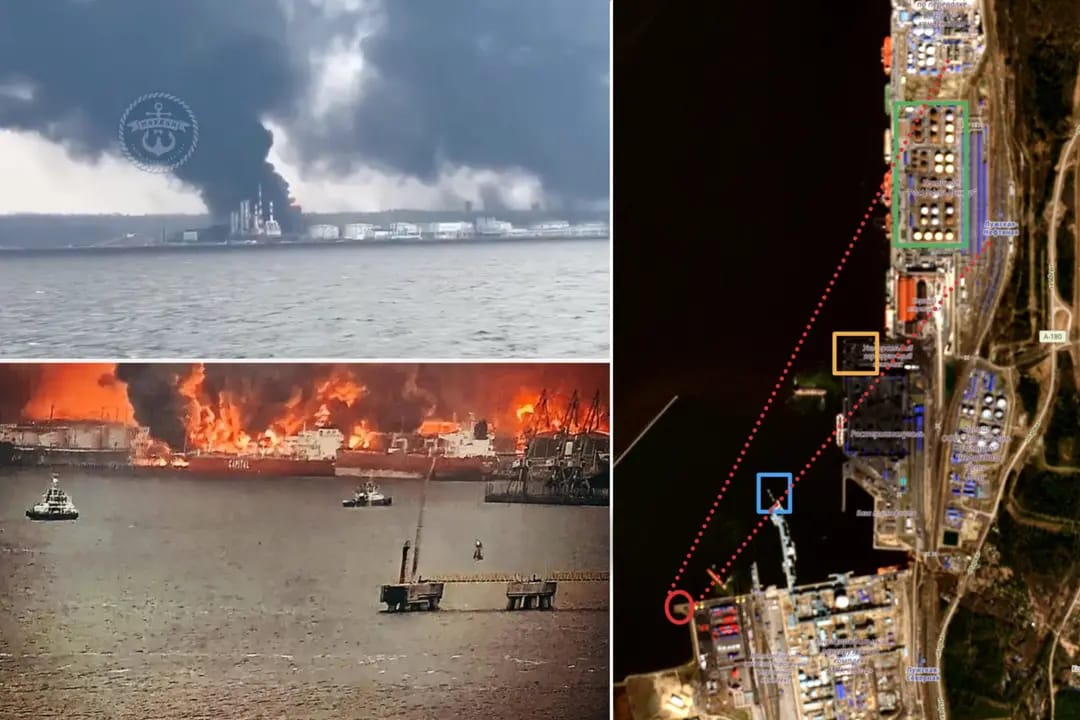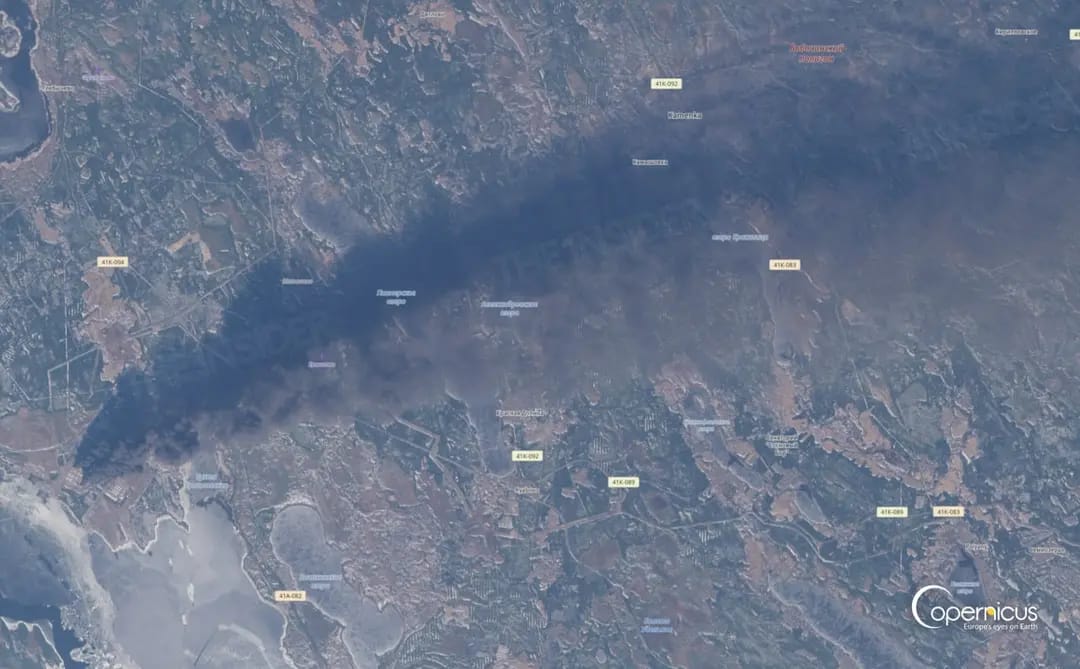
Ukrainian drones have again struck the Russian port of Ust-Luga, with Leningrad Region governor Alexander Drozdenko confirming an overnight attack lasting into the morning of April 7. A day earlier, Bloomberg reported that oil loading had resumed at the port after disruptions caused by several days’ worth of previous strikes.
Regional authorities said this morning that 22 drones had been shot down. Ukrainian monitoring channels reported (1, 2) that the port of Ust-Luga itself was among the targets. Ukraine’s General Staff confirmed the strike, saying it targeted a terminal linked to Russia’s state pipeline operator Transneft-Baltika. Preliminary information indicated that three storage tanks were hit.
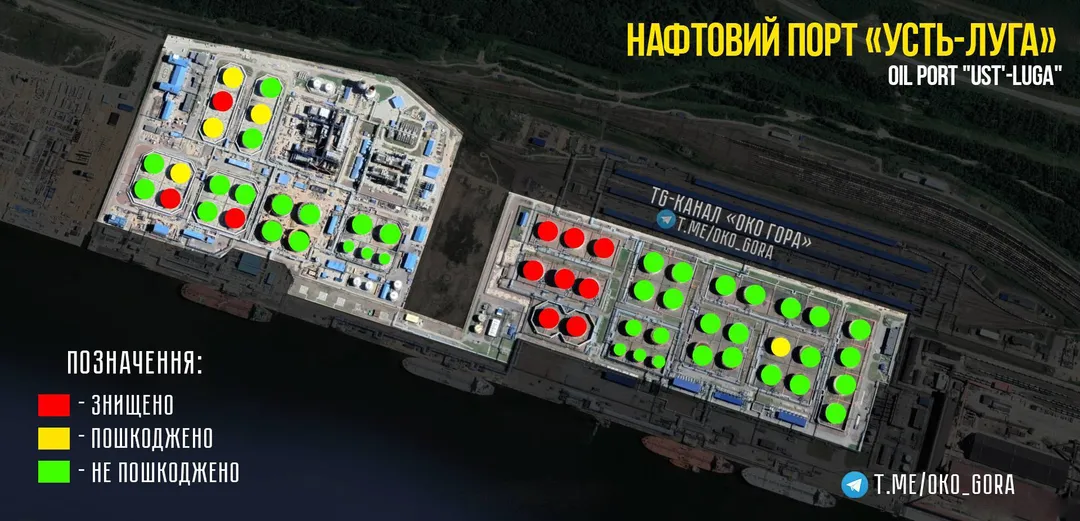
The Ukrainian open source intelligence project Oko Hora said that nearly a third of the port’s oil storage tanks had been damaged in the series of attacks. Over the past two weeks, the port has been hit six times, driving shipments of Russian oil through the Baltic Sea down to their lowest levels since 2022.
Because of the Ukrainian strikes, the ports of Ust-Luga and Primorsk were unable to receive and load fuel for close to two weeks. However, on April 5, Bloomberg reported that loading of crude oil at Ust-Luga had resumed.
On April 6, Russian Foreign Ministry spokeswoman Maria Zakharova accused the Baltic states — Estonia, Latvia, and Lithuania — of opening their airspace to Ukrainian drones, saying Moscow had issued them a special warning.
“These countries were given an appropriate warning. If the regimes of these countries are smart enough, they will listen. If not, they will face a response,” she said, according to the Interfax news agency.
Russia’s pro-war bloggers reacted mockingly to Zakharova’s statement, particularly against the backdrop of the most recent attack (1, 2, 3).
“We’re waiting for a new special warning, but this time with the spokeswoman making a zigzag exit — that should look scarier,” wrote military blogger Vladimir Romanov.
Over the past month, Ukraine has sharply stepped up attacks on Russian oil infrastructure. Reuters has reported that this has cut the country’s export capacity by about 1 million barrels per day — approximately one-fifth of the total.