For more than a month, Britain’s armed forces tracked the movements of three Russian submarines in the North Atlantic, UK Defense Secretary John Healey revealed at a news conference in London on April 9. As a result, Russia’s planned “covert operation” failed, and the submarines have now left Britain’s territorial waters, according to a report by the BBC citing the official.
Healey said the group monitored by British forces included a Project 971 Shchuka-B submarine, known in NATO as the “Akula” class, as well as two submarines belonging to the Russian Navy’s Main Directorate of Deep-Sea Research, known as GUGI. According to the minister, the first submarine was “a likely decoy to distract” from the two GUGI submarines, which were operating above “critical infrastructure relevant to us and our allies.”
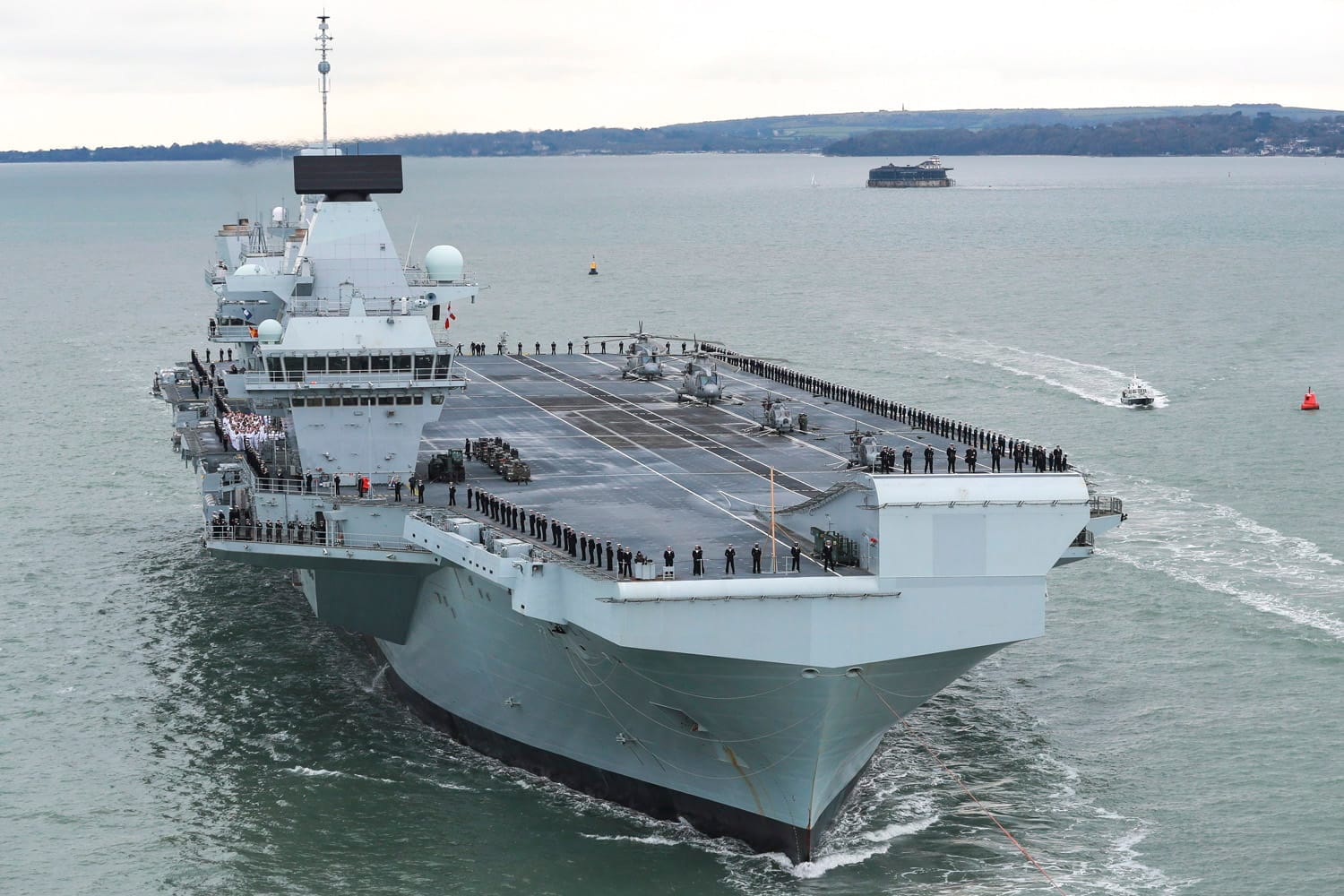
Healey did not disclose exactly what the Russian submarines did or attempted to do in British waters, saying only that the Russian covert operation had failed thanks to the fact that the British government had “completed [our] first duty” to protect the country. The surveillance operation involved the frigate HMS St Albans, the fleet tanker RFA Tidespring, and Royal Navy Merlin helicopters.
At the same time, the defense secretary’s remarks made clear that the target of the operation was underwater communications. “We see you, we see your activity over our cables and our pipelines,” Healey said, directly addressing Vladimir Putin. He stressed that any attempt to damage the UK’s cables or pipelines would not go unanswered, adding that the seabed had become a primary target for Moscow. Underwater pipelines supply half of the gas used to heat homes in Britain, while undersea cables carry 99% of international telecommunications traffic.
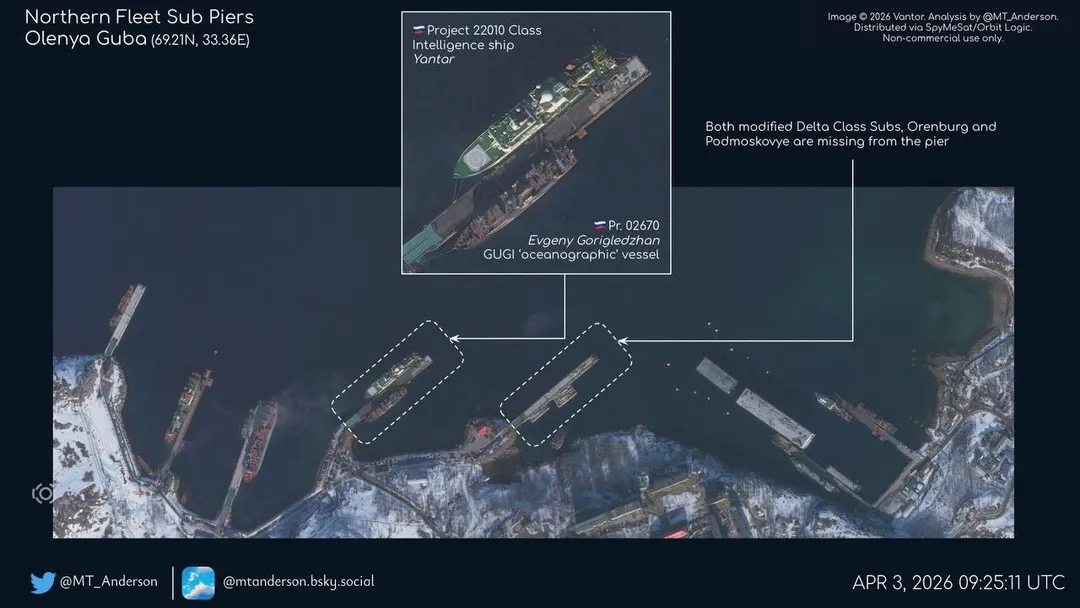
To reach the underwater cables, submarines are required to carry so-called “midget submarines” (“autonomous nuclear deep-water stations”, or “AGS” in Russian). The Telegram channel MilitaryRussia.Ru notes that the only AGS carrier submarine still in service with the Russian Navy, the BS-64 Podmoskovye, is currently absent from its base. Satellite imagery confirms that the vessel is not at the pier in Olenya Guba in Russia’s northern Murmansk Region. The BS-64 Podmoskovye is operated in the interests of GUGI.
Healey also said the number of Russian vessels threatening British waters has risen by 30%. The UK government has allocated an additional 100 million pounds ($134 million) for aircraft that search for submarines and for the launch of the “Atlantic Bastion” program to create “British hybrid naval forces.”
The UK imposed sanctions on GUGI in June 2025. British authorities accuse the directorate of developing Russian maritime intelligence-gathering operations.