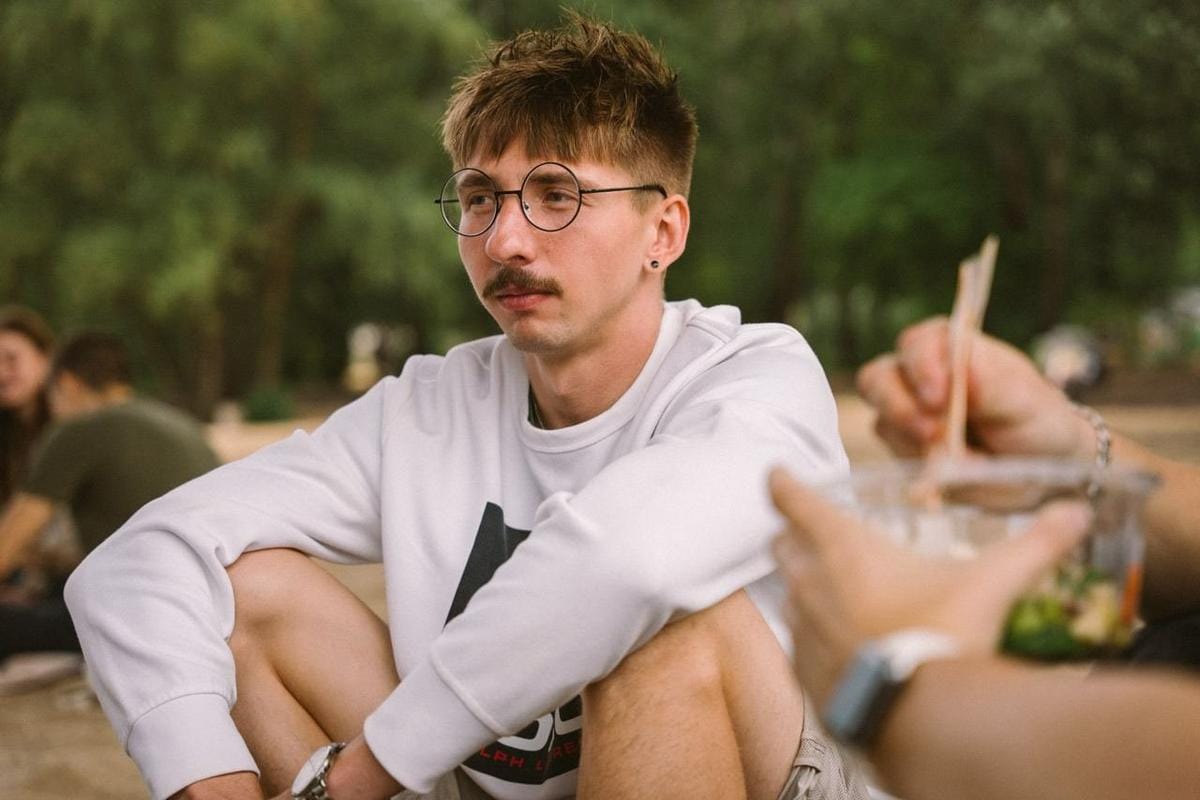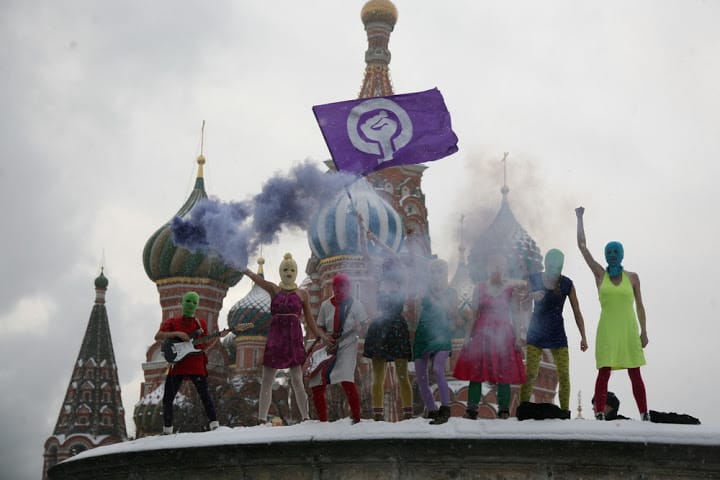
Former Pussy Riot member Rita Flores has stated that in February 2023, officers from the Russian Federal Security Service (FSB) coerced her into cooperating with them by using threats of criminal prosecution and physical violence against her and her loved ones. According to Flores, in the years that followed she passed information about artists and political activists to the security service. Then, in the summer of 2025, she received an assignment to help organize the killing of former Mediazona publisher and Pussy Riot member Pyotr Verzilov.
Flores recounted the story in an interview with lawyer Dmitry Zakhvatov, who had helped her flee Russia around ten days earlier. In a conversation with The Insider, Zakhvatov said that he learned of Flores’s relationship with the security services in the summer of 2005, and preparations for her evacuation had taken roughly a year.
How the FSB recruited Flores
According to Flores, she was recruited on Feb. 17, 2023, following a search of her Moscow apartment. That day, media reported that her phone and laptop had been seized and a message had been sent from her phone to her lawyer stating that she had been taken to the Investigative Committee. Flores now says that in reality she had remained at home with two FSB officers.
Zakhvatov told The Insider that the recruitment was preceded by prolonged psychological pressure: Flores had been detained multiple times, placed in temporary detention centers, subjected to surveillance, and had her home searched. According to the lawyer, the final search differed from the previous iterations. This time, one of the officers who entered the apartment addressed Flores in a markedly gentle tone before his colleague began applying intense pressure on her.
“First they worked her over psychologically like that, then threatened her into signing one document, then two days later they made her sign another,” Zakhvatov told The Insider.
As the lawyer stresses, Flores already had extensive experience dealing with the security forces. She had taken part in Pussy Riot protests and was detained multiple times. She knew she was being watched, and Zakhvatov himself had previously helped her evade surveillance.
“It’s difficult to say she was completely unprepared. Nevertheless, under certain circumstances, if you find the right approach to a person and hit a vulnerable spot, then, as practice has shown, [recruitment] is possible,” he said.
“Harley”: tracking artists and activists for the FSB
Flores herself recounted that during the process, the officers threatened her with criminal charges over posts she had made about Russian soldiers killing civilians in Bucha, and the officers also made threats about her family members. She was later taken to the security service’s building on Michurinsky Avenue, where she signed cooperation documents. According to Flores, she was given the operational alias “Harley” and was assigned a handler — an FSB officer named Ivan.
Flores’s first assignment, she says, was to compile profiles on contemporary artists from Russia and neighboring countries. She was subsequently required to gather information on potential law enforcement targets, including details about their associates, relatives, habits, and vulnerabilities including drug use, infidelities, and mental health. According to Flores, this data could be used as tools of pressure and blackmail.
Flores claims she tried to sabotage her work by withholding information that could be dangerous to people she knew, and she deliberately cut off contact with individuals whom the FSB assigned her to “develop.” At the same time, according to her, the security service gained access to her phone through surveillance software.
Zakhvatov told The Insider that Flores had indeed tried to avoid carrying out her assignments.
“She tried to wriggle out of things in every way she could. Sometimes it worked, sometimes it didn’t. But fortunately, no one was harmed,” the lawyer said.
Among those she was required to gather information on, Flores named street artist Phillip Kozlov, known as Philippenzo, who in the summer of 2023 created graffiti titled “Izrossilovanie” (a fusion of the words “Russia” and “rape”). Kozlov was later detained, received two consecutive 15-day administrative sentences, and became a subject in a criminal vandalism case. He subsequently left Russia.
The plot to kill Pyotr Verzilov
The most serious assignment, Flores claims, came in the summer of 2025. According to her, FSB officers proposed that she help organize the killing of Pyotr Verzilov, the unofficial spokesperson of Pussy Riot, with whom she had previously been in a relationship. Flores was to lure him to Serbia and arrange a meeting at a predetermined café.
“After that, I was supposed to step outside on some pretext,” Flores said. According to her, the plan was to then abduct and kill Verzilov.
For her participation in the operation, she was allegedly offered a reward of up to 3 million rubles ($36,000). Flores also claims that her handlers repeatedly asked her to find at least a partial image of Verzilov’s house in Ukraine in order to establish his location and place an explosive device nearby.
After receiving the assignment related to Verzilov, Flores reached out to Zakhvatov. They then began working on extricating her from the security service’s control and arranging her departure from Russia.
The lesson for other coerced informants
According to Zakhvatov, one of the key tasks was to recover Flores’s passport. They also initially considered a course of action in which the activist would pretend to agree to take part in the killing of Verzilov in order to create the opportunity for arresting the FSB team on Serbian territory, but the idea was ultimately abandoned.
“It was too dangerous for Rita. And most importantly, the plan lacked credibility. The FSB officers knew very well that Rita and Pyotr had been close. We thought that such a proposal might itself be a provocation on their part, or could trigger a serious loyalty test for Rita, which she most likely would have failed,” Zakhvatov explained.
After that, they focused on preparing the evacuation. The lawyer has declined to disclose how Flores managed to leave Russia.
Flores noted that she received money from the Russian security services in exchange for her cooperation. Initially she was given a one-time payment of 30,000 rubles ($360), and in the final months before her departure, she says, the FSB paid her 50,000 rubles ($600) per month.
Following Flores’s evacuation, Zakhvatov published an appeal to others who may have been recruited by Russian intelligence services and wish to stop cooperating. As the lawyer explained to The Insider, this is not a dedicated evacuation program for informants, so he does not expect a large number of such inquiries. However, according to him, the Flores case has demonstrated the need to create a dedicated communication channel for people in a similar predicament.
“Since this situation has arisen, we need to use it somehow to disrupt the recruiters’ game... If a person has encountered the same problem as Rita did, they can reach out and receive some form of assistance,” Zakhvatov told The Insider.
He left separate contact details for such inquiries on Element X, Telegram, and Proton email while urging people not to contact him from devices known to the Russian security services.
According to Zakhvatov, one of the most important things an informant who has reached safety must do is speak openly about their cooperation with the security service. Keeping this fact secret, the lawyer argues, allows recruiters to continue using it as leverage and compel a person to carry out assignments even after leaving Russia.
“You’ve already been hooked, you’ve already been reeled in, some trace has already been left. That trace means that at any moment — as the recruitment victim understands — you can be held accountable for it and can be forced to do things you don’t want to do... It’s important that people don’t stay silent,” Zakhvatov told The Insider.
According to the lawyer, this is precisely why it was important to make Flores’s full story public — detailing the methods that FSB officers allegedly used on her.
“People need to know about all these methods; they need to be publicized so that people understand how to handle such a situation correctly and avoid falling into this trap,” he said.
Flores herself also explained her decision to publicly disclose her FSB cooperation as coming from a desire to help others in similar situations.
“I suspect more people have been recruited. And I would like to help them. I am a living example that you can simply reach out to the right people, and they will help you one hundred percent,” she said.