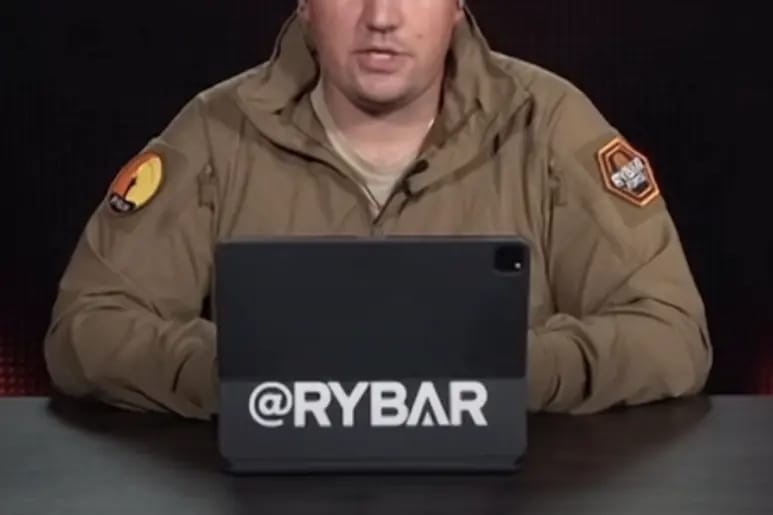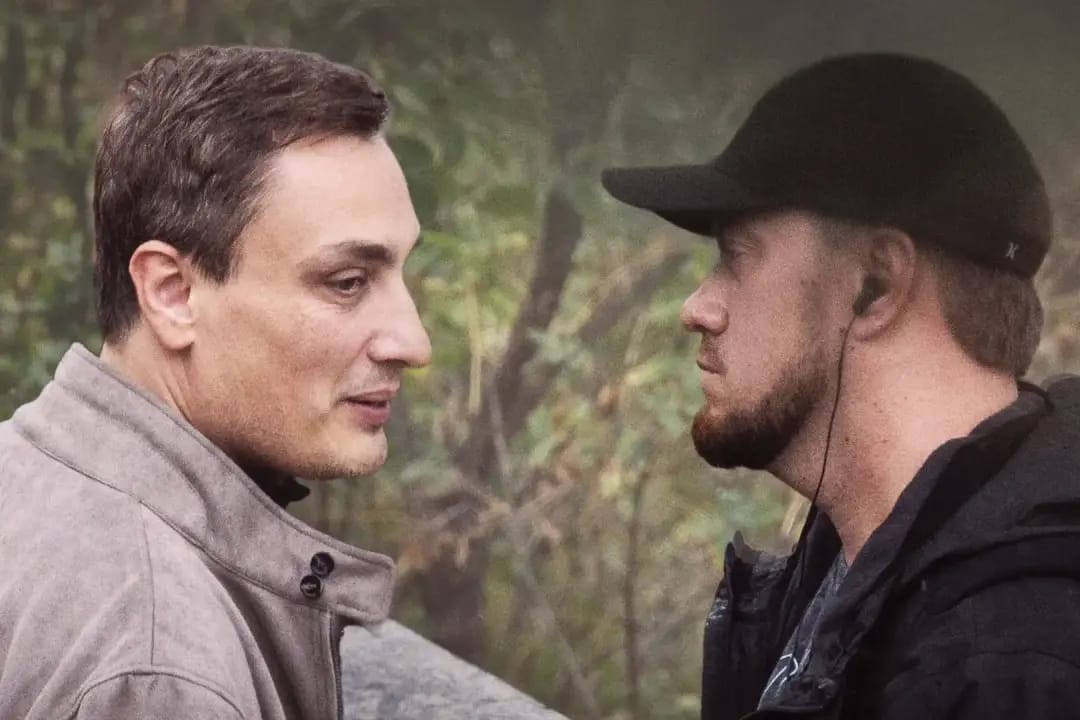
Montenegrin authorities are set to deport Mikhail Zvinchuk, founder of the Russian pro-war propaganda project Rybar. Zvinchuk’s wife, Valeria, and three of the project’s employees, are also on the deportation list, local outlet Vijesti reported, citing Montenegro’s Police Directorate. Bosnian investigative journalists found that Zvinchuk entered Montenegro from Bosnia and Herzegovina after flying there from Germany.
News of the detention of Zvinchuk, his wife, and other Rybar staff emerged earlier in the day on Oct. 9. Vijesti identified the other detainees as Sergei Belous, Pavel Lekatorchuk, and Kira Doroshenko. All five individuals have now been ordered to leave Montenegro, with law enforcement authorities saying the decision was made on the basis of national and internal security grounds.
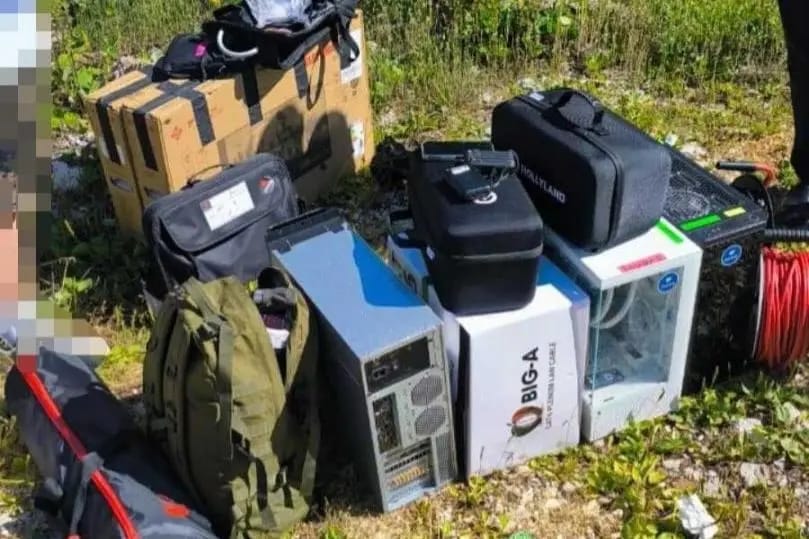
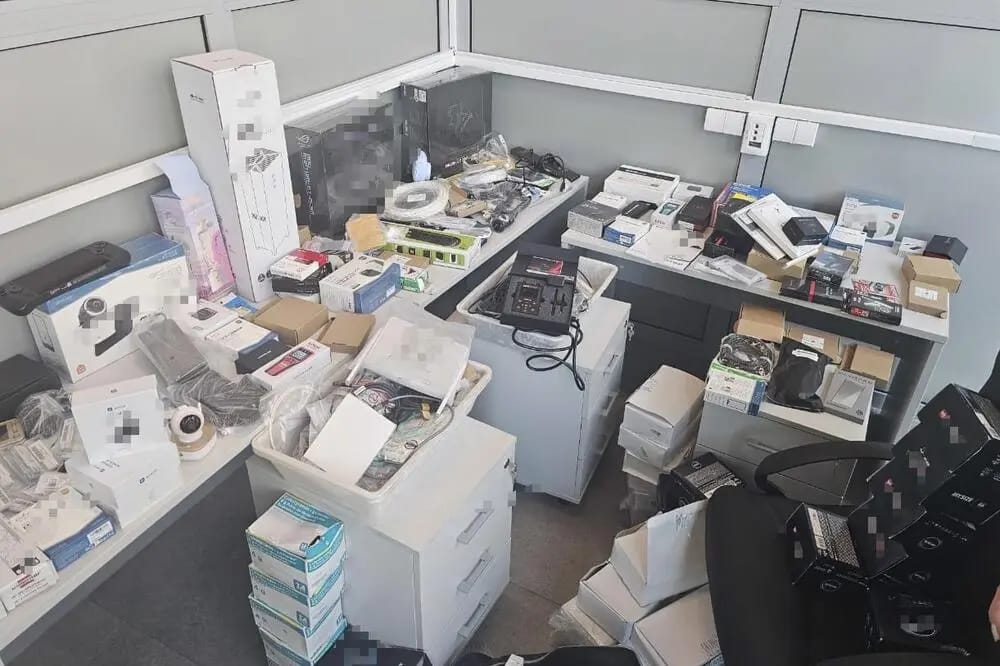
According to Montenegrin police, Zvinchuk, his wife, and Rybar employees entered the country two days earlier. They stayed in the town of Risan on the Bay of Kotor, where they were ultimately detained. Officers seized cameras, a GoPro, a filming drone, and mobile phones from the group.
Bosnian investigative outlet Detektor found that Zvinchuk and his team entered Montenegro from Bosnia and Herzegovina. They arrived in Sarajevo on Oct. 2 on a flight from Germany. While Zvinchuk, his wife, and Rybar employees were in the country, elections were taking place in Bosnia. Bosnia’s Security Ministry has not yet commented on the information.
On Oct. 6, Rybar published a video roundup for the Solovyov Live program that was filmed in Bosnia. The following day, Oct. 7, the Rybar team entered Montenegro by land.
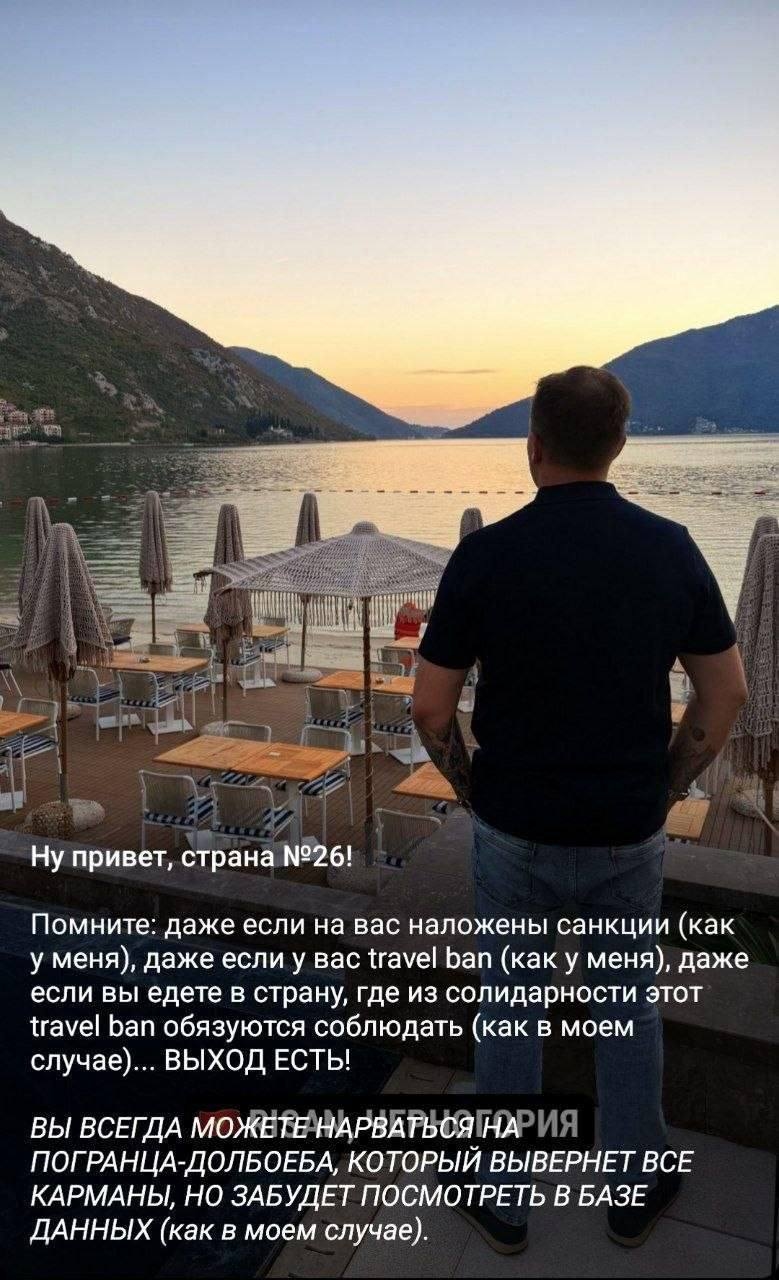
Zvinchuk later boasted that he had entered Montenegro despite the sanctions and travel ban levied against him. In a post on social media, Zvinchuk said Montenegro was the 26th country he had visited and described how he entered the country:
“Remember: even if you are under sanctions, like me, even if you have a travel ban, like me, even if you are traveling to a country that has pledged, out of solidarity, to enforce that travel ban, as in my case ... THERE IS A WAY!”
Zvinchuk added that travelers like him could always run into “an idiot border guard who turns out all your pockets but forgets to check the database.”
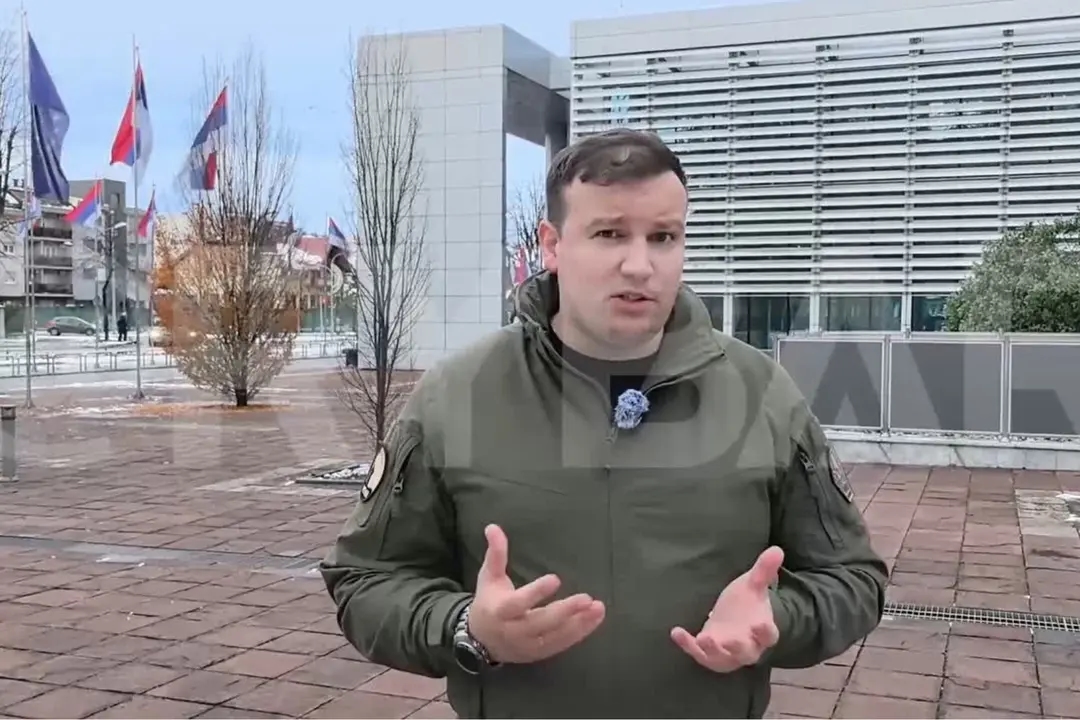
On Oct. 8, prior to his arrest, Zvinchuk again appeared on the Russian propaganda channel Solovyov Live, where he claimed that “Montenegro is in tears because visas are being introduced for Russian tourists.”
Montenegrin Prime Minister Milojko Spajić confirmed Zvinchuk’s detention in a post on X earlier today:
“The message following today's successful action in which the head of the information network ‘Rybar’ was apprehended is clear: out institutions are doing their job, Montenegro is protecting its interests, and no one will jeopardize our European future.”
Rybar founder Mikhail Zvinchuk, a former employee of the Russian Defense Ministry’s press service, is under EU and UK sanctions. The EU’s sanctions justification says he is part of a working group created by Vladimir Putin to coordinate Russia’s mobilization efforts in support of the ongoing war against Ukraine. Rybar’s main Telegram channel has more than 1.5 million subscribers.
In 2024, the United States offered a reward of up to $10 million for information about people working on the project, which it said used social media to "sow discord, promote social division, stoke partisan and racial discord, and encourage hate and violence in the United States.” The U.S. State Department also listed Zvinchuk as being involved in attempts to influence the U.S. electoral process.
In February 2026, OpenAI blocked a network of accounts linked to Rybar. The project’s team had used ChatGPT as a content farm to generate social media and blog posts in Russian, English, and Spanish.
In September, Czech police detained and questioned Russian nationals Vitaly Chashchukhin and Igor Dolmatov, whom journalists from local outlet Seznam Zprávy had earlier lured to a meeting in Prague and secretly recorded discussing their work for the Rybar project. After questioning, both were ordered to leave the Czech Republic within three days as undesirable persons.
Chashchukhin and Dolmatov are known to live in Germany, where Chashchukhin performs work for sanctioned Russian media outlets Izvestia, Channel Five, and REN TV. In his reports, he portrays Germany as a country in economic decline, claiming its only hope for prosperity requires a halt to arms supplies for Ukraine and a return to the purchase of cheap energy from Russia.
Zvinchuk’s detention drew reactions from Russian government officials including Kremlin spokesman Dmitry Peskov and ex-president Dmitry Medvedev, and also from media outlets, bloggers, and pro-war channels. Ivan Filippov, a propaganda researcher and author of the Telegram channel “All Quiet on the Zzzzzestern Front,” told the independent outlet Vot Tak that many commentators — regardless of their views — were asking why a sanctioned Russian propagandist who was aware of the risks had traveled to a NATO country that is seeking EU membership:
“Some people are expressing sympathy, but looking at the reactions now, the dominant question is why he went there in the first place. The pro-war “Z”-community is genuinely stunned. [Head of RT] Margarita Simonyan believed he would be extradited to Ukraine,” Filippov said.
Montenegro joined NATO in 2017 and is seeking to join the EU after adopting the euro in 2002 and applying for membership in the bloc in 2008. It imposed sanctions on Russia after Moscow launched its full-scale invasion of Ukraine in 2022.
The government recently approved plans to end visa-free travel for Russian citizens starting from Nov. 1, as Montenegro aligns its visa policy with the European Union ahead of a possible accession by 2028. Local media reported this spring that around 14,000 of the 21,000 Russians registered in Montenegro had left after the government announced plans to introduce visa requirements.
“Montenegro’s accession as the 28th member state by 2028 is within reach,” European Commission President Ursula von der Leyen said at an EU-Western Balkans summit in June.