On the evening of Nov. 14, three commercial vessels were attacked by drones in the Black Sea near Romania’s Sulina shipping channel, Romanian Prime Minister Luca Niculescu said. The Insider found that all three vessels were headed to the Moldovan port of Giurgiulesti. One of the tankers, which was due to load 6,500 metric tons of sunflower oil in Moldova, changed its declared destination about 90 minutes after the attack and headed toward Greece.
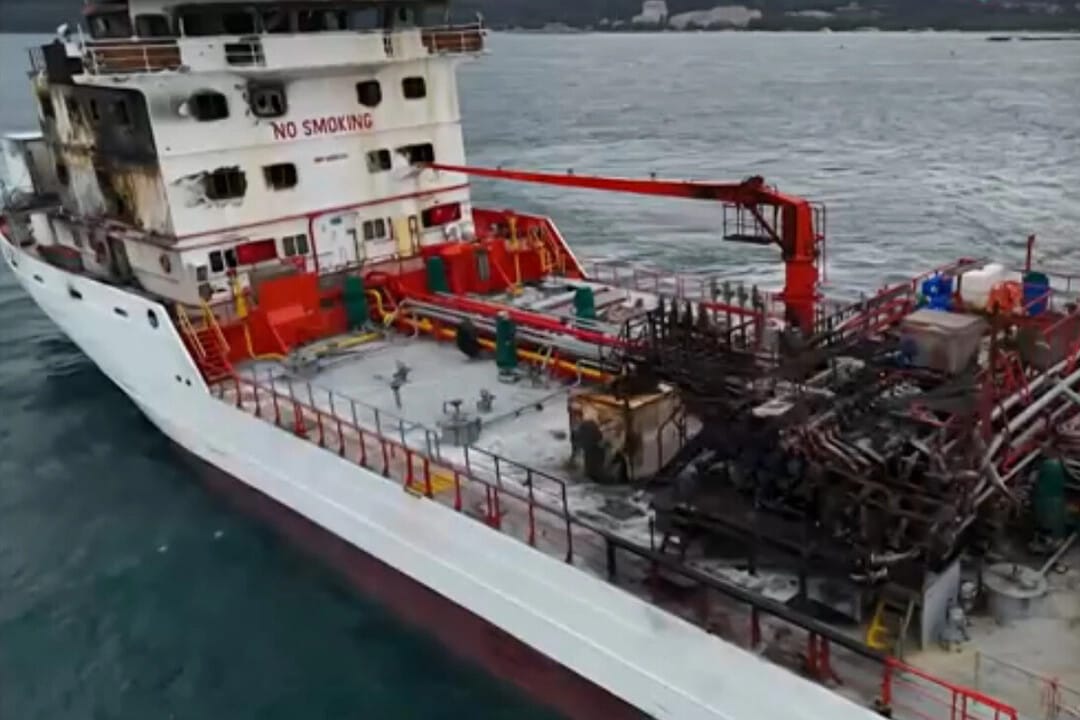
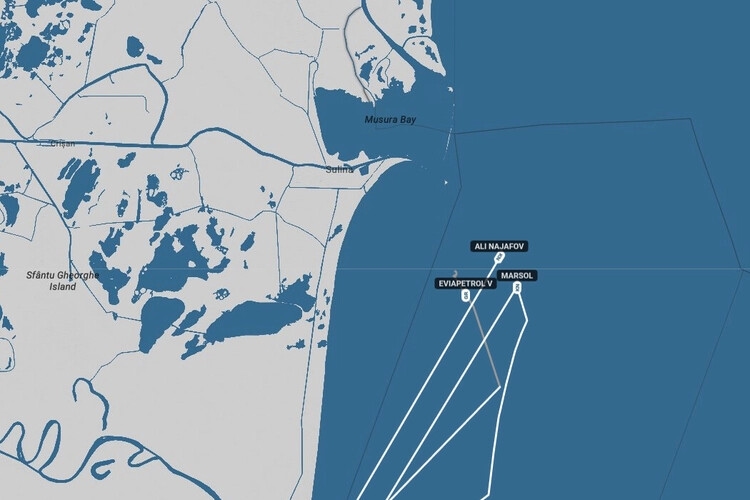
According to Romania’s Defense Ministry, the first vessel attacked was the Greek-flagged tanker Eviapetrol V (IMO: 9358503) at about 9:10 p.m. local time on Nov. 14. The ship was located 7.4 kilometers from Sulina. Thirty-five minutes later, a drone struck the Saint Kitts and Nevis-flagged cargo ship Marsol (IMO: 9109512), which was 9.3 kilometers southeast of the channel. Both vessels were inside Romanian territorial waters.
The Romanian Defense Ministry later reported an attack on a third tanker, Ali Najafov (IMO: 9175195), which also sails under the flag of Saint Kitts and Nevis. Fires broke out after the strikes, but the crews were able to extinguish them. No sailors were injured.
Romanian Air Force fighter jets were scrambled twice on the evening of Nov. 14 after military radar detected aerial targets near the mouth of the Danube. Niculescu called the attacks on civilian vessels a violation of international law and linked them to the worsening security situation in the Black Sea amid Russia’s ongoing war against Ukraine. Romanian authorities, however, have not said who launched the drones that struck the three ships.
On the morning of Nov. 15, Russia’s Defense Ministry said Russian forces had continued strikes on Ukrainian port infrastructure and vessels that it claimed were involved in supplying the Ukrainian armed forces. The ministry said it had struck a cargo ship allegedly carrying military and dual-use goods to Odesa. It later reported striking another cargo ship. In both cases, the ministry did not identify the vessels, give the exact locations of the strikes, or publish video of the attacks. It is unclear whether those statements were connected to the documented attacks on commercial ships off the coast of Romania.
All three attacked vessels were headed to Moldova
According to data from the vessel-tracking service Starboard Maritime Intelligence analyzed by The Insider, Eviapetrol V left the Turkish port of Ambarli on Nov. 1 and headed toward Moldova’s port of Giurgiulesti. The tanker had arrived in the area on Nov. 13 and was near Sulina while waiting to enter the channel linking the Black Sea with the Danube.
At 10:40 p.m. local time on Nov. 14, about 90 minutes after the attack, the crew changed the tanker’s destination in its AIS data from Giurgiulesti to the Greek port of Piraeus. The Eviapetrol V then left the Sulina area. By 4:47 p.m. on Nov. 15, the tanker was in the southern Black Sea off Bulgaria and was moving southeast at 22.2 kilometers per hour.
The Eviapetrol V had been scheduled to load about 6,500 metric tons of sunflower oil in Giurgiulesti. Moldovan agricultural group Trans-Oil said the tanker was damaged in the attack and would be unable to complete the planned voyage. The company warned of possible delays to export shipments, additional logistics costs, and disruptions to contract deadlines.
Trans-Oil said it was the second attack in a month on a tanker headed to Giurgiulesti to load vegetable oil — the Wine Trader had been attacked near Sulina on Oct. 15.
According to Starboard data, Marsol left the area near the Romanian port of Constanta on the morning of Nov. 14 and headed toward the mouth of the Danube. Its crew listed Giurgiulesti as its destination, with an expected arrival on Nov. 16. After the attack, the cargo ship also moved south from the Sulina area. Starting from 1:23 a.m. on Nov. 15, it remained nearly stationary at a location several dozen kilometers southwest of the attack site. Its declared destination had not changed as of 4:44 p.m. on Nov. 15.
The third tanker attacked last night, Ali Najafov, had departed from the Turkish port of Ambarli on Nov. 11, with the crew reporting that the vessel was due to arrive in Giurgiulesti at 6 a.m. on Nov. 13. As of the evening of Nov. 13, however, the tanker was near Sulina, where it remained almost motionless for about a day. The latest AIS data available to Starboard for the tanker was recorded at 11 p.m. on Nov. 14. What happened to the vessel after the attack remains unknown.
Giurgiulesti Moldova’s only seaport, is located on the Danube near the borders with Romania and Ukraine. Moldova uses the port to import petroleum products and export agricultural goods, among other cargo.
At least 13 commercial vessels have been attacked near NATO countries since early October
Another tanker heading to Moldova to load vegetable oil — the aforementioned San Marino-flagged Wine Trader (IMO: 8808707), was attacked by Russian drones on Oct. 15 while located approximately 24 kilometers from Sulina, putting it outside Romanian territorial waters but still within Romania’s exclusive economic zone.
Seven of the 12 crew members aboard Wine Trader were reported missing after the attack. In early November, human remains believed to belong to six sailors were found aboard the tanker after it was brought to the Bulgarian port of Varna. Russia’s Defense Ministry later published video of the strike, claiming the vessel had been carrying military cargo for Ukraine. However, according to the San Marino Maritime Authority, the tanker was empty at the time of the attack.
Additionally, on Nov. 13 a drone damaged a cargo crane aboard the Palau-flagged ship Larissa 1 (IMO: 9154268), which was 12.6 kilometers from the Romanian coast. The vessel was headed to Sulina with plans to continue to Ukraine. By The Insider’s count, at least 13 commercial vessels have been struck by drones near the coasts of NATO members Romania and Bulgaria since the beginning of October.
In response to the series of attacks, Romania has proposed that NATO’s Black Sea countries establish a joint command to defend against drones. The alliance also announced plans to strengthen its deployment of maritime patrol aircraft and drones in the region. France temporarily deployed an Atlantique 2 maritime patrol aircraft to Romania.