
Over the course of Russia’s full-scale war against Ukraine, Belarus has become an indispensable logistical and industrial stronghold for the Russian military. By providing infrastructure, training grounds, and capabilities for hybrid pressure on Europe, the Lukashenka regime is helping Russia prolong the conflict. As a result, Ukraine and the West face a dilemma: how to respond to Minsk’s de facto complicity in the aggression while maintaining their previous restraint. It is this evolution — rather than the prospect of Belarusian troops crossing the border — that now poses the primary security challenge for Ukraine and the West.
Belarusian dictator Alyaksandr Lukashenka claims Belarus is being pushed toward deeper involvement in the war, suggesting the option of sending Belarusian troops to fight in Ukraine remains open. However, regardless of Moscow’s future demands, Belarus already offers something more valuable: territory, infrastructure, industrial capacity, and strategic depth.
Phase one (2021–2022): Belarus as a launchpad
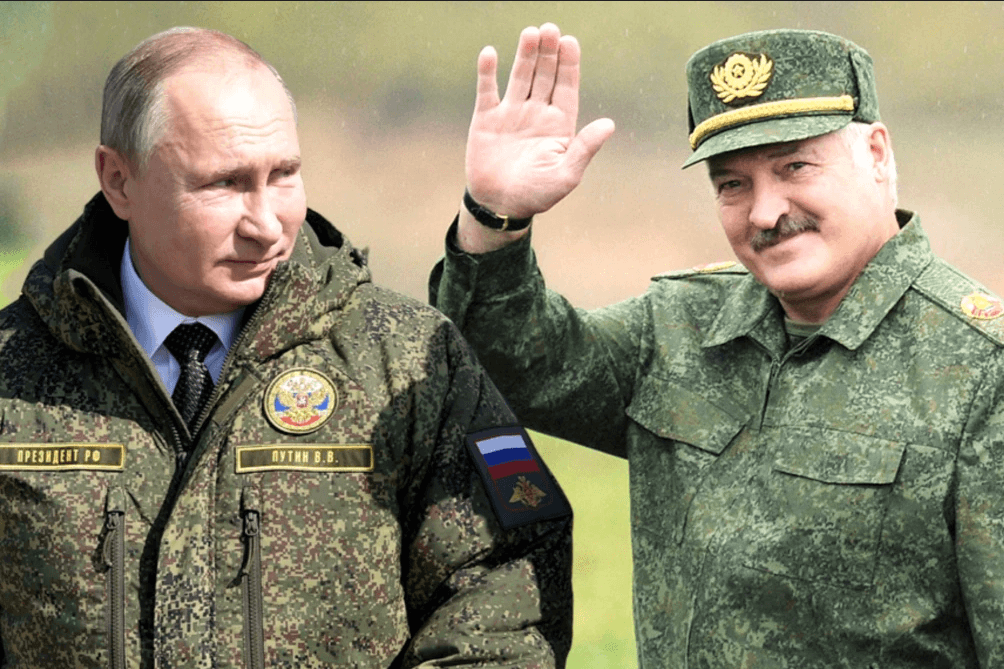
By the time Russia launched its full-scale invasion of Ukraine in February 2022, Alyaksandr Lukashenka had little room for manoeuvre. The turning point had come not with the war itself but two years earlier. After the fraudulent 2020 presidential election — which sparked the largest protests in Belarus’s modern history — Lukashenka’s political survival depended on the Kremlin. Russian political, financial, and security support enabled him to withstand unprecedented domestic pressure and Western sanctions, fundamentally altering the balance of power between Minsk and Moscow.
This dependence had immediate military consequences. Throughout 2021, Russia steadily expanded its military presence in Belarus under the cover of joint exercises. Following the joint Zapad exercise in autumn 2021, Russian troops and equipment remained in Belarus instead of returning home. At the same time, Lukashenka signed a series of long-delayed Union State agreements, including a new military doctrine that significantly deepened defense cooperation — measures that he had resisted for years became politically impossible to reject.
When the Russian invasion began on February 24, 2022, Belarus served as an indispensable staging ground. Russian forces crossed into northern Ukraine from Belarusian territory in their attempt to seize Kyiv. Belarusian airfields hosted Russian aircraft, missiles were launched from Belarusian soil, and the country provided logistics, supply routes, and medical facilities for Russian troops. Throughout the first weeks of the war, Belarus functioned as the northern bridgehead for Russia’s offensive against the Ukrainian capital.
Yet one notable line was never crossed. Despite intense speculation that he would do so, Lukashenka did not send the Belarusian army into Ukraine. There is little evidence that he ever wanted to. Aware of the overwhelming public opposition to the war, concerned about the reliability of his own armed forces, and wary of the domestic consequences, he sought to provide Moscow with everything except Belarusian soldiers. That pattern has largely defined Belarus’s role in the conflict ever since.
Lukashenka sought to provide Moscow with everything except Belarusian soldiers
After Russia’s failed assault on Kyiv and its withdrawal from northern Ukraine in the spring of 2022, Belarus’s role began to evolve. It no longer served primarily as a launchpad for offensive operations but gradually became Russia’s strategic rear.
Phase two (2023–2024): Belarus as strategic depth
By 2023, Russia was fighting a very different war from the one it had planned a year earlier. The Kremlin no longer needed Belarus as a corridor for a rapid advance on the Ukrainian capital. Instead, it needed something increasingly important in a war of attrition: a place to train troops, repair and maintain equipment, move men and materiel, and relieve pressure on Russia’s own military infrastructure.
Belarus was well placed to provide all of these. Its training grounds were used to prepare Russian troops, including newly mobilised personnel, before their deployment to the front. Russian and Belarusian forces continued joint exercises, while Belarusian facilities provided maintenance and repair capabilities. The country’s railways and other infrastructure remained available to the Russian military. Belarus effectively offered Russia additional military capacity away from the immediate battlefield — and largely beyond the reach of Ukrainian strikes.
Belarus offered Russia additional military capacity away from the immediate battlefield — and largely beyond the reach of Ukrainian strikes
In addition, the option of renewed escalation from the north had its own military value. Even after Russian forces withdrew from northern Ukraine, Kyiv could not simply ignore the Belarusian border. The threat of another deployment of Russian forces — or renewed missile and air attacks from Belarusian territory — forced Ukraine to fortify the frontier and retain troops and resources in the north that could otherwise have been deployed elsewhere.
Lukashenka, meanwhile, continued to avoid the step he feared most: sending Belarusian troops to fight in Ukraine. This suited Moscow better than it might initially appear. Russia had little to gain from forcing a relatively small and untested Belarusian army into combat at enormous political cost to Lukashenka. Belarus was more useful as a secure rear area than as a source of additional infantry.
This was the paradox of the second stage of Belarus’s involvement in the war: its role became less visible, but not less important. Belarus was no longer central to Russia’s plans for a rapid victory. Instead, it was helping Russia adapt to the failure of those plans — and to prepare for a much longer war.
Phase three (2025 – present): Belarus as part of Russia’s capacity to wage a long war
By 2025, Belarus’s role was evolving again. Russia was now fighting not only a prolonged war of attrition in Ukraine, but a much broader confrontation with the West. In both cases, Belarus was becoming increasingly useful.
The longer the war lasts, the less Moscow needs Belarusian soldiers and the more it values Belarusian capabilities. Belarusian enterprises supply Russia’s defence industry with heavy vehicles along with optics, electronics, and other components, while repair plants and military facilities add capacity to an economy mobilised for war.
Belarus also forms part of the economic ecosystem through which Russia has adapted to Western sanctions, with the two countries deepening industrial cooperation and developing new supply chains as access to Western markets and technology has narrowed.
Furthermore, Belarus occupies a critical position on NATO’s eastern flank, bordering Poland, Lithuania, and Latvia and lying between mainland Russia and the heavily militarised Kaliningrad exclave. Together, Belarus and Kaliningrad flank the Suwałki Gap, the narrow stretch of territory connecting Poland with the Baltic states that has long been regarded as one of NATO’s most vulnerable strategic chokepoints.
Belarusian airfields, training grounds, storage facilities and transport infrastructure can support Russian military operations while remaining far from the front line. In June 2026, Volodymyr Zelensky warned that Belarus was building new infrastructure close to the Ukrainian border, including six road bridges, a road junction, and new ammunition and fuel-storage facilities. Kyiv says Russian military documents link the construction to the war in Ukraine. There is no evidence of an imminent new invasion from Belarus, but that may miss the point. Infrastructure built today can expand Russia’s options tomorrow, a reality that forces Ukraine to plan for such contingencies now.
Infrastructure built today can expand Russia’s options tomorrow
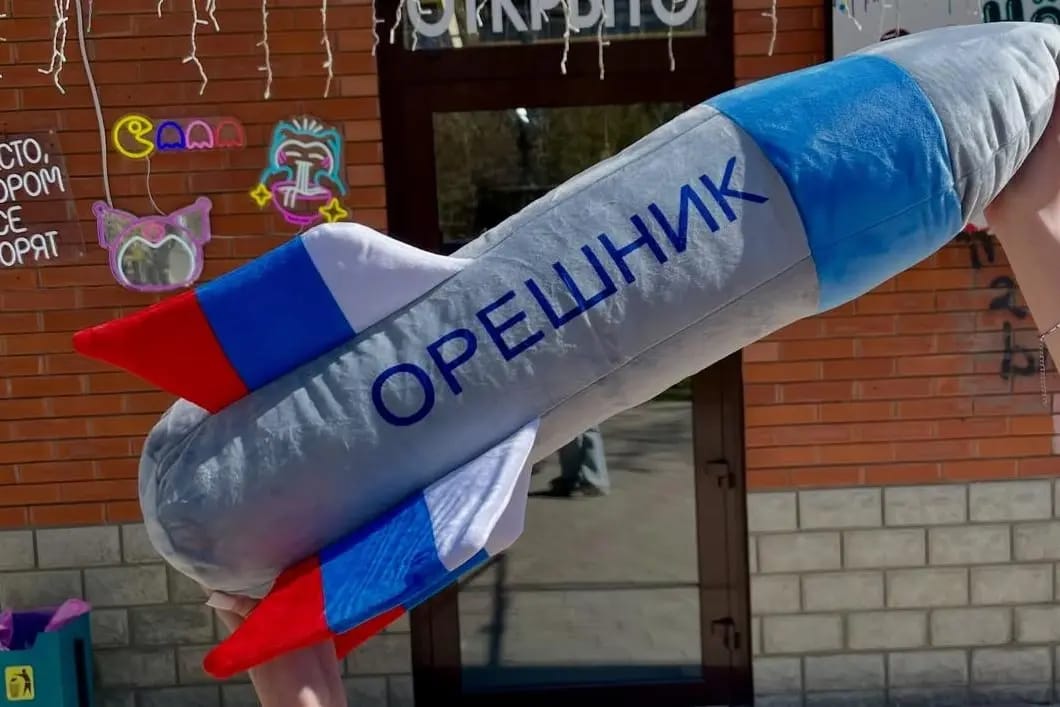
Belarus has also become a platform for Russian military signalling against Europe. Russia has deployed Iskander and Oreshnik missile systems in the country and says it has stationed tactical nuclear weapons there (although that has not been verified independently). Whether or not these weapons fundamentally change the military balance, their political purpose is clear: Belarus allows Moscow to move the physical geography of its confrontation with NATO further west and to use Belarusian territory for coercion and nuclear signalling.
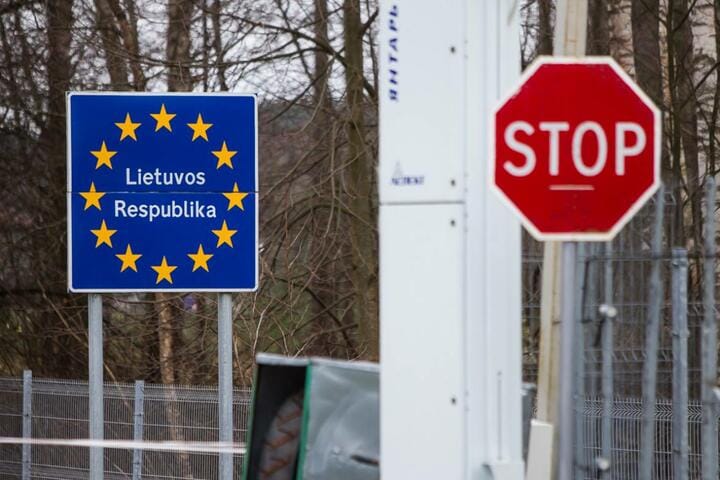
Belarus’s value in the confrontation with the West also extends beyond conventional military power. Since 2021, the Lukashenka regime has used migrants as an instrument of pressure against Poland, Lithuania, and Latvia, creating a border crisis that has never fully disappeared. More recently, Lithuania has faced repeated incursions by balloons launched from Belarus carrying contraband cigarettes. What might once have been treated simply as smuggling has repeatedly disrupted civilian aviation and forced the closure of Vilnius International Airport. Lithuanian and EU authorities have increasingly described the incidents as a hybrid threat.
This illustrates another reason Belarus is useful to Moscow: deniability. Pressure can be applied below the threshold of open military confrontation while being presented as something else — a migration problem, organised criminal activity, cigarette smuggling, or the actions of unidentified individuals. Minsk can deny responsibility and Moscow can deny involvement altogether. Yet the cumulative effect is to consume the resources of NATO states, test their borders and airspace, create uncertainty, and demonstrate their vulnerability to hybrid threats.
Belarus is therefore less likely than in 2022 to become a direct participant in the war, yet it is arguably more important to Russia’s war effort than at any point since the full-scale invasion began. Its value no longer lies primarily in the possibility that Belarusian troops might cross the Ukrainian border. It lies in the infrastructure, industrial capacity, logistics, geography, and deniability that Belarus provides. In 2022, Belarus helped Russia launch the invasion. Today, it increasingly helps Moscow sustain a long war against Ukraine — and wage a wider confrontation with the West.
For now, Ukraine has exercised restraint towards Belarus. Despite Minsk’s extensive support for Russia’s invasion, Kyiv has avoided opening a second front. That restraint reflects political as much as military calculations: attacking Belarus risks giving Lukashenka a pretext to enter the war directly, strengthening the Kremlin’s narrative of Western aggression and alienating a Belarusian society that remains overwhelmingly opposed to participating in the conflict.
But the longer the war continues, the harder that distinction may be to sustain. If Belarusian factories continue supplying components for Russian weapons, if military infrastructure on Belarusian territory becomes increasingly important for Russian operations, or if Russia launches further attacks from Belarus, Kyiv may find it more difficult to justify treating Belarus differently from Russia. That does not mean Ukrainian strikes on Belarusian military or defence-industrial facilities are imminent. However, it does mean that, from a military perspective, they become progressively easier to justify.
Lukashenka appears to understand this dilemma. His recent public insistence that Belarus should not be dragged into the war, his attempts to demonstrate some diplomatic autonomy through engagement with China and other partners, and his efforts to reassure Kyiv that Belarusian troops will not cross the border all point to the same objective: to remain indispensable to Moscow without becoming a co-belligerent in the eyes of Ukraine and the West. Whether he can continue to maintain that distinction will depend less on his rhetoric than on the extent to which Belarus becomes embedded in Russia’s ability to wage war.