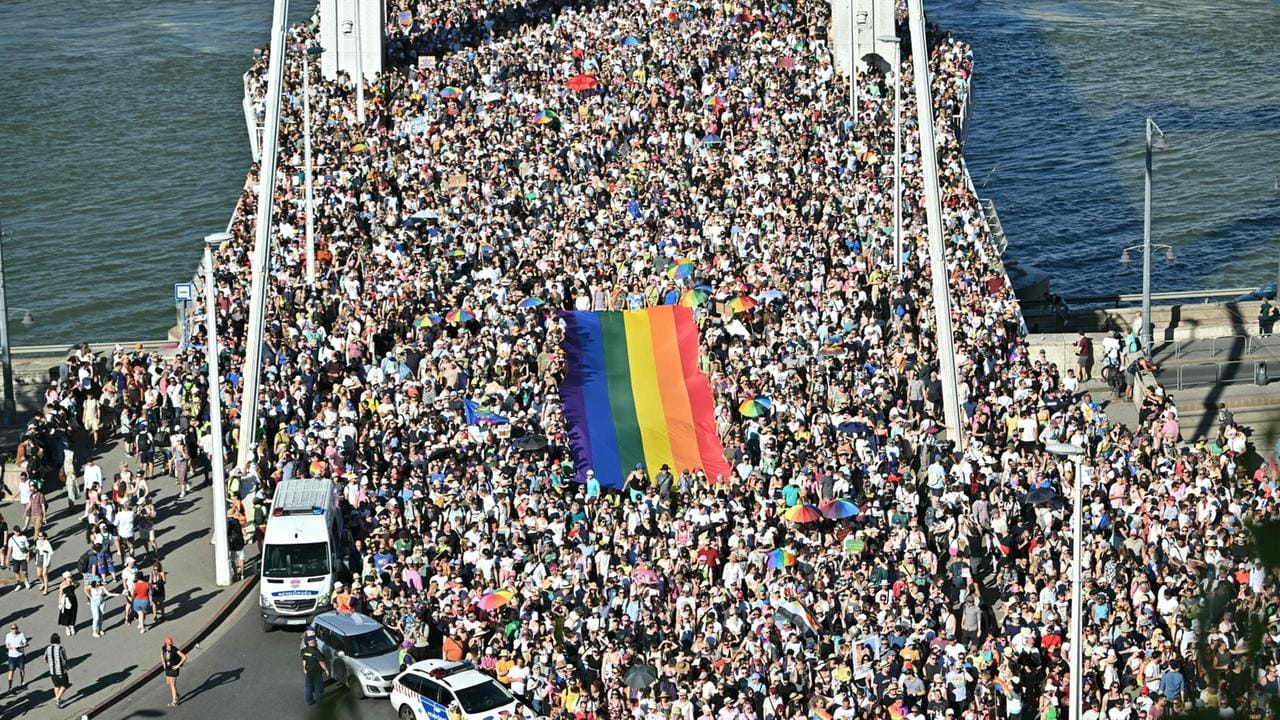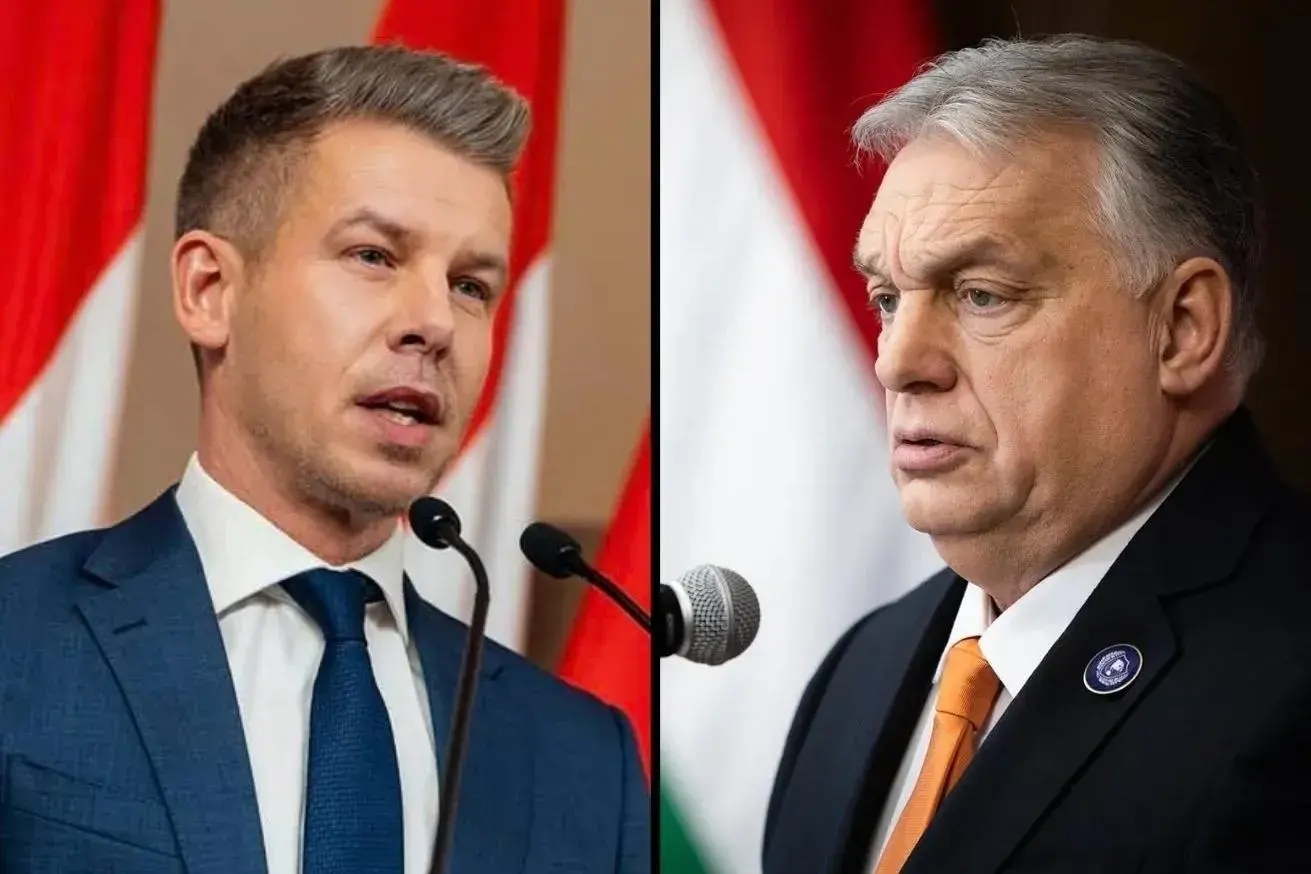
With less than a week to go before the vote, Hungary’s opposition looks set to win its first parliamentary elections in 16 years, with the Tisza party, led by Péter Magyar, holding a clear lead in the polls. Just two years after its formation, the party has effectively pushed aside the old opposition, which was weak and fragmented. Tisza has managed to win support from conservative and rural voters by focusing on citizens’ everyday problems and linking them to the failures of Viktor Orbán's government. Orbán's Fidesz party, for its part, has failed to build an effective campaign strategy, and not even the open support it receives from Donald Trump has impressed voters. If the election is conducted fairly, Tisza is almost certain to win. However, Orbán may resort to falsifying the results, a move that would pose a direct threat to democratic institutions and decision-making mechanisms across the European Union as a whole.
On April 12, Hungarians will head to the polls for parliamentary elections. Aside from the U.S. midterms that will be held this November, the vote in Hungary is widely seen as the world’s most consequential election of 2026. The country has undergone profound changes over the past 16 years of Prime Minister Viktor Orbán’s illiberal rule, but the upcoming contest could reverse that trend.
Under Orbán, Hungary has turned from a frontrunner of democratic transformation in Central Europe into a semi-authoritarian countermodel — one widely perceived by nationalist and other radical-right forces throughout the West as a blueprint for how to undermine liberal democracy and establish a system of political rule sustained by a skewed political playing field.
Of course, becoming an illiberal countermodel has its consequences: the degradation of democracy has turned Hungary into one of the poorest and most corrupt countries in the European Union, making it a Trojan horse for authoritarian great-power interests, with primary loyalties to the Kremlin, Beijing, and, since January 2025, also to the Trump administration.
In April 2026, however, a historical window of opportunity appears to be opening after 16 years of Orbán’s rule — one promising democratic change, normalization, and reorientation toward the West. With Péter Magyar’s opposition party “Respect and Freedom” (Tisza) holding a double-digit advantage in the polls, it is worth taking a broader look at the Hungarian political landscape, the campaign itself, and the international environment in which it is taking place. All of these factors will significantly influence whether Hungarian society is ultimately able to seize this democratic opportunity, or whether Hungary’s autocratization and strategic geopolitical reorientation toward the East will receive a renewed mandate under Orbán’s rule.
The “Magyar phenomenon” and the renewal of Hungarian opposition
This is not the first time that the Hungarian opposition is topping Orbán’s incumbent Fidesz party in the polls; the same happened in the late summer and early fall of 2021, during the run-up to the 2022 elections.
However, today’s Hungarian opposition could not be more different from the alternative on offer four years ago. This time, Fidesz is not facing a motley crew of small parties ranging from the radical right to progressive liberals and social democrats, entangled in infighting due to their particular interests and led by a prime ministerial candidate without a real party or power base. Instead Magyar’s Tisza is a solid, unified party led by a charismatic leader.
This time, Fidesz is not facing a motley crew of small parties — Magyar’s Tisza is a solid, unified party led by a charismatic leader
Since its establishment in early 2024, Tisza has practically wiped out Hungary’s old opposition. This has been possible for three main reasons.
First, the old opposition had suffered from a growing legitimacy crisis. After failing to pose a serious challenge to Orbán for three consecutive elections, their existence was perceived by a growing number of Hungarian citizens not as a threat to the regime, but as a guarantee of its survival.
Second, due to the country’s miserable economic growth, declining public services, and increasingly unsustainable public finances, the Orbán regime lost its authority in the economic sphere — the main reason why many voters had supported the party in the past. This his given rise to a more widespread protest-vote sentiment in Hungarian society, with millions of people eager to support any reasonably credible challenger to the regime’s continued rule.
Third, the emergence of a talented political entrepreneur fundamentally reshaped political communication and constituency-building in Hungary. Péter Magyar and Tisza succeeded where other opposition parties had failed since 2010 by building a stable support base outside Budapest and the country’s other large urban centers. They have convincingly linked the issue of strategic corruption under Fidesz to the everyday socioeconomic concerns of citizens from all walks of life.
In addition, as a moderate, center-right political force, Tisza has credibly used nationalistic mobilization and appealed to conservative voters in the countryside — something that had long remained out of the reach of progressive, urban opposition parties. This enabled Tisza to penetrate mid-sized and smaller cities — the heartland of the Fidesz electorate.
Based on polling data, Fidesz has only been able to retain its advantage in villages and rural areas, where the system of paternalistic dependencies created by the party provides both motivation and material incentives for voters.
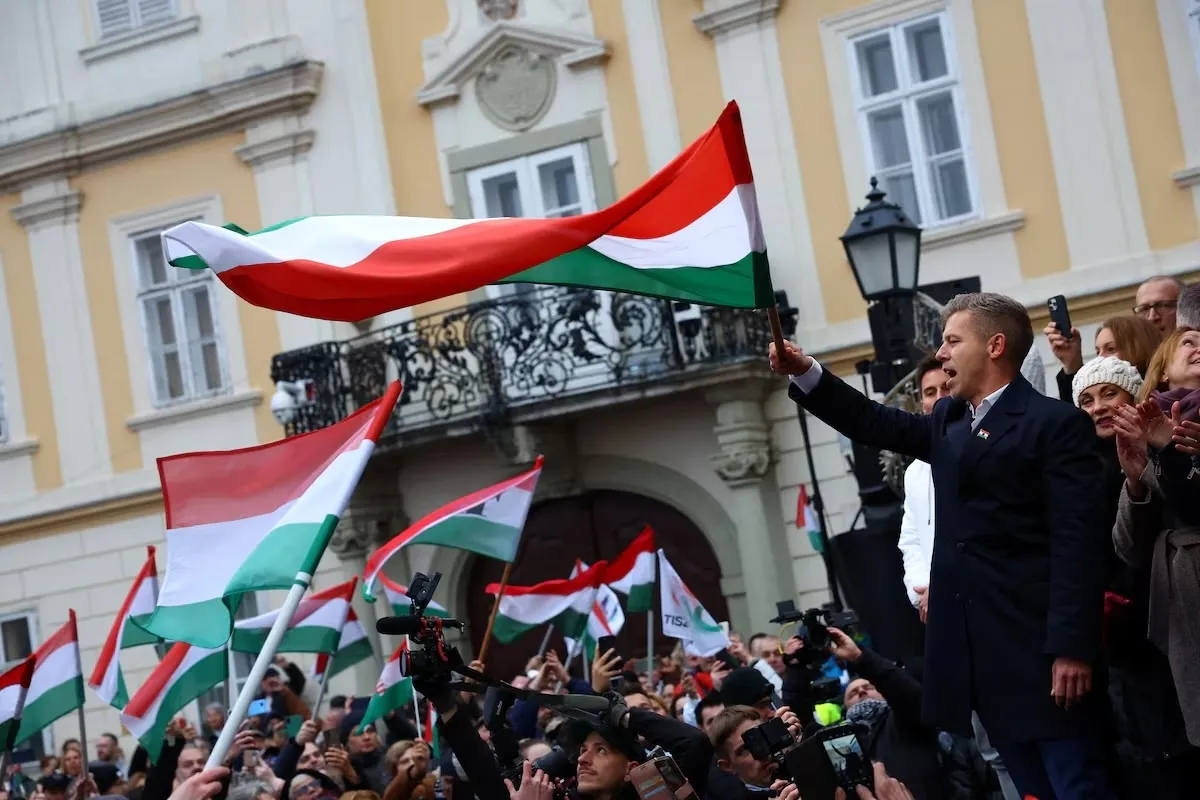
In short, the slow degradation of the regime, its poor governance, and the revival of Hungarian opposition politics have resulted in the current political opening. However, it is the skillful political performance of Tisza and Péter Magyar that could be the key factor pushing the opposition over the top in 2026 after its failure of 2022.
The take of two campaigns
The election campaigns of Tisza and Fidesz are running as if they are taking place in completely parallel realities, their respective narratives barely reflecting on each other.
The communication of Tisza has a predominantly domestic focus, revolving around the issues of corruption, the incompetence of Fidesz’s governance, economic stagnation, and the desolate state of healthcare, education, and public transportation.
In the field of European and foreign affairs, Tisza’s stated aim is the normalization of relations with Hungary’s key European and NATO allies — abandoning the veto-wielding politics of Fidesz and regaining Hungary’s status as a credible, trustworthy, and constructive player on the international stage. Based on its election manifesto, Tisza would prioritize joining the European Public Prosecutor’s Office and securing the release of suspended EU funds that were frozen due to rule-of-law deficiencies stemming from the high-level corruption of Orbán’s Hungary.
In contrast, the election campaign of Fidesz is almost exclusively internationally focused. It is based on the claim that Ukraine poses a clear threat to the sovereignty and security of Hungary, particularly in the spheres of energy supply security. The ruling party also pushes the narrative that Ukraine, various EU institutions, and the Hungarian opposition are colluding on a plan to manipulate the election results in order to bring a Ukraine-friendly government to power in Budapest. In this context, just like in 2022, the Hungarian opposition is not portrayed as an independent political actor, but is almost exclusively depicted by Fidesz propaganda outlets as a group of foreign agents and puppets. In this context, factual nuances — such as the fact that Tisza and Péter Magyar cannot actually be considered Ukraine-friendly political forces — are deliberately left aside in order not to challenge the internal coherence and argumentative logic of government propaganda.
The election campaign of Fidesz is based on the claim that Ukraine poses a clear threat to the sovereignty and security of Hungary
Since 2014, Fidesz has been campaigning on the concept that Hungary faces an external threat. That year, the “enemy” was the EU, along with international financial institutions such as the IMF. In 2018, it was the EU and the various foundations and civil society organizations linked to George Soros, which were alleged to be fueling mass migration to Europe. In 2022, the war in Europe served as the external threat, with the Hungarian opposition and the EU portrayed as colluding to drag Hungary into the fight on the side of Kyiv.
In 2026, facing the sort of domestic challenge not seen since 2006, Fidesz has reverted to its most recent successful strategy: fearmongering around the war and accusing opponents of dragging Hungary into it. The campaign has included claims that, if the opposition wins at the polls on April 12, they will be ready to send Hungarian men to the front to defend Ukraine.
However, the most interesting aspect of the Fidesz campaign is the fact that it quite simply is not working. While the sudden escalation in Hungarian–Ukrainian bilateral tensions following the hijacking of an official Ukrainian money transport on Hungarian territory threatened to derail the domestically focused Tisza campaign and communication strategy, a look at the polling numbers over the past few weeks suggests that Fidesz’s demonization of the authorities in Kyiv has not aided them domestically.
The almost exclusively Ukraine-focused campaign apparently does not resonate with Hungarian voters, and it is difficult to understand why Fidesz is apparently doubling down on a dysfunctional strategy. The ruling party remains path-dependent instead of reflecting and adapting in light of the underperformance of its campaign strategy.
The most interesting aspect of the Fidesz campaign is the fact that it quite simply is not working
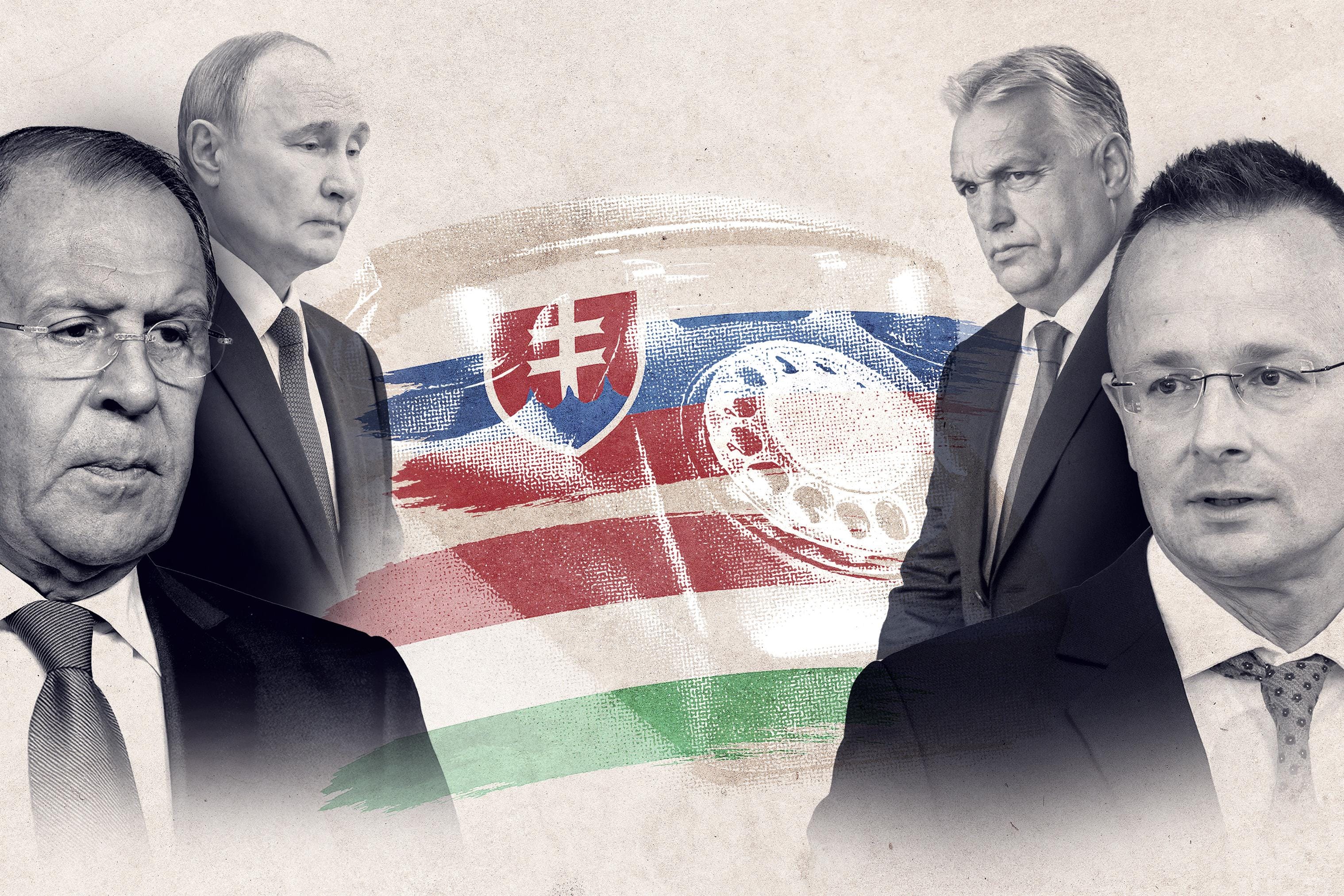
In a similar manner, while the leaked phone conversations between Russian Foreign Minister Sergei Lavrov and his Hungarian counterpart Péter Szijjártó shed light on the subservient nature of Szijjártó’s relationship with his Russian counterpart, they are unlikely to significantly change the campaign dynamics in Budapest. The leaks provided very relevant evidence, but they did not offer any fundamentally new information about Szijjártó’s diplomatic qualities. For most opposition voters, Szijjártó’s relationship with Russia amounted to betrayal even before the recordings of his conversations with Lavrov came to light, while for Fidesz voters, the Hungarian foreign minister is still seen as fighting for the country’s real interests, particularly with regard to energy supply security.
The leaks pose the greatest challenge for Szijjártó’s EU counterparts, for whom maintaining a working relationship with him will become an even more uncomfortable task in the event that Fidesz is unexpectedly re-elected.
The international environment of the Hungarian elections
There is certainly some irony in the claims of the Hungarian government, which has actively undermined and hampered Ukrainian national security ever since 2017, when Budapest started blocking NATO-Ukraine Commission meetings. Since Russia’s full-scale invasion of 2022, Hungary has regularly delayed and blocked EU financial aid packages and reimbursements for Member States under the European Peace Facility, watered down sanctions packages against Russia, and increased its fossil fuel dependency on the Kremlin, contributing to the financing of the Russian war effort.
Obviously, the halt in oil transit via the Druzhba pipeline following Russian air attacks on Jan. 27, as well as the resulting unfortunate comment of Volodymyr Zelensky’s that was widely interpreted as a personal threat to Orbán, contributed to the further deterioration in bilateral relations between Hungary and Ukraine. However, with time Kyiv also realized that this escalatory spiral runs counter to its strategic interests, as it is only feeding the Fidesz campaign.
At the EU level, the Hungarian government is currently blocking both a 90 billion euro financial aid package for Ukraine and the bloc’s 20th sanctions package against Russia. While Budapest’s actions are widely perceived as aimed at maintaining leverage over Kyiv as part of an effort to force the relaunch of oil transit via the Druzhba pipeline, in reality the Orbán government’s policies are also serving the strategic interests of the Kremlin.
The Hungarian government is blocking both a 90 billion euro financial aid package for Ukraine and the bloc’s 20th sanctions package against Russia, effectively serving the strategic interests of the Kremlin
A continuation of Fidesz rule would almost certainly mean a continuation of Budapest’s anti-Ukraine initiatives. If Orbán is able to turn the campaign around and win on April 12 without the help of massive irregularities, his main lesson learned will be that his anti-Ukrainian mobilization was successful. Moreover, the situation may be even worse in the event of an authoritarian scenario in which anti-democratic practices succeed in keeping the regime in power. In such a situation, Orbán would become further isolated from the EU mainstream and even more dependent on support and recognition from Russia, China, and the Trump administration. Considering that Russia’s overwhelming interest is to block the loan package to Ukraine, Orbán could have little choice but to continue complying with Moscow’s requests.
A reasonable reset and de-escalation in Hungarian-Ukrainian bilateral relations can only be expected in the case of an opposition victory. Tisza is certainly not a pro-Ukrainian political force, and it will clearly refrain from providing military aid to Ukraine, but a normalization of the relationship is clearly in its interest — particularly if it comes with a relaunch of oil transit via Druzhba and the development of an acceptable and realistic energy diversification plan that could allow Budapest to phase out Russian energy imports in the longer run without the risk of supply or price shocks.
Still, due to the likelihood that a Tisza victory would lead Fidesz to initiate extensive recounting and administrative remedy procedures, Ukraine’s international partners should be prepared to wait for quite some time after April 12 before the new government in Budapest is in a position to reverse Orbán-era policies.
A reasonable reset and de-escalation in Hungarian-Ukrainian bilateral relations can only be expected in the case of an opposition victory
Regarding future relations with Russia under a Tisza government, the jury is still out. Restoring relations with EU and NATO partners and withdrawing from the blockade and veto policies of the Orbán regime is a central promise of Tisza’s election manifesto. Needless to say, such a shift would certainly result in a cooling of relations with the Kremlin, making Budapest a much less attractive partner in the eyes of Vladimir Putin. The Tisza election manifesto also contains some very bold political objectives, such as the revision of the loan and construction contracts of the Paks II nuclear power plant project. Furthermore, Tisza’s candidate for foreign minister, Anita Orbán (no relation to the prime minister), calls for energy diversification away from Russian sources.
However, even a hypothetical Péter Magyar-led government would not be interested in an abrupt cut of energy relations with Russia, as this could cause supply security issues, particularly in the area of natural gas. Budapest’s interest will remain a managed phase-out of Russian fossil fuel energy, which in some way requires a minimum level of cooperation from Russia. This reality will continue to provide certain leverage for the Kremlin, resulting in a pragmatic rather than overtly anti-Russian foreign policy under a new government in Budapest.
Even a hypothetical Péter Magyar-led government would not be interested in an abrupt cut of energy relations with Russia
The same pragmatism can be expected toward the Trump administration. While the current White House has repeatedly endorsed Prime Minister Orbán during the election campaign, it is clear that the Hungarian public is not impressed by international support for the Orbán regime, whether originating from the European radical-right Patriot party family or from the MAGA universe in the United States. A new Hungarian government will remain dependent on the U.S. — not only as a security provider within NATO, but also as an energy partner during the process of diversification away from Russian resources.
Furthermore, American stakeholders outside the ideologically motivated core of the Trump administration (which views Orbán as a key ideological ally in weakening EU unity) may also recognize that on many issues such as China, a Tisza government may be much more aligned with U.S. strategic interests than the Orbán regime has been. This may be one reason why Washington is not going beyond symbolic endorsements of Orbán and is not betting all its cards on a potentially losing alternative.
The uneven playing field
With all these strategic calculi in mind, the main question of the Hungarian elections is whether the process will remain reasonably free. Hungary had its last free and fair election sixteen years ago, in 2010, and since then, official election observation missions of OSCE-ODIHR have consistently labelled Hungarian elections as “free but not fair.”
However, in contrast to previous elections, this time dissatisfaction with the Orbán regime appears to be high enough that not even the tilted playing field will be enough to save Fidesz from its political fate.
The first-past-the-post electoral system in single-member districts, along with the so-called “winner compensation” mechanism, provides extra advantages to the political party with the most overall support. In recent cycles, this has been Fidesz; however, based on current polling data, it is now Tisza. The situation is also less clear regarding the gerrymandered nature of the districts. This used to provide a 5% advantage for Fidesz as long as its opponent was a largely urbanized, progressive movement. But when faced with a centrist, conservative, right-leaning political opponent that is able to make inroads into the traditionally Fidesz-dominated countryside, the impact of gerrymandering may also be lower than in the past. Mail ballots from ethnic Hungarians in neighboring countries will continue to serve Fidesz well, as will campaign regulations and political control over the billboard market, but this will not undercut a Tisza government majority provided that the party is able to win with at least a 7% percentage point advantage.
Against this background, if the elections remain free, a democratic change in government is likely. In light of the level of state capture and the amount of public resources placed under partisan control in the form of private foundations, one could conclude that Prime Minister Orbán could risk losing an election while keeping the option open for a democratic return. However, due to their entanglement in high-level corruption, a central question for many oligarchs and acolytes of the regime is whether a change in government would result in their prosecution. With Fidesz-related oligarchs already moving their assets out of Hungary, this is evidently an existential question for many of them. Under these circumstances, it cannot be excluded that the April 12 Hungarian election might become the European Union’s first ever rigged election, with far-reaching consequences for the democratic integrity and decision-making processes of the bloc.
It cannot be excluded that the April 12 vote in Hungary might become the European Union’s first ever rigged election
In such a scenario, reactions from both Brussels and Hungarian society will be crucial in determining Hungary’s future trajectory — democratic or authoritarian. For EU stakeholders, it is essential that they prepare for such an eventuality. Regarding Hungarian society, it is equally essential that any attempts at authoritarian election manipulation face determined social opposition and widespread protests. What opposition politicians need to understand in such a context is that they are entering a marathon.
Prime Minister Orbán may have learned from his close partners in places like Georgia and Serbia that even the most intense social protests can be effectively weathered by incumbents — provided that they have sufficient stamina and external support. This will likely be Orbán’s strategy as well. There will certainly be no Ukrainian-style Maidan revolution in Hungary, as neither Hungarian society nor the police or military will be prepared and motivated to use force.
Therefore, months of Serbia-like peaceful protests are the most likely outcome in the event of election fraud (or of a constitutional coup d’état). Such a movement will only be able to steer Hungary back onto a democratic path if its demonstrations of popular legitimacy are sufficiently strong, determined, and sustained domestically, and if it is accompanied by EU pressure exerted on Orbán in the event that he makes the wrong decision at this critical historical juncture.