A new crisis in relations between Israel and Ukraine has erupted over shipments of wheat taken from occupied Ukrainian territories. Kyiv accused Israelis of buying stolen grain and threatened sanctions. The EU, whose relations with the Jewish state have become increasingly strained in recent years, backed the threat. The affair also carries serious economic implications, given that Israel imports 90% of the wheat consumed in the country. Much of it comes from Russia. The grain scandal could become a major obstacle to the diplomatic and political thaw that had only just begun between Kyiv and Jerusalem.
Stolen grain
The Israeli port of Ashdod has unilaterally decided to stop receiving vessels from Russia and Ukraine. The chairman of the port’s operating company sent a letter to Israel’s National Security Council and published it in the Israeli outlet Globes.
The port will refuse entry to vessels if they meet one of four criteria: the ship sails under a Russian flag; it has a Russian name, even if registered in another country; it called at a Russian or Ukrainian port on its way to Israel; and/or it is carrying cargo originating from Russia or Ukraine.
The letter states that the proposed policy contradicts the company’s legal obligation “to provide port services to all who request them.” At the same time, it notes that receiving such vessels could expose the port and its executives to criminal prosecution and sanctions from the European Union and Ukraine. The port is asking the National Maritime Administration for guidance on how to avoid such liability, thereby shifting responsibility to the state.
The port made the decision following a scandal involving two vessels that arrived in Israel. According to Kyiv, they were carrying grain from Ukrainian territories occupied by Russia.
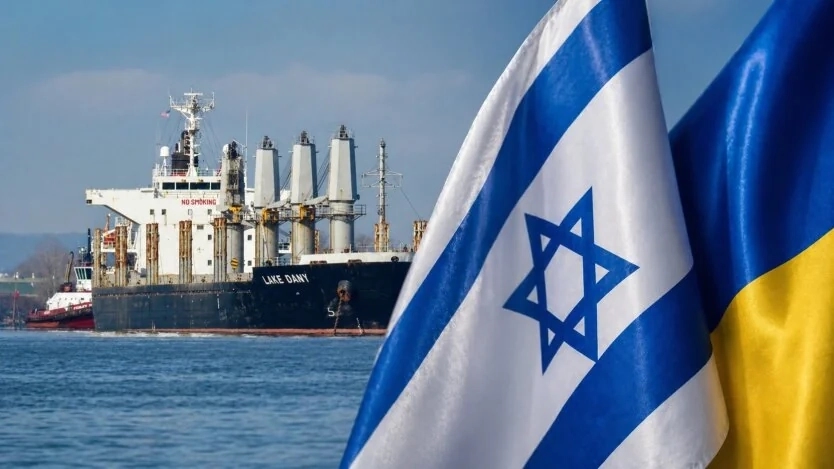
The first vessel, the Abinsk, carrying 43,700 tons of wheat, was unloaded at the port of Haifa in mid-April and returned to Russia despite repeated requests from Ukraine to detain the bulk carrier. According to Kyiv, part of the wheat came from Sevastopol and Berdyansk.
Israeli journalist Barak Ravid claims that at the end of March, Ukraine’s ambassador to Israel, Yevhen Korniychuk, met with senior officials at Israel’s Foreign Ministry. The diplomat allegedly provided information about the vessel and warned that its entry into port amounted to a violation of international sanctions. A request for legal assistance was also submitted.
On April 26, two weeks after the Abinsk, another grain vessel anchored off the coast of Haifa. This time it was the Greek bulk carrier Panormitis sailing under the Panamanian flag. According to Myrotvorets, part of the cargo – 6,087 tons of barley and 954 tons of wheat – had been transported from occupied Berdyansk aboard the Leonid Pestrikov and transferred to the Greek vessel.
This time Kyiv reacted even more sharply. A note of protest was delivered to Israel’s ambassador to Ukraine, Michael Brodsky. Foreign Minister Andrii Sybiha publicly expressed dissatisfaction with Israel’s actions on social media, while President Volodymyr Zelenskyy announced preparations for a sanctions package against carriers and companies involved in trading such grain. “The Israeli authorities cannot fail to know which vessels and what cargo are arriving at the country’s ports,” he wrote.
The European Union also warned Israel that it was prepared to impose sanctions on those facilitating the trade in Ukrainian grain. “We condemn all actions that help finance Russia’s illegal military activities and circumvent EU sanctions. We are prepared to stop such actions by placing, if necessary, people and legal entities from third countries on sanctions lists,” a European Commission representative told Euronews.
For his part, Israeli Foreign Minister Gideon Sa'ar accused the Ukrainian side of engaging in “Twitter diplomacy.” He said diplomatic relations between friendly countries are not conducted through social media. In addition, according to him, the vessel had not yet docked or submitted its customs declarations, making it impossible to verify the accuracy of the claims.
Israeli Foreign Minister Gideon Sa'ar said diplomatic relations between friendly countries are not conducted through social media
As Ambassador Michael Brodsky later explained, the Ukrainian request “contained significant factual gaps and did not include any supporting evidence.” According to him, Israeli police asked the Ukrainian prosecutor’s office to provide additional information.
The Panormitis left Haifa without entering the port after the Israeli grain importer Tzenziper stated that, in light of the circumstances, it was forced to postpone unloading the vessel.
However, the story did not end there. The Ukrainian embassy in Israel filed complaints with Israeli police against Tzenziperand another company, Dizengoff Trading Company, which had received cargo from the Abinsk. According to reports in the Israeli media, the allegations concern document forgery, false declarations of origin, fraud, and money laundering. At the same time, Kyiv appealed to the EU to consider sanctions against the Israeli companies.
“As with other importers in the industry, we were surprised to learn about this issue [the stolen grain], and we are awaiting instructions from the relevant authorities in Israel. Our company operates in accordance with generally accepted international trade standards, and we possess all the necessary documentation,” Dizengoff Trading Company said. The company also stated that it has no new orders for Russian wheat.
Ukraine’s ambassador to Israel, Yevhen Korniychuk, reportedon May 7 that Israel’s largest agricultural importers had approached the embassy with a request to sign a memorandum of cooperation. The document would make it possible to prevent grain stolen by Russia from being supplied to Israel. According to the ambassador, the key factor behind the request was the threat of sanctions-related risks.
“We believe this is a step forward, a leap forward, because the association of major importers complained that over the past two weeks the Israeli government has been unable to provide them with guidance on how to act in this situation,” Korniychuk noted.
According to remarks by Kateryna Yaresko, grain from occupied territories is shipped to Israel quite frequently. But proving it is difficult because the port of origin is listed as Port Kavkaz in Russia’s Krasnodar Territory. That was the case with both vessels that arrived in Haifa in April.
According to an investigation published in late April by the Israeli newspaper Haaretz, in 2023 – about a year after the full-scale invasion of Ukraine by Russian forces – at least two vessels carrying stolen grain arrived in Israel, and at least one of them was unloaded.
Haaretz also identified seven more vessels that unloaded wheat in Israel in 2023 after taking cargo from unidentified ships near the Russian-controlled Kerch Strait. The ship-to-ship transfers were carried out with the AIS tracking system switched off. The available information does not make it possible to determine the origin of the wheat they transported. This year, according to the newspaper, four shipments of stolen Ukrainian grain have already been unloaded in Israel, including the cargo from the Abinsk. The vessels unloaded in Ashdod and Haifa.
The threat of European sanctions could have serious economic consequences for Israel in addition to legal ones, given that the country imports 90% of the grain it consumes. According to Globes, Russia has supplied more than 40% of that volume in recent years. Ukraine, which was the main supplier before the Russian invasion, accounted for a much smaller share in 2025.
Israel imports 90% of the grain consumed in the country, most of it from Russia
According to an analytical report by the U.S. Department of Agriculture, the situation is even more critical: about 70–80% of imported wheat comes from Russia. Ukraine and Romania rank next among exporters. The report notes that imports of Ukrainian wheat have declined over the past four years as Kyiv increased shipments to European countries.
At the same time, the Israeli government has repeatedly spoken of its desire to purchase more non-Black Sea wheat in order to diversify imports. Nevertheless, supplies from Russia, Ukraine, and Romania remain the most economically advantageous.
In this context, the proposal by Ukraine’s chief rabbi, Moshe Reuven Asman, who sent a letter to Israel’s economy minister Nir Barkat urging him to reconsider procurement policy and abandon Russian grain in favor of American wheat, appears unrealistic.
According to the U.S. Department of Agriculture, American wheat has historically cost Israel at least $25 more per ton than Black Sea wheat, while shipping from the United States could add up to another $25 per ton compared with freight costs from the Black Sea basin. As a result, the price advantage of Russian and other Black Sea wheat could reach about $50 per ton – nearly 20% given an average price of $260–280 per ton. This significantly limits imports from the United States.
Political background
The grain dispute also has a political dimension. At the very least, it is another problem in relations between Israel and the European Union, which have already become highly strained in recent months. This is evident from the EU sanctions recently imposed on Israeli settlers in the West Bank.
In April, several European countries, including Spain and Ireland, once again attempted to suspend the EU–Israel Association Agreement. However, as before, no consensus was reached on the issue. Such efforts have been ongoing since 2024. Initially, they were prompted by Israel’s actions in the Gaza Strip during the war with the terrorist group Hamas. The latest debates are linked to rising violence against Palestinians in the West Bank and Israel’s adoption of a law introducing the death penalty for terrorists, which also applies to Palestinians.

EU foreign policy chief Kaja Kallas said there was insufficient support to suspend the agreement, though discussions on relations with Israel would continue. She promised to raise the concerns voiced by European ministers with the EU trade commissioner.
Last September, the European Commission had already proposed freezing some of the trade-related provisions of the Association Agreement. Such a move would require the backing of 15 of the EU’s 27 member states. Suspending the agreement entirely, however, would require unanimous approval from all EU countries. At the same time, the European Union remains Israel’s largest trading partner: trade in goods between them totaled €42.6 billion in 2024.
Against this backdrop, the Kyiv Post quoted a senior Israeli official who pointed to the timing of the uproar over the grain scandal alongside what he described as an “EU-orchestrated campaign” against Israel amid worsening tensions between Jerusalem and Brussels, as well as the EU’s approval of another €90 billion loan package for Ukraine over two years. More broadly, the newspaper reported that some Israeli officials were caught off guard by the intensity of Kyiv’s reaction. However, there is no direct evidence linking these developments beyond their coincidence in time.
Kyiv had previously raised the issue of grain shipments to Israel that Ukraine considers stolen. According to Ynet, the first known episode dates back to September 2024. At the time, following diplomatic pressure from Ukraine, Israel halted the purchases. But until this April, Kyiv had not mounted a large-scale public campaign, including social media posts by the foreign minister and president. The implication is that without public pressure and the threat of sanctions, Kyiv would have achieved little from Jerusalem. Even now, the initiative ultimately came from importers and the port authorities rather than from the state itself.
War of resolutions
Notably, the grain dispute erupted just as relations between Jerusalem and Kyiv appeared to be thawing. In February, Israel voted in the UN General Assembly for a resolution supporting Ukraine’s sovereignty, independence, and territorial integrity, even as the United States abstained.
Only a year earlier, in February 2025, Israel had voted alongside the United States and Russia against a Ukrainian-backed resolution. It marked just the second time since the start of Russia’s full-scale invasion that the Jewish state opposed a Ukrainian proposal.
In November 2022, Israel abstained on a resolution establishing a mechanism to compensate Ukraine for damages caused by Russian aggression, while the United States and most Western countries voted in favor. Israeli media noted at the time that the vote reflected frustration in Jerusalem after Kyiv once again backed an anti-Israel resolution at the UN.
Even before 2022, Jerusalem did not always act as Kyiv had hoped. In March 2014, Israel did not participate in the UN General Assembly vote on a resolution affirming Ukraine’s territorial integrity following the annexation of Crimea. Officially, the absence was attributed to a strike by employees of Israel’s Foreign Ministry. But U.S. officials said at the time they were surprised by Israel’s absence from the vote.
As for Kyiv’s own position, Ambassador Michael Brodsky said in 2023 that Ukraine supported anti-Israel resolutions in the UN Security Council in 90% of cases, calling it an “abnormal situation.”
In 2023, Israel’s ambassador to Kyiv said that Ukraine supported anti-Israel resolutions in the UN Security Council in 90% of cases
This February, however, Israel made a point of voting in support of Ukraine at the instruction of Foreign Minister Gideon Sa'ar. More broadly, relations between Jerusalem and Kyiv appeared to become more trusting under Sa’ar. Last July, he paid an official visit to Ukraine, where he met with President Volodymyr Zelenskyy and Ukraine’s foreign minister. The sides agreed to launch a strategic dialogue on the Iranian threat.
The visit came a month following the Twelve-Day War between Israel and Iran. Officials in Jerusalem repeatedly stressed that the conflict also served Kyiv’s interests. In particular, after the killing of IRGC Aerospace Force commander Amir Ali Hajizadeh, Ambassador Michael Brodsky recalled that in 2020 the Iranian general spent three days insisting that the Ukraine International Airlines flight traveling from Tehran to Kyiv “had not been shot down by IRGC air defense forces but had supposedly ‘crashed due to technical reasons.’”
“It turns out that Israel today thus avenged both the UIA flight and the other victims of Hajizadeh,” Israel’s ambassador to Ukraine wrote.
Weapons: for and against
Another persistent source of friction between Israel and Ukraine was the issue of arms supplies. After the outbreak of the war, Israel provided Ukraine with humanitarian aid, helmets and body armor for medical personnel, and opened a field hospital. But from the very first months of the invasion, Kyiv sought from Jerusalem not only humanitarian assistance but also air defense systems capable of protecting Ukrainian cities from Russian missiles and Iranian drones.
In June 2022, Ukraine’s ambassador to Israel, Yevhen Korniychuk, openly stated that Kyiv wanted to purchase Israel’s Iron Dome missile defense system. Ukraine also asked Jerusalem to authorize Berlin to transfer Spike anti-tank missiles to Kyiv, since they are manufactured under Israeli technology and license. The request was later repeated and expanded. Some of the systems Ukraine sought, however, had not yet entered operational service.
Israel avoided complying with the requests, primarily out of concern that a confrontation with Russia could undermine Israeli security interests in Syria. After the fall of the regime of Bashar al-Assad in December 2024 and the sharp reduction of Russia’s military presence in Syria, the situation began to shift. In January 2025, the Israeli Air Force transferred around 90 MIM-104 Patriot air defense systems from storage facilities in Israel to Poland for onward delivery to Ukraine.
At the same time, according to Axios, Jerusalem informed Moscow in advance about the move and stressed that it was “only returning the Patriot system to the United States,” rather than supplying weapons to Ukraine. Israeli officials reportedly argued that the step mirrored Washington’s decision two years earlier, when Ukraine received American artillery shells from stockpiles stored in Israel.
Another example was Belgium’s purchase of 15 FlakpanzerGepard systems for Ukraine from OIP Land Systems, a company linked to Elbit Systems. Details of the deal were published in April 2026. Formally, these were not direct Israeli arms deliveries, but some level of military-technical cooperation was clearly present, albeit in an extremely cautious form.
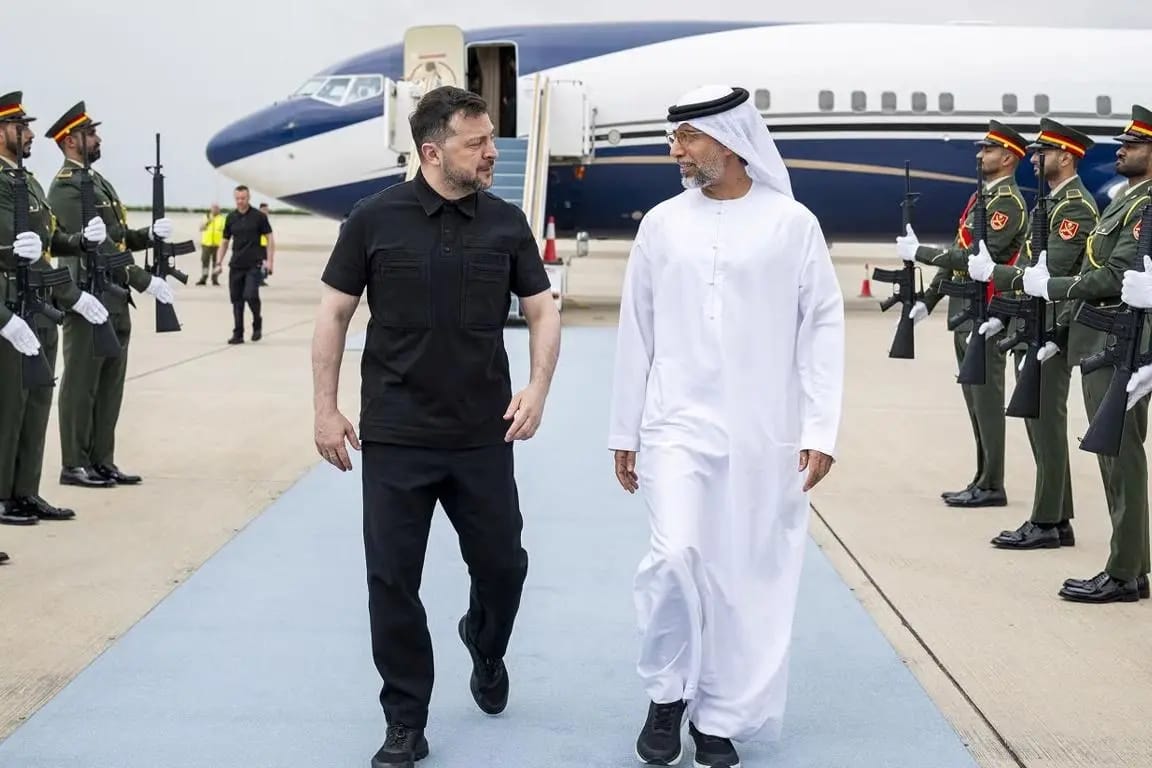
Particularly revealing was Volodymyr Zelenskyy’s trip to the Middle East in late March 2026. The visit took place during the war with Iran and resulted in agreements between Ukraine and several Arab states on defense cooperation, including cooperation in countering drone attacks. Zelensky did not visit Israel. Asked why by Israel’s Channel 12, the Ukrainian president replied that he had “received no information” from either Prime Minister Benjamin Netanyahu or President Isaac Herzog since the start of the war with Iran.
Earlier reports said Netanyahu had sought to arrange a phone call with Zelensky, reportedly to discuss protection against Iranian drones. Although Zelensky agreed, Netanyahu never followed through, according to Channel 12. The last conversation between the two leaders took place in January 2025. “I have the impression that the prime minister is always trying to balance between Russia and Ukraine. And even when Russia is helping Iran, I feel that the prime minister is still trying to find a balance,” Zelensky said of Netanyahu.
Israeli officials may also have viewed with some unease the growing demand among Gulf monarchies for Ukrainian military expertise. A similar reaction may follow Zelensky’s recent visit to Azerbaijan, with which Israel maintains particularly close ties, including in the sphere of military-technical cooperation. Ukraine and Azerbaijan signed six agreements, and Zelensky made clear that their primary focus was cooperation in the defense-industrial sector, with energy taking a secondary role.
Still, this does not mean that Baku will be forced to choose between Kyiv and Jerusalem. Nor does it mean that relations between Israel and Ukraine have stopped developing despite the tensions. For Ukraine, however, Israel’s attitude toward Russia remains a fundamental issue.
“As we can now see, this thaw did not touch the core issue: Israel has still not changed its basic approach to the sanctions regime against Russia and to issues where its own commercial interests intersect with those of Ukraine,” writes Ihor Semivolos.
Israel, for its part, has no intention of sacrificing either its economic or strategic interests for anyone else. At the same time, opinions within Israel differ significantly over the necessity of cooperating with Russia.
Israel has no intention of sacrificing either its economic or strategic interests for anyone else
The official Israeli line toward the Kremlin shifted from openly warm before the war in Ukraine to markedly more cautious after it began. That position was shaped by Russia’s military presence in Syria under Bashar al-Assad, Moscow’s ties with Tehran, Russia’s contacts with Palestinian groups including Hamas and Lebanon’s Hezbollah, and, more broadly, Russia’s influence across the Middle East.
Jerusalem also relied on Moscow during efforts to secure the release of Israeli hostages from the Gaza Strip. For that reason, Israel has no intention of slamming the door on relations with Russia – at least not under the current government led by Benjamin Netanyahu, who is widely seen as having close personal ties with Vladimir Putin.
At the same time, Israeli think tanks and media outlets have increasingly voiced differing views in recent years, especially after Russia began using Iranian drones against Ukraine and Moscow and Tehran deepened their military cooperation. The think tank Mitvim wrote that Israel’s policy of “sitting on the fence” was becoming ever harder to justify. Experts at the Institute for National Security Studies argued that Israel could respond more forcefully than in the past to hostile actions by Moscow while still carefully avoiding the risk of a broader confrontation.