
A year after being elected German chancellor, Friedrich Merz has transformed from a presumed ally of Donald Trump’s into a leading figure in Europe’s confrontation with the United States. German-American relations — and U.S.-European relations more broadly — have sunk to their lowest point in decades. In practice, it turned out that, for Trump and Merz, “chemistry,” shared biographies, and a commitment to Euro-Atlanticism were not enough to guarantee successful cooperation. By the standards of the MAGA movement, the conservatism of Merz, often criticized at home for his rightward leanings, is practically left-wing. Merz’s Germany is heading in a different direction from Trump’s America.
A time of hope
Over the years of his active political career — and also during his forced absence from politics following a sharp conflict with Merkel — Merz has grown accustomed to accusations of being excessively pro-American and overly devoted to Euro-Atlanticism, charges frequently repeated by his opponents. These criticisms are largely subjective. Still, it is indeed difficult to find another contemporary senior German politician with such close ties to the United States.
Between 2009 and 2021, Merz held prominent positions in major American companies, from chairman of the supervisory board of the German branch of BlackRock, the world’s largest asset manager, to senior partner at the legal giant Mayer Brown.
For ten years, Merz also headed the NGO Atlantik-Brücke (“Atlantic Bridge”), the leading lobbyist for German-American cooperation from politics and economics to cultural and academic exchange.
In February 2025, just days before snap Bundestag elections, Merz, who was then the chairman of the CDU/CSU parliamentary faction and a candidate for chancellor — wrote on the organization’s website about the “opportunities and possibilities” presented by Donald Trump’s second presidency. The article spoke of opening a new chapter in U.S.-European relations, jointly responding to global challenges, and building a positive Euro-Atlantic agenda.
Merz was being sincere. Both as a politician and as a person, he took shape within a worldview that saw America as an unquestioned symbol of freedom and the principal defender of the Western world and its values. For a committed conservative and Euro-Atlanticist, Trumpism was a “system malfunction,” an “alien America” that American democracy would ultimately overcome. Merz harbored no illusions, but he also fully understood the kind of partners he would have to work with.
For the committed conservative and Euro-Atlanticist Merz, Trumpism was a “system malfunction”
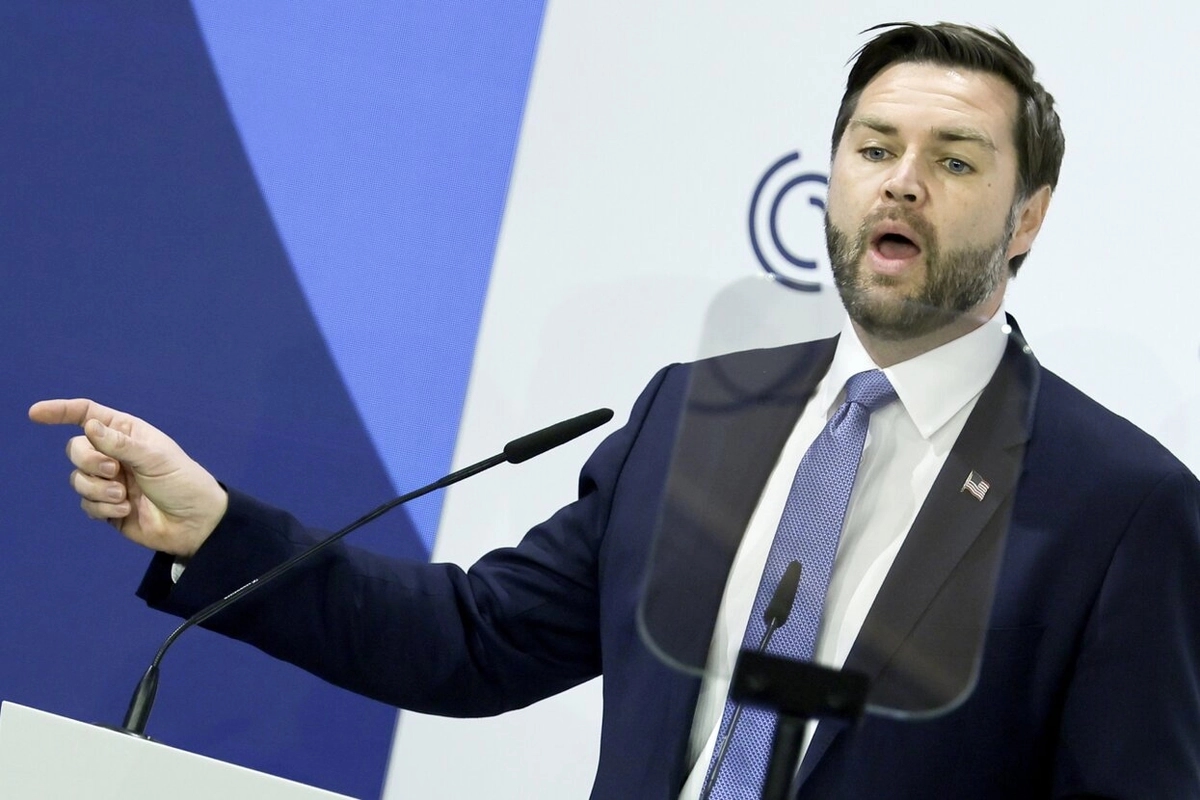
Also in February 2025, U.S. Vice President JD Vance was remarkably candid at the Munich Security Conference, claiming Europe had become something close to a “suicide club,” “destroying” itself through mass migration and “violations” of free speech. In his first interview after polling stations closed and exit poll results were announced, Merz, responding to a question about Trump. He replied: “The fate of Europe is, by and large, of no concern to him.”
At the same time, Merz understood that Germany – dependent on the United States politically, militarily, and to a large extent economically – still needed to establish workable relations with the difficult occupant in the White House.
There were even grounds for optimism. Many observers believed the two leaders had quite a few points of commonality. Merz not only speaks flawless English, but thanks to his experience and personal ties within the American establishment, he understands how the U.S. political and business elite functions – the very environment from which Trump emerged.
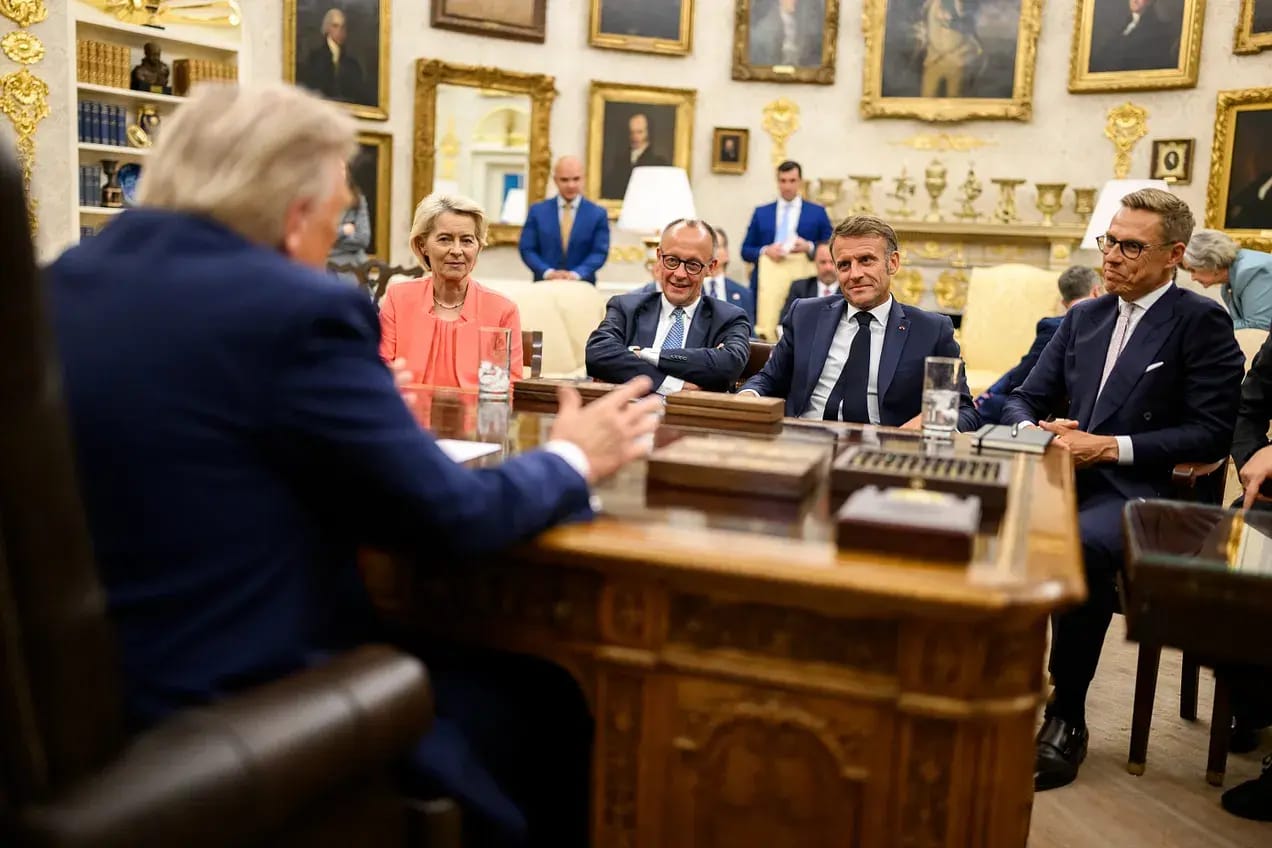
At first glance, the approach seemed to be working. The first months of contacts were successful for Germany. Following the two leaders’ first phone call and their meeting in Washington in June 2025, the press showered Merz with praise, highlighting the harmonious and almost friendly atmosphere.
Merz was granted permission to stay overnight at Blair House, the official guest residence of the U.S. president. Informally, this is considered a gesture of the highest regard toward a guest. Trump also appeared genuinely pleased with the chancellor’s gift – the birth certificate of his grandfather, Friedrich Drumpf (the original German spelling of the surname), from the town of Kallstadt, now located in the German state of Rhineland-Palatinate.
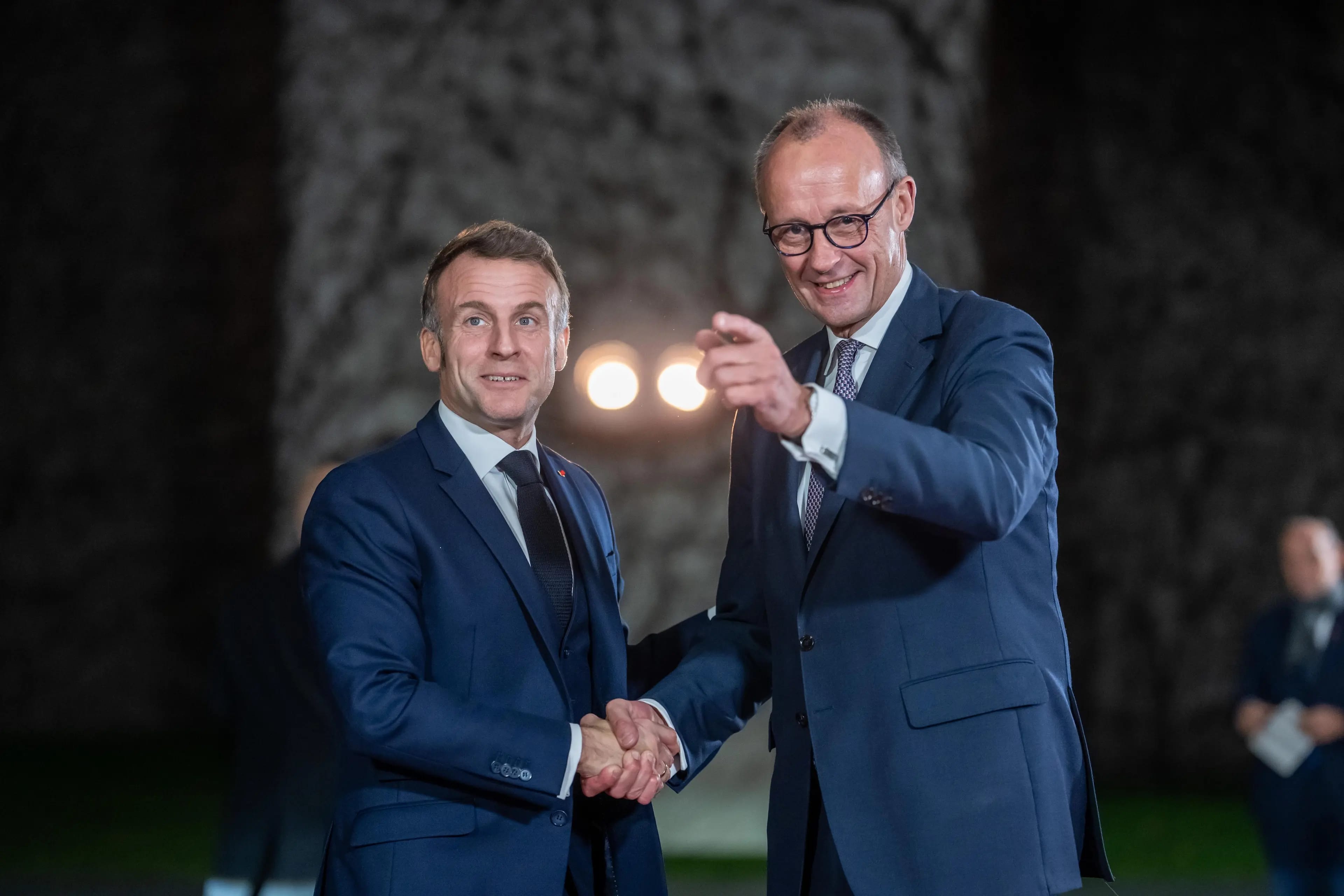
The chancellor combined displays of friendliness and a willingness to listen to his counterpart, albeit with a certain degree of firmness on key issues. With this strategy, Merz appeared far more successful than French President Emmanuel Macron, whose visit to Washington several months earlier critics had almost unanimously deemed a failure.
The chancellor chose a mixed approach: displays of friendliness combined with a certain firmness on key issues
Progress appeared to be emerging in all four areas of cooperation most important to Berlin: tariffs, access to the American market, support for Ukraine, and the strengthening of NATO unity. Germany’s government and parliament removed defense and security spending from the constitutional fiscal restrictions known as the “debt brake,” making it possible to sharply increase the defense budget. This was a step toward meeting Trump’s demands.
In August 2025, the EU and the United States concluded a temporary trade agreement. Despite justified criticism of some of its provisions, the document still protected the German auto industry from astronomical American tariffs. Merz played the central role in securing the deal.
It seemed that the worst was over and that the new chancellor had indeed managed to find the key to a mutually beneficial format of interaction between Berlin and Washington. Trump described Merz as “a very respected man,” about the highest form of praise the American president appeared capable of offering a genuinely democratic European leader.
Confrontation
The German-American honeymoon did not last long. By late summer of last year, Washington was already accusing the Europeans of violating the “tariff” deal and threatening to raise duties. In fact, the White House continues to do so to this day, periodically issuing ultimatums to the EU.
On the issue of Ukraine, Trump has displayed striking inconsistency, at times promising new sanctions against Russia and at others meeting with Putin and blaming not Moscow but Kyiv for an “unwillingness to make a deal.” Merz and other European leaders found themselves accompanying Volodymyr Zelensky to Washington in order to avoid a repeat of the scandal that occurred during the Ukrainian president’s previous visit.
The White House has also openly questioned the value of continuing to uphold its commitments within NATO. Prominent American politicians openly support the European far right, while the new U.S. National Security Strategy directly stated that present-day Europe could not be considered a reliable ally of America.
In Germany, the message was understood. Even journalists from conservative publications wrote quite bluntly that the American document was openly hostile to the European Union. Some even predicted that, under a worst-case scenario, “Europe would face two adversaries” – Moscow and Washington.
Merz found himself in a difficult position. On the one hand, he did not want to lose his communication channel with Trump and thus tried to preserve the remnants of their former understanding. He stated that certain elements of the current U.S. foreign policy course “can be understood,” while others are “unacceptable from a European point of view.”
On the other hand, the chancellor was under both domestic political and European pressure. By the autumn of 2025, he was already facing falling approval ratings, serious problems within the ruling coalition, and even pushback from within his own party. In addition, Germany’s European partners expected him to strengthen the country’s role in world affairs – one of Merz’s central campaign promises. Passivity would have been politically disastrous.
And so the chancellor struck back. “With great regret,” he noted that the United States “has changed so fundamentally that it no longer follows the rules; it calls freedom of speech into question and represses the independence of the judiciary.” Driving the point home, Merz acknowledged: “Today, authoritarian political systems are no longer the only ones in the world questioning the rules-based international order and adherence to international law. Unfortunately, this also applies to America.”
A logical continuation of these remarks came in another statement by the chancellor, in which he concluded that Pax Americana, in its familiar form, no longer exists. Europeans, he argued, must recognize the “fundamental changes in transatlantic relations.”
Chancellor Merz concluded that Pax Americana, in its familiar form, no longer exists
The new year of 2026 brought the most severe crisis seen within the Western world in decades: the Greenland affair. Even committed critics of Trump did not expect such an intensity of passions and such undisguised expansionism from Washington, including a readiness for the forceful annexation of the Danish island — even at the expense of an armed confrontation with allies.
At the beginning of the conflict, Merz tried to avoid sharp statements. He said that he shared American “concerns regarding Greenland’s security,” dispatching two his vice chancellor and foreign minister to Washington.
As the situation developed, it was not politicians who traveled to Greenland, but European soldiers, including German troops. Merz’s next statement was: “Denmark and Greenland can count on us.” A month later in Munich – on the same stage where Vance had listed all of Washington’s grievances against Brussels a year earlier – the German chancellor noted the existence of a “deep abyss between Europe and the United States.”
Another source of tension between Germany and the United States – and to a large extent between Merz and Trump personally – was Berlin’s assessment of Washington’s military operations against Venezuela and Iran. For Germany, Venezuela was a distant periphery, and the country’s then-leader Nicolás Maduro did not inspire a shred of sympathy within the German establishment. As a result, Merz clearly did not want to quarrel with Trump over this issue as well.
But the domestic political climate in Germany did not allow him to stay on the sidelines. The chancellor’s weak initial reaction to Maduro’s abduction by an American special forces unit triggered a unified wave of criticism in Germany, including accusations that he was condoning violations of foundational UN documents and even creating a situation in which the government found itself in an “idiotic position.” Merz was ultimately forced to instruct his press secretary to state that there was an “absence of convincing evidence that the actions of the United States complied with international law.”

The events in Venezuela did not directly affect Germany, but merely confronted Berlin with a moral and legal dilemma. The U.S.-Israeli war against Iran, however, struck Germany economically, given the country’s heavy dependence on energy supplies and export chains. The previous operation against Iran in 2025 had met with Merz’s approval — “Israel is doing the dirty work for all of us” — but in March 2026, his reaction was fundamentally different. It took only six days to move from “we understand the concerns but see risks” to warnings about the danger of an “endless war”.
Merz’s tone then became even harsher. He directly refused Trump’s request for the participation of the German armed forces in operations in the region and stated that the current war against Iran “does not involve NATO.” In addition, he shared with the public his view that regime change in Tehran – or indeed any meaningful results at all – could not be achieved through bombing alone. He then went even further, reproaching Washington for lacking a strategy altogether.
Merz’s outrage was understandable: the United States not only failed to inform its European allies about the planned strike on Iran, but also did not consider it necessary to take into account the negative consequences for Europe that were easy to foresee. The possibility of Iran blocking the Strait of Hormuz in the event of war was obvious.
It was clear that any escalation in the Persian Gulf – through which not only oil shipments for Germany pass, but also supplies of electronics, spare parts, and raw materials for German automotive and chemical corporations – would hit Berlin hard. Merz’s government, already going through difficult times, was forced to take urgent measures to curb rapidly rising fuel prices at gas stations across the country. In addition, the United States appeared little concerned about the growth of Russia’s oil revenues and, consequently, the additional resources Moscow would gain for waging war.
The growth of Russia’s oil revenues and the resulting increase in resources available for waging war appeared to concern Washington very little
The chancellor could not afford to take a wait-and-see approach in hopes of preserving what remained of his understanding with Trump. The American president likewise did not hesitate to respond, openly mocking Merz and his country. Under the circumstances, Trump’s decision to partially withdraw American troops from Germany and refrain from deploying missile defense systems came as a predictable move.
As long as Trump remains in the White House
Jeff Rathke, president of the American-German Institute, describes the current relationship between the leader of Old Europe and the nominal leader of the Western world as a “partnership with limits.” Both sides recognize the boundaries of their capabilities.
Of course, it cannot be said that Merz is focused exclusively on confrontation. He still displays optimism and continues to try to establish contact with Trump.
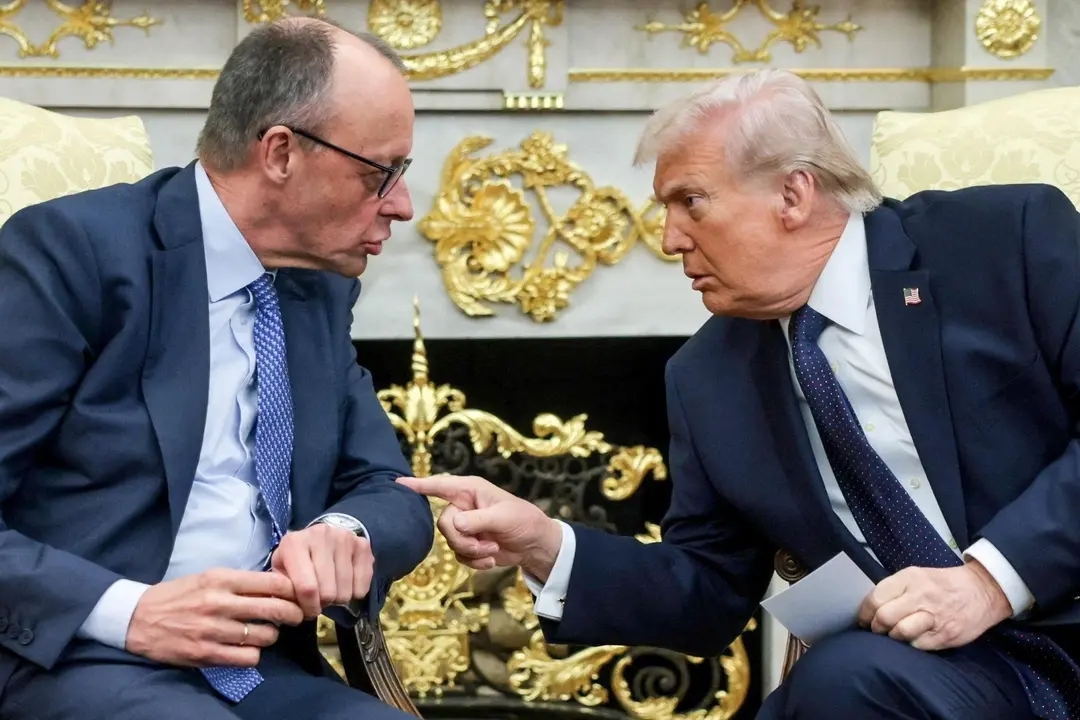
But there are serious doubts about the viability of this model. Merz’s March visit to Washington – his third in less than a year – may have outwardly resembled the previous June’s trip (complete with another prestigious overnight stay at Blair House and compliments from Trump), but in substance it was fundamentally different. Even the chancellor’s silence in response to Trump’s attacks on Spanish Prime Minister Pedro Sánchez – which triggered a crisis in relations between Madrid and Berlin – failed to salvage the situation. What the world witnessed was not a meeting of friends, but one between reluctant partners compelled to cooperate with one another.
From the standpoint of logic and political expediency, the White House should have wholeheartedly welcomed the arrival of an “American” in the German chancellor’s office and extracted maximum advantage from Merz in the spheres of politics, trade, and the exercise of soft power – especially given Germany’s forced reassessment of defense and security issues amid its ongoing confrontation with Russia. Because of his personal background and worldview, Merz is the most pro-American German leader in decades, one willing to make concessions in order to preserve Euro-Atlantic solidarity. And yet, the Trump administration is moving in the opposite direction. U.S. actions are not only pushing Merz toward criticizing America, but are also turning him into one of the leaders of Europe’s move toward political emancipation.
The United States is not only pushing Merz toward criticizing America, but also turning him into one of the leaders of the project of Europe’s political emancipation
The rapprochement between Berlin and Washington failed to materialize, but the reason was not because Merz had made mistakes in communicating with Trump. The German politician exploited the “chemistry” factor as much as possible, explaining the European position to the American president in language he understood – both literally and figuratively – by speaking in terms of interests and profit. For Trump, the personal dimension does indeed matter greatly. But the worldview of the current administration shapes its perception of Germany and Europe far more strongly.
In his book The Second World War, Winston Churchill quotes Joseph Stalin’s famous question during a prewar round of Soviet-French negotiations: “How many divisions does the Pope have?” For Trump as well, a partner’s importance is determined by its strength – or more precisely, by its ability and willingness to project that strength. The concept of the European Union, with its endless search for consensus, its prioritization of diplomacy and respect for international law, and its largely liberal approach to migration and environmental programs, is perceived by the current White House as weakness and nonviability.
The American president operates within a different frame of reference. For him, the ideal is the Europe — and the Germany — of his grandfather’s era. To the current White House occupant, the true German patriots are the far-right Euroskeptics who want to return the continent to the period before integration, liberalization, and globalization. And if a partner appears weak in his eyes, Trump is tempted to extract the maximum possible concessions without paying much attention to that partner’s interests.
Merz is a conservative – for many, even a right-wing conservative, albeit only by contemporary German standards. He heads a coalition government and is forced to take into account the demands and expectations of a wide range of actors in Germany, from political parties and social movements to trade unions and lobbying organizations. He is not only a Euro-Atlanticist but also a Euro-optimist, deeply rooted in the traditions of German parliamentarianism and the project of a united Europe — with an emphasis on the latter. Such a priority lies outside the boundaries of “Trump’s world.” As a result, German-American and broader U.S.-European relations under the current American president cannot be those of true allies.
Beyond the transatlantic dimension, the foreign policy results of Merz’s first year as chancellor have been mixed. His unquestionable achievements include systematic support for Ukraine – far more consistent than that of his predecessor – along with a noticeable improvement in relations with France and especially with Poland, traditionally a difficult partner for Germany. Berlin unequivocally supports NATO unity and the strengthening of the EU’s defense component despite the multibillion-euro costs and the country’s difficult economic situation. Germany’s allies have noticed and appreciate this.
Merz also tries to engage with the countries of Central and Eastern Europe as equals, an approach that has been positively received in capitals east of Berlin. Until quite recently, that was not the case. Though clearly not Europe’s most charismatic politician, over the past year Merz has repeatedly seized the role of “Europe’s spokesman” from his rivals, above all Macron. The German chancellor has managed to strike a fairly accurate chord in contemporary European discourse – the desire to emancipate Europe from the United States while at the same time avoiding the complete destruction of ties with Washington.
On the other hand, the chancellor’s policy remains largely Western-centric. The Global South receives relatively little attention, and even successes such as the signing of a free trade agreement with India after twenty years of negotiations (in which Merz’s team played a significant role), are overshadowed by the absence of a coherent strategy toward China, one of Germany’s most important markets. During the chancellor’s visit to Beijing in February 2026, he managed to do little more than preserve the status quo. Additionally, entire regions of Africa and Latin America, where Germany’s political and economic influence is declining or absent altogether, also remain outside Berlin’s focus. Like his predecessors, Merz remains in many ways a European leader rather than a global one.