
Germany’s centrist parties are moving away from the strict isolation of radical factions, a move that is deepening divisions within the Christian Democratic Union and Social Democratic Party. The shift threatens the country’s political stability as the far-right opposition reaches record levels of support nationwide, while the Left Party (Die Linke) wins in Berlin. Germany’s governing coalition is unlikely to risk an early election, but it could effectively split from within.
Until recently, Germany’s party system was widely regarded as one of the most stable and durable among parliamentary democracies. That is changing rapidly.
The right and left edges of the political spectrum are gaining support, while the position of Germany’s two moderate Volksparteien — the Christian Democratic Union (CDU) and the Social Democratic Party (SPD), which have historically competed for support across a broad middle section of society — continues to deteriorate.
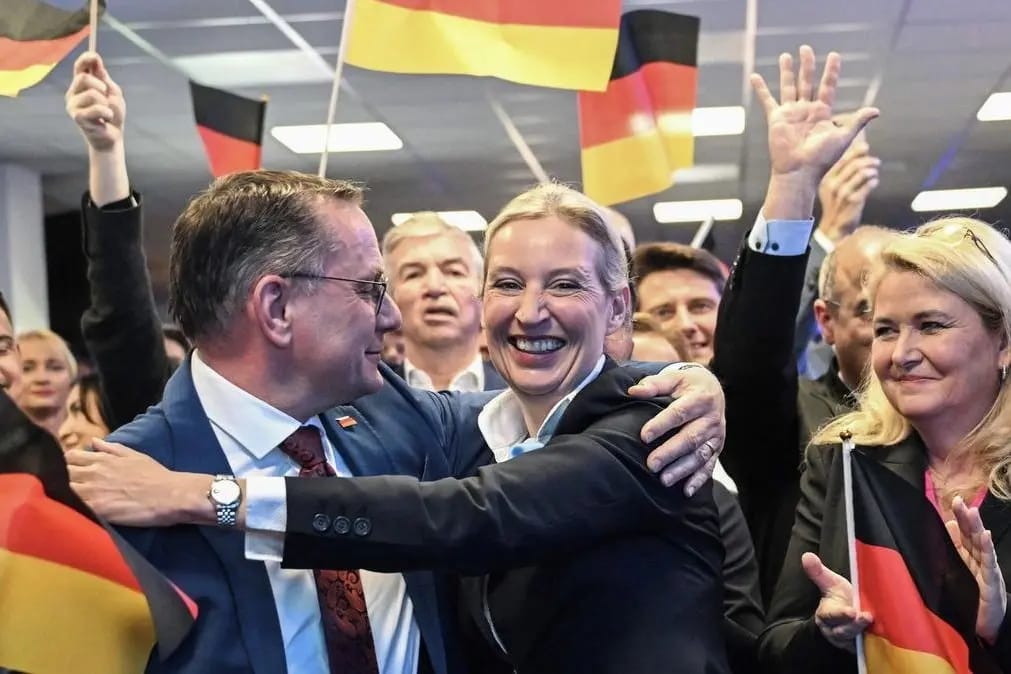
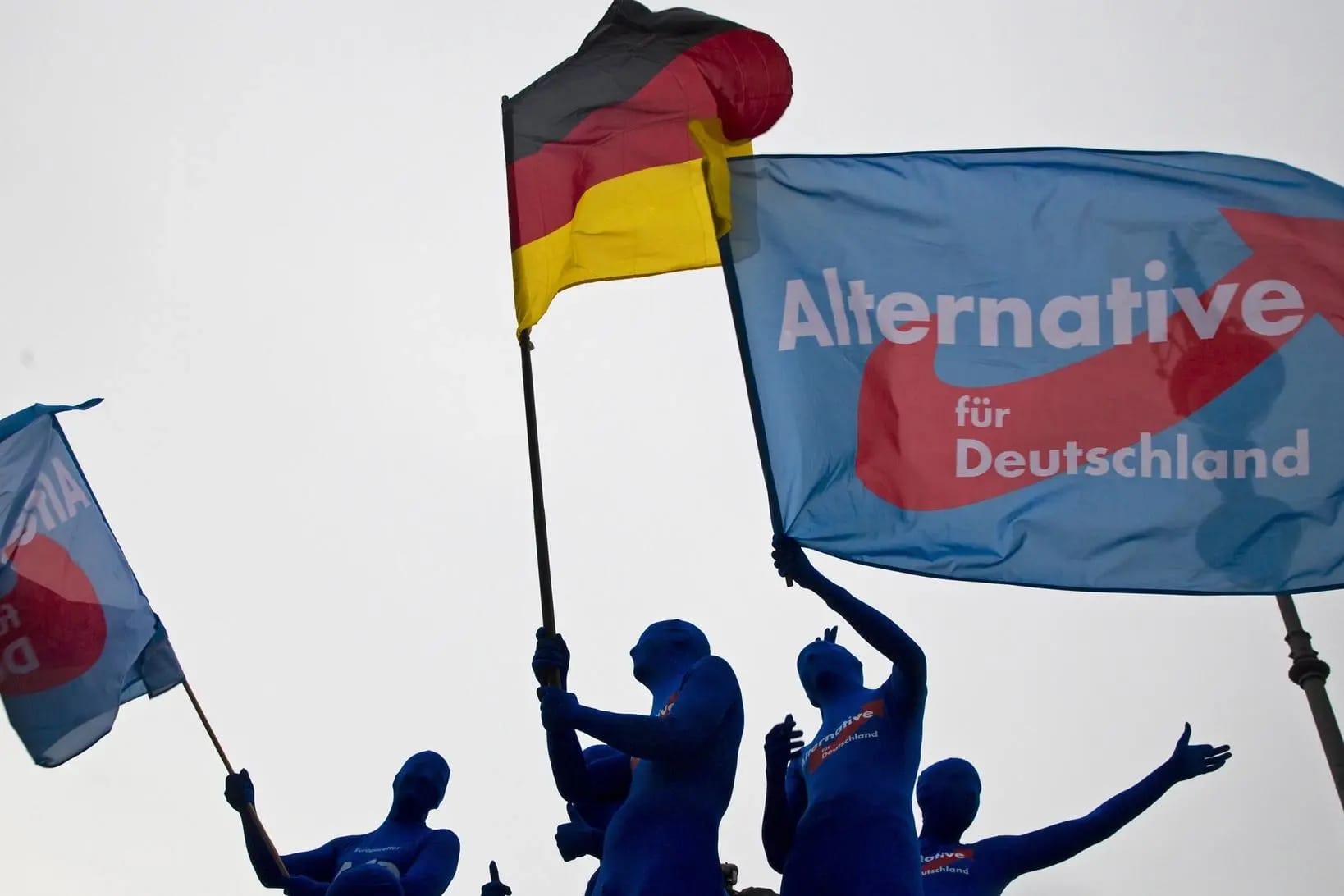
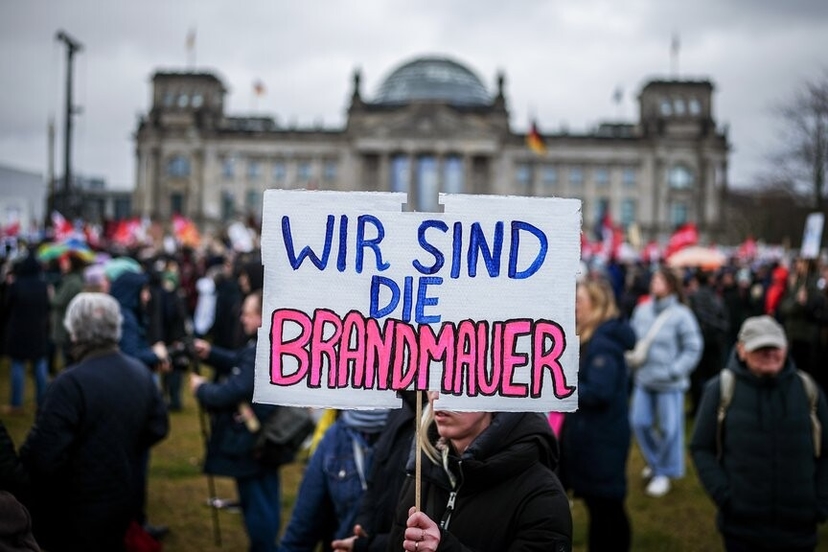
Critically, while the Social Democrats are “opening to the left” by negotiating over a government led by Die Linke, some in the CDU call for their party to “open to the right” by finding a rapprochement with the Alternative for Germany (AfD). In effect, Germany may be witnessing the end of the Brandmauer — the “firewall,” an informal commitment by mainstream parties not to cooperate with the far right. Such a decision would come at a price.
Disarray
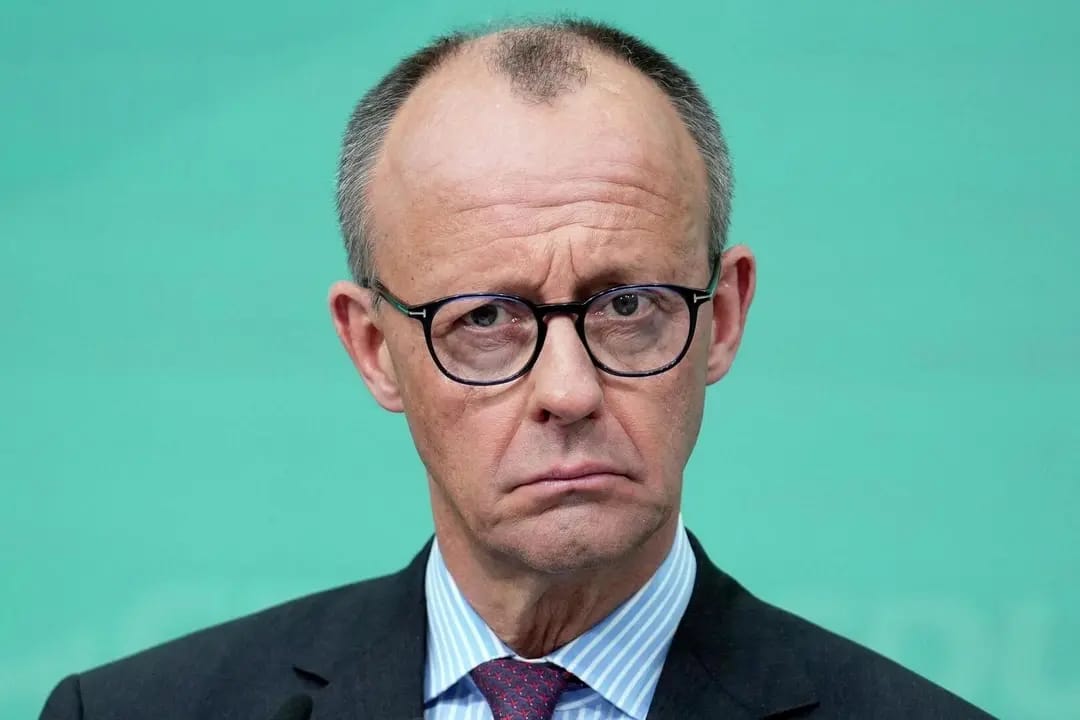
Since the spring 2026, the approval ratings of Chancellor Friedrich Merz have fallen from around 30% to between 10% and 18%, depending on the poll.
Until recently, however, Merz could still play one important political card: resistance to the threat from the AfD. Although he failed to fulfill a longstanding promise to cut the far-right party’s support in half, he retained strong arguments within the CDU for maintaining the firewall. Those arguments are now weakening.
All three elections held in September 2026 ended in major defeats for the conservatives. In Saxony-Anhalt, the party won half as many votes as in the previous election, losing nearly two-thirds of its parliamentary seats while being driven from power. For the first time in the party’s history, the CDU failed to enter the state parliament in Mecklenburg-Western Pomerania. In Berlin, it lost half its constituency seats and is almost certain to lose the office of governing mayor.
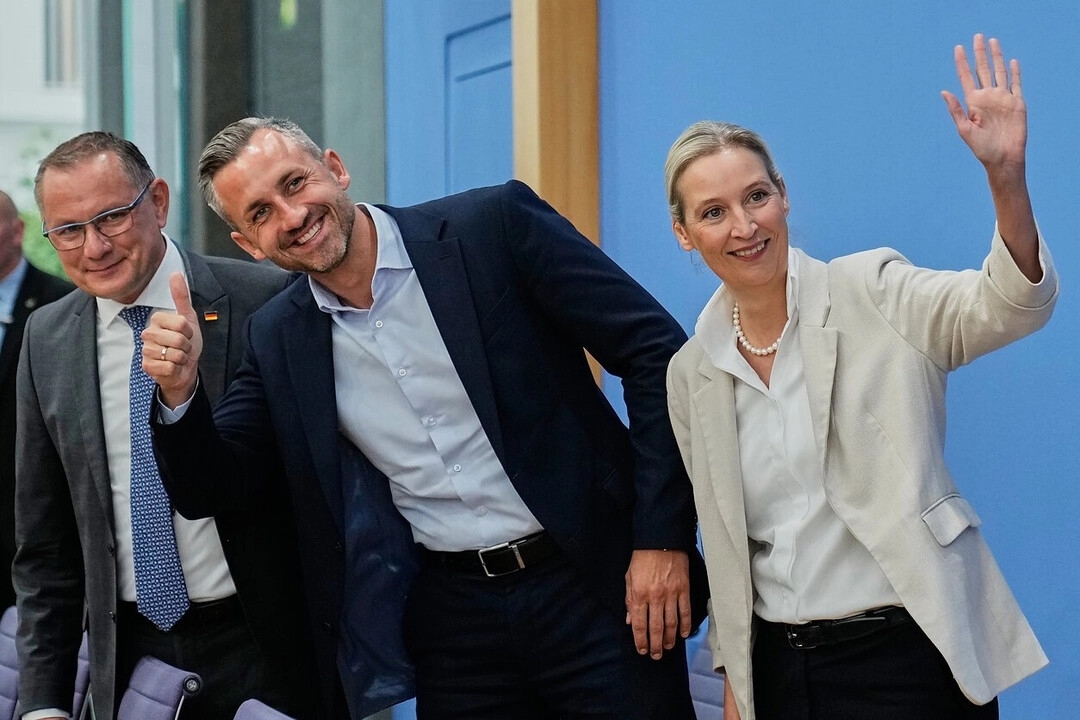
That appears to be only the beginning. In the second half of October, nationwide support for the Christian Democrats finally fell below 20%, and it is also declining in North Rhine-Westphalia — Germany’s industrial heartland and most populous state — despite the personal popularity of Premier Hendrik Wüst. The pattern resembles Saxony-Anhalt, where Premier Sven Schulze also led personal approval ratings but was unable to overcome the party’s negative national trend. Against that backdrop, next April’s regional vote in North Rhine-Westphalia is already being dubbed a “mini federal election” because of its political significance.
What has left conservatives at a loss is that none of their strategies to counter the rise of the AfD has worked. Merz tried to project toughness while appropriating elements of the AfD’s agenda. His government introduced controls at Germany’s external borders, tightened migration and welfare laws, and stepped up deportations. The chancellor spoke of a “problem in the appearance of cities” — a reference to people with immigrant backgrounds — and sought an agreement with the new authorities in Damascus on the return of Syrians living in Germany. At the same time, Merz sharply attacked the far right, at various points calling the AfD a “destructive force” and accusing it of seeking to divide society by discriminating against large groups of people.
What has left conservatives at a loss is that none of their strategies against the AfD has worked
Merz explicitly said that any cooperation with the AfD was incompatible with CDU membership. It did not help. The AfD is not only breaking records in eastern Germany but has crossed the 20% threshold in all key western states — from Lower Saxony and Baden-Württemberg to Bavaria and North Rhine-Westphalia. In Bavaria, where the conservative Christian Social Union (CSU) has dominated for decades, the AfD gained 4 percentage points in just six months, reaching 21% in the polls.
There is bad news on the far left as well. Sahra Wagenknecht’s party — renamed the Alliance for Social Justice and Sensible Economy — had served as a political lifeline for the CDU and SPD. Despite fundamental disagreements over foreign policy, the mainstream parties were willing at the state level to form coalitions with regional branches of Wagenknecht’s alliance that were prepared to govern pragmatically — as happened in Thuringia, where the CDU, SPD, and Wagenknecht’s alliance managed to form a functioning government, and in Brandenburg, where the Social Democrats initially governed with Wagenknecht’s supporters before defectors from the latter’s parliamentary group helped create a new majority that included the conservatives.
The situation has now changed fundamentally. The rebellious Thuringian members have left the party, while in other states Wagenknecht has reasserted control over local organizations. As a result, the party has gone from being a reluctant ally of the political center to an important supporter of its principal opponent on the far right.
In Saxony-Anhalt, votes from Wagenknecht’s alliance already helped elect an AfD politician as speaker of a state parliament for the first time, and the first AfD state premier could soon follow. In Brandenburg, the AfD and supporters of Wagenknecht who have reorganized their local structures now hold a majority in opinion polls. Both parliamentary groups have openly said they are willing to cooperate, meaning that if the fragile governing coalition collapses and new elections are held, Brandenburg could become another political flashpoint for the federal government to deal with.
A precedent on the left
Another taboo is now being challenged in the German capital. Die Linke won Berlin’s local election and is seeking to lead the state government, seeking potential partners among the Greens and the Social Democrats. The parties have held preliminary talks, adopted a joint statement setting out priorities for a possible coalition, and their leadership bodies have voted to begin formal final negotiations.
Cooperation between the SPD, the Greens, and Die Linke is not in itself new. Die Linke has already served in governments in five states, including Berlin and even the western city-state of Bremen, and some of its politicians have long been considered acceptable partners even in conservative circles.
Two factors fundamentally change the situation, however. First, regional branches of Die Linke differ sharply. In addition to moderate organizations that support an agenda resembling social democracy, there are also much more radical regional groups.
The Berlin branch is widely regarded as the party’s most radical. It has been accused of supporting left-wing extremism and anti-Israel Palestinian movements, and also of antisemitism and having ties to organized crime. In 2024, almost all of the party’s prominent Berlin politicians quit the party, accusing their colleagues of antisemitism rooted in anti-Zionism.
During the 2026 campaign, the party called for nationalizing housing owned by large private landlords, abolishing the German state’s domestic intelligence service, and imposing sweeping reforms in the spheres of law enforcement and education.
Second, Berlin Die Linke leader Elif Eralp is not seeking merely a ministerial post. She wants to become governing mayor of the German capital.
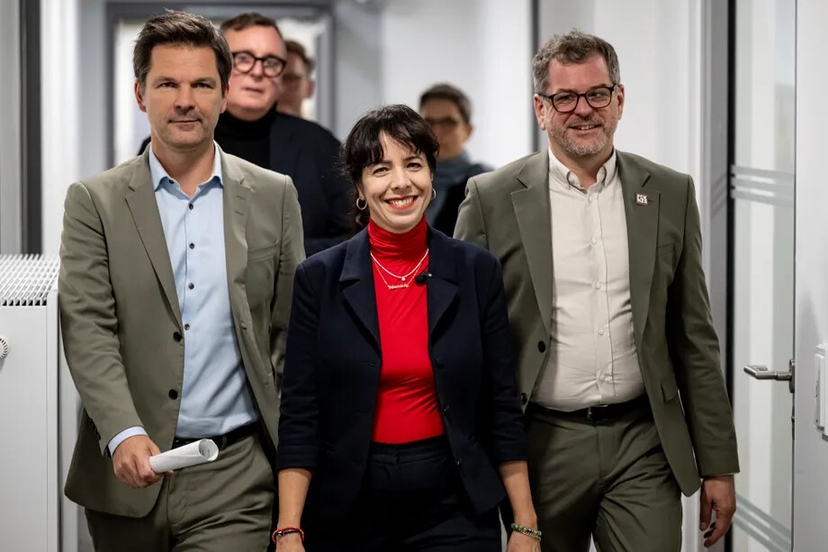
Merz demanded that the talks stop, saying: “Anyone who wants to strengthen the political center cannot negotiate with left-wing radicals. We oppose anyone who questions Israel’s right to exist. Stop going down this path!”
The CDU’s youth organization called for the SPD and the Greens to face “public condemnation” over what it called a “breach of political tradition,” proposing that Berlin be cut off from national security information-sharing systems if Die Linke came to power.
Alexander Throm, the CDU/CSU parliamentary group’s domestic affairs spokesman in the Bundestag, made the same proposal, saying the response should be “just as with the AfD in Saxony-Anhalt.” Berlin CDU leader Stefan Evers spoke of a “capitulation” by the Greens and SPD. The premiers of Hesse and Bavaria, Boris Rhein and Markus Söder, proposed cutting funding to Berlin — Germany’s most heavily subsidized state — through the fiscal equalization system under which wealthier states support poorer ones. Rhein, normally regarded as a moderate, did not hold back, calling the SPD and Greens “former center-left parties” and accusing them of trying to stay in power at any cost. Notably, those remarks were directed at the CDU’s own federal coalition partners.
There is another dimension to the dispute. The Christian Democrats maintain the same prohibition on cooperation with Die Linke — which they view as a radical-left successor to the Socialist Unity Party, the ruling party of communist East Germany — as they do with the far right. Until now, the CDU generally did not try to impose that rule on other parties. But the prospect of two states moving toward more radical governments (and of gaining representation in the Bundesrat, Germany’s upper house representing the states), has enraged conservatives.
Some have drawn a conclusion: If the SPD is “allowed” to do it, why should the CDU not be? The CDU leadership in Berlin’s Reinickendorf district decided to “open itself to all parties,” including the AfD. Despite the possibility of forming a district majority with center-left parties, local conservatives chose cooperation with the far right. They appear to be counting on AfD votes to elect their candidate to the post of district mayor.
Mario Czaja, a former general secretary of the Berlin CDU and the head of its organization in the Marzahn district, said coalition talks with the AfD had begun, using the occasion to criticize Merz’s policies. In Saxony-Anhalt, CDU lawmakers are saying openly: “The firewall has failed!”
Similar statements are now coming from senior figures who until recently rejected any proposal to treat the AfD as a normal party. Rhein, who heads both the Hesse state government and the CDU organization there suggested abandoning the term “firewall,” calling it “un-Christian Democratic.” He also said lawmakers should stop blocking AfD candidates from leadership posts on Bundestag committees and commissions, justifying the call by reasoning that they had been elected and parliamentary tradition should be respected.
Manfred Weber, deputy leader of the CSU and president of the European People’s Party, declared bluntly: “The firewall in the sense of ‘us or them’ must become a thing of the past.” His argument is that by entering endless coalitions with parties to its left, Christian democracy is losing its identity due to a compromise with the left that has not even stopped the party from losing support.
Fragmentation
Weber’s words reflect the antagonism inside the CDU. A dispute over the party’s fundamental direction — and fears among some members that it is losing its identity — is creating tension, provoking conflict, and, in some cases, already producing a loss of control. The election of the speaker of Saxony-Anhalt’s state parliament demonstrated that clearly.
In principle, the combined votes of the AfD and Wagenknecht’s party would have been enough to elect the far-right candidate. But Tobias Rausch received four additional votes that could only have come from members of parties closer to the political center — almost certainly from CDU politicians, despite oral and written assurances from every member of its parliamentary group that they would abstain.
Simple arithmetic suggests that some CDU lawmakers decided to support the AfD after all, betting on the “new force.” Others voted against the candidate because they viewed neutrality as too weak a response to the far right.
A German newspaper surveyed conservative lawmakers about how they voted. Eight said they had abstained as agreed. But only five abstentions were recorded in the chamber. That means at least three of those questioned gave inaccurate accounts.
Meanwhile, the SPD candidate for deputy speaker failed to secure enough votes, even though unified conservative support should have guaranteed his election. Concluding that it had completely lost control, the CDU parliamentary group decided that it would simply leave the chamber during a future vote for the state’s new premier.
Similar developments emerged in Baden-Württemberg. The state election there was held back in March, but lawmakers are still filling various parliamentary positions and seats on supervisory boards of public institutions.
In mid-October, AfD candidates, breaking with years of firewall practice, received noticeably more votes than the total number of AfD lawmakers — and Wagenknecht’s party has no representatives in the four-party state parliament.
Personnel votes in German state parliaments are conducted by secret ballot. It is therefore formally impossible to establish how any individual lawmaker voted. But there is little doubt about which parliamentary group the defecting votes came from. Statements by CDU politicians themselves show that the situation is changing fundamentally and that a serious desire to break down the wall separating the CDU from the AfD is growing inside the party. Merz’s claim that the vote was a provocation by the conservatives’ opponents, as well as claims from his close Bundestag allies about “false assertions” and “unsubstantiated accusations,” sound unconvincing (to put it mildly).
Statements from CDU politicians show that a serious desire is growing within the party to tear down the wall separating it from the AfD
The Social Democrats are also going through a severe internal conflict. Disagreements are spilling out of party offices into public view. After Stefan Krach, leader of Berlin’s SPD, gave the green light for final coalition negotiations with Die Linke, opposition came both from district party organizations and from Krach’s own local branch.
Breaking with unwritten convention, federal politicians also intervened. Matthias Miersch, leader of the SPD parliamentary group in the Bundestag, expressed “very serious doubts.” Defense Minister Boris Pistorius, who has for years been Germany’s most popular politician, came out openly against the coalition — as did 21 SPD lawmakers, who signed a joint letter titled “Our values have never been negotiable.”
In response, another group of lawmakers representing Berlin just as forcefully backed an alliance with Die Linke expressing “incomprehension” at their colleagues’ statements. No planned state government involving the Social Democrats has provoked this level of emotion.
Future threats
Germany’s political crisis is not simply deepening; it is taking on different and potentially more dangerous characteristics. Until recently, the mainstream parties shared a consensus: no cooperation with the AfD. Coalitions cobbled together on the principle “everyone against the far right” were treated with skepticism but were nevertheless broadly accepted as a workable model.
The assumption was that the AfD did not have enough electoral support to win an absolute majority. It was therefore unpleasant when the far-right party garnered notable support in elections, but those outcomes were still not politically decisive. Even as a large opposition force, it still had little hope of attaining executive executive power or even leadership positions on parliamentary committees. That old reality has already changed.
The chancellor is effectively caught in a vise between the right and the left. His party is losing its leading position in public opinion, and acceptable results are no longer guaranteed even in western Germany.
Some in Merz’s circle believe endless governments with center-left parties have significantly eroded the foundations of Christian democracy itself. They blame the chancellor for failing to deliver on his own promises — instead of a conservative shift to the right, they say, he has produced “Merkel 2.0.”
The mainstream conservative party’s more right-wing faction sees the emerging Berlin coalition as a fundamentally new precedent, one that justifies cooperation with the AfD in order to prevent any chance of a “communist comeback.” To them, that appears a greater threat than a far right that may be distasteful but, in their view, “perhaps not so frightening after all.”
Moderates, meanwhile, see no effective formula for resisting the AfD. In practice, the only thing protecting Merz is that no one has yet emerged who clearly wants to replace him.
The SPD faces an equally serious question over its direction. The Social Democrats are not merely losing popularity; they are suffering so many defeats that journalists have largely stopped describing each result as an “all-time low” or a “historic record.” The AfD is attracting support from former SPD voters who no longer see Germany’s oldest political party as representing their interests.
Some party officials and rank-and-file members are comfortable cooperating with the CDU — not an ideal arrangement, but a well-tested one. Others believe the party is moving in the wrong direction and that its only chance of survival is a sharp turn left and a future federal alliance with Die Linke with a Berlin government serving as the pilot project. They are prepared to “look past” certain problems with their partners because they see no other option.
Tensions within the coalition are continuing to rise. In the CDU, an alliance between center-left parties and Berlin’s radical left is viewed as a “betrayal of democracy,” while concessions to the Social Democrats are seen as excessive. In the SPD, there is deep dissatisfaction with the government’s latest reforms, which many Social Democrats regard as antisocial and inconsistent with the party’s ideology and core principles.
Still, even as coalition partners openly accuse each other of breaching political firewalls, the governing alliance is unlikely to collapse early. What holds it together is the determination to avoid a snap election at almost any cost given the fact that there is little doubt the AfD would finish first. Combined support for the CDU/CSU and SPD is barely above 30%, meaning any new governing majority would have to include the Greens (making the arrangement even more complicated). And even that broad coalition might fail to secure enough votes.
A hypothetical alliance of the SPD, the Greens, and Die Linke clearly lacks a majority, and it would in any case be unlikely to win full support from centrists. The current “marriage of convenience” between the CDU and SPD is therefore likely to continue.
Combined support for the CDU/CSU and SPD is barely above 30%
The “dissidents” will remain, however, and a coalition with a safety margin of only 12 votes is likely to struggle to muster support for unpopular legislation. In a worst-case scenario, if the government becomes deadlocked and Merz’s opponents gain the upper hand inside the conservative bloc, there could be a temptation to seek AfD votes for individual initiatives — without formally institutionalizing cooperation or coordinating votes as a bloc.
Formally, that would not mean the end of the government or new elections, but rather a “free search for majorities.” A coalition in Germany is not legally binding; it is primarily a practical instrument for governing. As such, seeking votes from the AfD on certain initiatives would amount to a test of whether the Social Democrats would really risk leaving the government and triggering elections over their partners’ limited cooperation with the far right.
Still, for Merz and his CDU to take such a step would be a political gamble — one that risks AfD’s gradual entry into positions of real power and influence in Berlin itself. Such a scenario can no longer be ruled out.