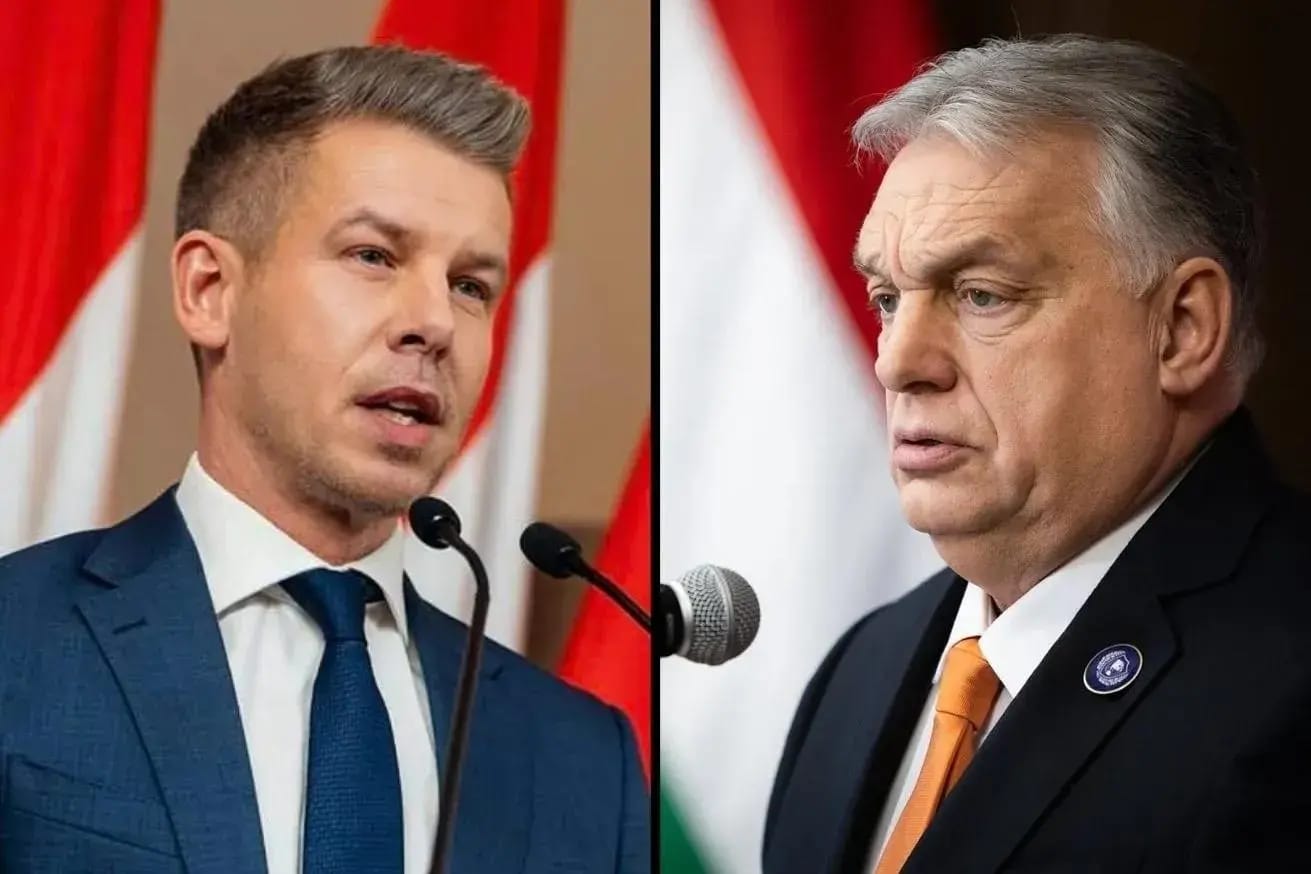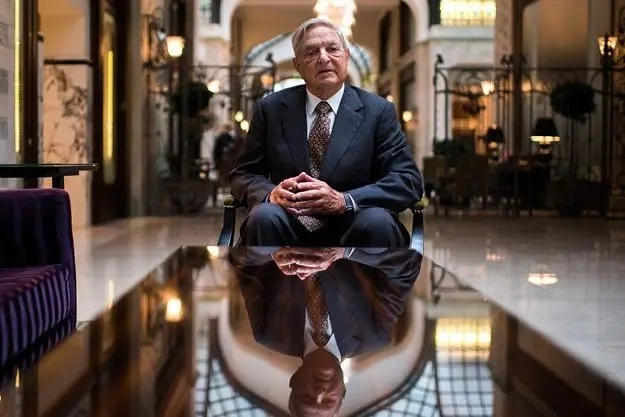
“Soros wants to destroy Western civilization,” Elon Musk tweeted on June 25. “George Soros and his son should stand trial. They are destroying our country,” Donald Trump wrote on his social media platform a less than a year ago. “Soros is the greatest threat to the Western world,” Reform UK leader Nigel Farage declared in 2019. “Children’s minds have been corrupted by Soros textbooks,” Vladimir Putin claimed in September 2025. Then, in the spring of 2026, libraries across Russia began removing books because they had once been purchased with funding from Soros, who was accused of seeking to “undermine the constitutional order.” The philanthropic work of the nonagenarian Soros has been accompanied by conspiracy theories almost from the very beginning. He has been portrayed simultaneously as a former Nazi and a supporter of the Antifa movement, the creator of COVID-19, and the mastermind behind mass migration. As both a financier known for his aggressive investment style and as a liberal philanthropist known for his opposition to authoritarian regimes, Soros has indeed made enemies around the world. Even after stepped away from active management of his foundation three years ago, handing control of his to his younger son, the political right in the United States, Europe, and Russia continue to portray him as the ultimate bogeyman. Notably, the conspiracy theories surrounding him are essentially a modern continuation of earlier antisemitic conspiracies of the last century centered on the Rothschilds and the Rockefellers.
Soros the bogeyman
In 2017, ahead of Hungary’s parliamentary elections, passengers riding Budapest’s trams could see the face of American investor and philanthropist George Soros — on the floor beneath their feet. Prime Minister Viktor Orbán’s political consultants had deliberately placed the posters where commuters would step on them.
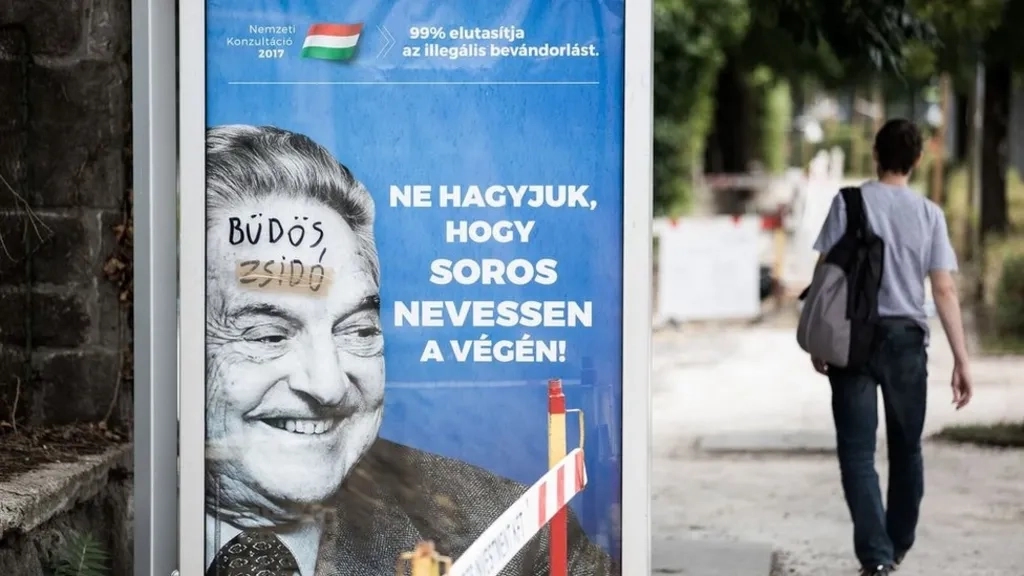
The floormats on public transportation were only part of the anti-Soros campaign being run by Orbán’s right-wing Fidesz party. Giant billboards featuring Soros appeared across the city, depicting him with a sinister smile above the slogan: “Let’s not allow Soros to have the last laugh.” In smaller print above it was another message: “99% oppose illegal immigration.”
With its reference to the well-known Nazi trope of the “laughing Jew” (and with Stars of David incorporated into the posters), the campaign amounted to the most sweeping antisemitic display in Europe in a decade. Orbán won reelection.
In 2018, a pipe bomb was mailed to Soros’s home in the United States. Shortly beforehand, Donald Trump had accused him of funding protests against his Supreme Court nominee, Brett Kavanaugh. In the years that followed, social media was awash in claims that Soros was a former Nazi who financed the Antifa and Black Lives Matter movements — and had even created COVID-19 — all as part of a plot to destroy America.
Nine years later, Orbán was finally voted out of office in Hungary, and thousands of people took to the streets of Budapest to celebrate. But Donald Trump was back in power. Ahead of the U.S. midterm elections, apparently concerned about the prospects for his party, the American president has once again turned his attention to George Soros.
The Trump administration began threatening an investigation into the financier’s Open Society Foundations in an effort to establish a link between the organization and the killing of Charlie Kirk. Trump declared that the government must “identify and dismantle the networks, structures, and organizations that incite political violence,” adding that Soros was “at the center of it all.”
So far, no investigation appears to have been launched. But as the midterms approach, Soros will likely find his name included in the Trump administration’s rhetoric. For the political right, he has become the ideal all-purpose enemy.
Who is George Soros?
George Soros is a 95-year-old billionaire financier and philanthropist. Incidentally, he is also the “man who broke the Bank of England” — and he is also a Jew who grew up in Budapest during the Holocaust. The Soros family survived the Nazi occupation by obtaining forged documents identifying them as Christians. At the age of 13, George posed as the godson of an official in Hungary’s collaborationist government, while his parents helped hide other Hungarian Jews.
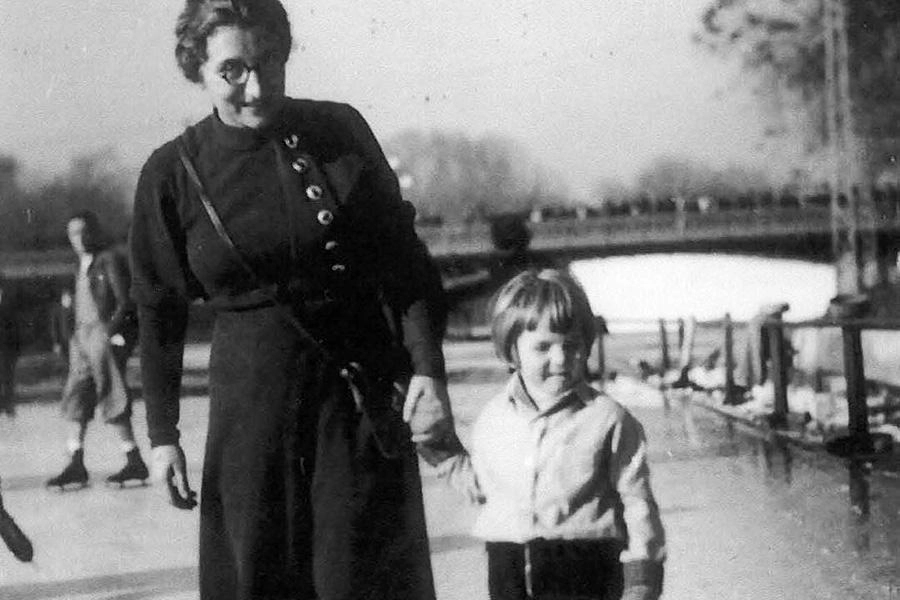
In 1947, Soros fled what had by then become communist Hungary, arriving in England, where he enrolled at the London School of Economics. He studied under the Austrian philosopher Karl Popper, whose ideas profoundly shaped the future philanthropist’s worldview. Popper’s The Open Society and Its Enemies proved especially influential, leading Soros to embrace the principle that no single ideology should dominate a polity. Armed with a degree in philosophy and a deep belief in the idea of the open society, Soros emigrated to the United States in 1956 and began a career in finance, eventually becoming one of the world’s most influential investors.
In 1970, Soros founded the hedge fund Soros Fund Management. His investment style could best be described as aggressive, if not outright opportunistic. He sought to capitalize on every available opportunity and exploit weaknesses in financial systems, generating annual returns that at times exceeded 100%.
The episode that earned Soros the title of the “man who broke the Bank of England” best illustrates his hard-nosed approach. In 1992, as Britain sought to curb inflation while preparing for the creation of a single European currency, it artificially maintained the pound’s exchange rate peg to the German mark.
Convinced that the policy was unsustainable and that the pound would eventually fall, Soros began aggressively selling the currency, flooding the market with so many pounds that the Bank of England could not buy them back quickly enough. His fund’s short position ultimately approached $10 billion. After frantic interest rate hikes failed to stabilize the currency, Britain was forced to withdraw from the European Exchange Rate Mechanism, and the pound was devalued. The trade earned Soros more than $1 billion in profit, and he later employed similar strategies in Asian financial markets.
In 1992, Soros became known as the “man who broke the Bank of England”
The wealthier Soros became, the more interested he grew in public life, politics, and philanthropy. Yet his approach to giving remained much the same as his approach to investing: aggressively exploiting weaknesses in the system in order to achieve his goals.
Soros began his philanthropic work in 1979 by providing scholarships to Black students in South Africa, who were disadvantaged by the apartheid regime. In the mid-1980s, he turned his attention to his native Hungary, where he began funding academic exchanges with the West and supporting independent cultural groups at a moment when the Communist regime in Budapest was already slipping into a crisis of legitimacy. One of Soros’s scholarships was awarded to a university student and aspiring politician named Viktor Orbán. For a time, the financier even regarded the billionaire as his protégé.
As the socialist bloc began to collapse, Soros supported networks of dissident intellectuals across Eastern Europe — including Czechoslovakia’s Charter 77 and Poland’s Solidarity movement — while also financing cultural initiatives and supplying universities and libraries with equipment. The Atlantic noted that Soros’s programs “helped light the fuse for communism’s collapse from within.”
Western journalists noted that Soros’s programs “helped light the fuse for communism’s collapse from within”
In the 1990s, the philanthropist established the Open Society Foundations, which became the primary vehicle for distributing his wealth around the world, including in Russia. The foundation’s grants consistently went to scholars and students, local activist groups, and independent media outlets. Over the course of four decades, Soros donated more than $32 billion through the Open Society Foundations.
Soros later said that his experience of living under the Nazi occupation of Hungary had shaped his approach to philanthropy:
“Instead of submitting to our fate, we resisted an evil that was much stronger than we were — and we prevailed. We not only survived, but also managed to help others. This left an indelible mark on me, transforming a catastrophe of unimaginable proportions into an exhilarating adventure.”
He described the mission of the Open Society Foundations by saying: “People who have lived all their lives under a totalitarian system need help in turning their aspirations into reality.”
Because of his hard-charging business approach and his willingness to engage publicly in political causes, Soros quickly made enemies around the world. In Europe, he opposed pro-Soviet forces, effectively serving as a conduit for American influence independent of the U.S. government. In the United States, he became a principal target of the far-right wing of the Republican Party. And through it all, he continued trading in financial markets outside Europe, drawing accusations of promoting “Jewish globalism” whenever currency crises followed his investments.
By the turn of the 2000s and 2010s, Soros had become the era’s preeminent “liberal villain.” At least three separate sources of conspiracy theories can be identified, all of which emerged in parallel and reinforced one another: Russian disinformation, Hungary’s right wing (with the assistance of the American political consultants it had hired), and the American far right itself.
Russia: The architect of the “color revolutions”
The Open Society Foundations had all but wound down its operations in Russia by 2003. At the time, George Soros said that their mission in the country had largely been accomplished, as the Russian state had become strong enough that external support was no longer necessary. By then, relations between the philanthropist and the Russian authorities had already begun to deteriorate. Soros had openly criticized Vladimir Putin, linking him to the oligarchic system (specifically to Boris Berezovsky).
But relations between Soros and the Kremlin truly soured after the “color revolutions” — Georgia’s Rose Revolution in 2003 and Ukraine’s Orange Revolution of 2004–2005. In both cases, mass protests erupted over electoral fraud, ultimately leading to the removal of pro-Russian governments. And, in fact, opposition groups in both countries did receive support from Soros’s foundations in one way or another — as part of broader civil society development programs.
Despite the nebulous real-world ties, following the events in Georgia and Ukraine, the Russian media increasingly portrayed Soros as the West’s “invisible hand” allegedly financing regime change. Soros himself later wrote that Putin had personally urged the leaders of Central Asian countries to shut down Open Society offices.
In 2004 — eight years before the term entered Russia’s political vocabulary — Uzbek President Islam Karimov declared Soros’s foundation an “undesirable organization,” claiming it had orchestrated the revolution in Georgia and was preparing a regime change operation in Tashkent.
The billionaire even featured in the 2005 book The Fourth Way: An Introduction to the Fourth Political Theory, by none other than Alexander Dugin. The author portrayed the Open Society Foundations as part of a project aimed at the “accelerated erosion of national sovereignty” in pursuit of the creation of a world government. According to the fascist ideologue, “color revolutions” had become the most effective weapon in Soros’s strategy for destabilizing and destroying the states exercising that sovereignty.
The claim resonated with nationalist audiences and was later widely adopted by Russian propaganda. By late 2013, Russian state media was already portraying Soros as the architect of Ukraine’s Euromaidan protests, and in 2015, the Open Society Foundations became one of the first organizations to be designated “undesirable” in Russia.
Meanwhile, Soros himself became the target of a large-scale propaganda campaign directed at European audiences through the state-funded outlets Sputnik and RT. Russian propagandists claimed that he was responsible for Europe’s migration crisis, echoing narratives promoted by Europe’s own political right. A 2016 Sputnik article quoted an “expert” who alleged that Soros despised “traditional European values” and wanted the interests of minorities to take precedence over those of the majority. Soros was portrayed as a threat to traditional society while simultaneously being linked to a shadowy global elite supposedly seeking to undermine national governments.
Russian propagandists portrayed Soros as a threat to “traditional society”
Russia’s campaign against Soros even reached the United States. Ahead of the 2016 presidential election, Russian bots spread claims on social media that voting machines in several states were personally controlled by the billionaire.
Vladimir Putin has repeatedly invoked Soros as the embodiment of the threat allegedly posed by the West. In 2018, for example, he claimed that the head of the Open Society Foundations wanted to bring down the euro at Washington’s behest:
“Our American friends very often tell me that America, as a state, has nothing to do with this. Now there are rumors that Mr. Soros wants to destabilize the European currency. This is already being discussed in expert circles. Ask the State Department why he is doing it. The State Department will tell you that they have nothing to do with it — that it is Mr. Soros’s personal affair.”
Hungary: The perfect enemy
In 2019, an investigation by Swiss journalists revealed that as early as 2008, American political consultants George Birnbaum and Arthur Finkelstein had deliberately crafted the image of George Soros used by Viktor Orbán to turn the Hungarian-American billionaire into the villain of his political campaigns. Birnbaum and Finkelstein spent years quietly refining a strategy designed to personify all of Hungary’s problems in a single Jewish financier.
As Birnbaum told the reporters, Finkelstein had his breakthrough in 2013: Hungary needed a “puppet master” — a real person who could supposedly be portrayed as “controlling everything.” Soros, who had been born in Hungary and whose support for liberal causes infuriated conservatives, was the perfect choice.
This reflected one of the core principles of Finkelstein’s political strategy. Finkelstein, who died two years before the investigation was published, believed in focusing failure on one specific human scapegoat and uniting voters against a single fabricated enemy. He taught that politicians should “fight not al-Qaeda, but Osama bin Laden,” urging Orbán to give voters a concrete figure to hate. According to Birnbaum, Finkelstein chose Soros because he was disliked by both the right and the left, the latter viewing him as a symbol of big finance.
Political strategists chose Soros as their enemy because he was hated by both the right and the left
The Hungarian media campaign to discredit Soros began in 2013 and was followed by a crackdown on initiatives he funded. In 2015, Orbán’s supporters seized on the refugee crisis, claiming that the financier “wanted to weaken the country and flood it with migrants.” The campaign reached its peak in 2017, when Orbán’s Fidesz party launched a barrage of messaging steeped in hostility and antisemitic themes.
Arthur Finkelstein and George Birnbaum designed Orbán’s anti-Soros campaign knowing that Soros’s Jewish background would resonate with centuries-old antisemitic stereotypes. Orbán’s rhetoric echoed The Protocols of the Elders of Zion, depicting an enemy who did not belong to the Hungarian nation — a “globalist” seeking to subjugate the entire world.
Birnbaum, who is himself Jewish, later said that the campaign simply needed a target and that antisemitism in Hungary was “eternal.”
United States: The “puppet master”
George Soros became a U.S. citizen in the 1960s. When the billionaire began funding anti-communist movements in Eastern Europe in the 1980s, he enjoyed broad support across the American political spectrum, especially among Republicans. That changed in the 1990s, when Soros began directing money toward harm reduction programs for drug users. At the time, U.S. authorities were waging the War on Drugs, incarcerating so many people for drug-related offenses that prisons were running out of space. It was then that Lyndon LaRouche — an ultraright conspiracy theorist and presidential candidate — published some of the first articles accusing Soros of crimes ranging from drug trafficking to plotting to start World War III.
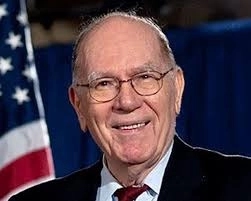
A retrospective by the Associated Press notes that LaRouche’s fantasies later influenced conspiracy theorists such as Alex Jones. Although the former presidential candidate remained on the fringes of American politics, his attacks helped entrench the antisemitic image of Soros as a “puppet master,” a narrative that later took hold among the American far right.
Republicans, however, truly turned against Soros only in 2004, when he began funding Democratic candidates. At the time, the philanthropist declared that defeating George W. Bush had become “the central focus of my life,” explaining that the White House’s Iraq policy was rooted in a supremacist ideology that threatened to plunge the region into a permanent state of war. In his book The Bubble of American Supremacy, published during the election campaign, Soros argued that Bush and his supporters had embraced “a crude form of social Darwinism” — the administration had deliberately stoked fear using slogans such as “either you are with us, or you are with the terrorists.” According to Soros, this rhetoric echoed the propaganda he had heard while growing up in Nazi-occupied Hungary. Republicans responded by making the philanthropist one of their principal political enemies, falsely accusing him of “buying” the Democratic Party and of enriching himself through the international narcotics trade.
In 2010, Fox News aired a special titled The Puppet Master. Against a dramatic soundtrack, host Glenn Beck described the “little-known” billionaire philanthropist as a man secretly pulling the strings behind world events. Using imagery of marionettes, Beck claimed that the Open Society Foundations were undermining political and economic systems around the globe. After the program aired, right-wing politicians in the United States began making regular claims that Soros was financing waves of immigration.
The trend only intensified after Donald Trump came to power. In 2018, conspiracy theories spread across the English-language internet claiming that Soros was paying people in Latin America to organize “migrant caravans” heading toward the United States. Trump, like other right-wing politicians, openly flirted with these theories — saying only that he “wouldn't be surprised” if Soros were funding the caravans.
Trump openly flirted with conspiracy theories, saying he “wouldn't be surprised” if Soros were funding migrant caravans
In 2020, Soros was blamed for two more crises facing the Trump administration: the COVID-19 pandemic and the Black Lives Matter demonstrations precipitated by the killing of George Floyd. Online conspiracy theories claimed that Soros had deliberately created the virus and, in Floyd’s case, had conspired with the police to “stage” his death. An analysis by the Anti-Defamation League later found that during the 2020 protests, the number of negative tweets mentioning Soros surged from roughly 20,000 per day to more than 500,000.
Soros as part of the global myth of Jews and globalists
The conspiracy theories surrounding Soros are replete with tropes borrowed from twentieth century narratives about the Rothschilds and Rockefellers: behind the façade of governments, running the world through its banks and foundations, stands a small circle of wealthy families — disproportionately Jewish ones.
The oldest and most overtly antisemitic version of this conspiracy theory developed around the Rothschild banking dynasty. In the nineteenth century, the family pioneered cross-border finance by establishing banking houses across Europe, financing government debt, and investing in major international projects, including railways and other infrastructure. The Rothschilds were also active philanthropists, purchasing land in Palestine for Jewish families, among other initiatives. Over time, however, their wealth and success became surrounded by myths. They were accused of financing wars, manipulating financial markets, and controlling governments. Fact-checkers have repeatedly shown that claims alleging the Rothschilds control global finance — including the U.S. Federal Reserve System — are entirely baseless.
The next stage was the “Rockefeller” version of the conspiracy theory, which emerged in the United States during the twentieth century and was not originally rooted in antisemitism — the Rockefellers were not Jewish. As capitalists and founders of Standard Oil, the Rockefeller family undeniably wielded enormous influence in business, the economy, and politics — and they also established the Rockefeller Foundation, a philanthropic organization that, much like Soros’s organizations of today, funded NGOs along with a wide range of social initiatives. Unsurprisingly, the Rockefellers became a prime target for the far right, who alleged that the Rockefellers secretly controlled American education, medicine, foreign policy, the United Nations, and a shadowy “world government.”
The political right transformed legitimate criticism of concentrated wealth into a conspiracy theory about a secret world government
Before long, the narrative surrounding the American Rockefellers merged with older antisemitic myths about the Rothschilds, giving rise to the modern mythology of the “New World Order,” which holds that a small elite controls international institutions and that Jewish financial dynasties deliberately engineer global crises.
The fusion of these two narratives made Soros an almost perfect embodiment of both myths. Like the Rothschilds, he is a highly successful financier of Jewish origin. Like the Rockefellers, he oversees an extensive international philanthropic network that supports social initiatives around the world. Unlike either of those families, however, Soros has conducted his activities openly, publicly funding liberal causes. That visibility gives the far right tangible facts to seize upon in an effort to lend a patina of credibility to their conspiracy theories.
Universities, libraries, doctors: Who do Soros’s foundations actually support?
The activities of George Soros’s foundations are indeed highly transparent. They publish financial reports, and their spending can be traced through grant records, lists of recipient organizations, and program descriptions. The best-known of these organizations, the Open Society Foundations, publishes regular financial reports detailing how its funds are allocated. According to the latest figures, of the $32 billion Soros has transferred from his personal wealth to the foundations since 1984, $24.2 billion had been spent by 2024, including roughly $1.2 billion in 2024 alone. Most of the money goes toward global programs, administration, and general operating expenses. An independent OECD assessment published in 2023 found that the foundations spent $590.3 million that year. Of that amount, $441.4 million was distributed to organizations promoting civil society, with 35% provided as flexible core funding and 39% earmarked for specific projects.
Broadly speaking, the foundations’ work falls into three main areas. The first — and by far the largest, longest-running, and most comprehensive — is focused on education and academic research. The second consists of socially oriented initiatives carried out in different countries at different times, ranging from support for Roma communities in Europe to funding research into palliative care and supporting hospice programs in the United States. The third encompasses humanitarian missions responding to crises, wars, and natural disasters around the world.
As noted above, Soros’s philanthropic work began in 1979 with scholarships for Black students in Cape Town during the apartheid era. Over the following three decades, more than 20,000 people received these scholarships. A 2023 evaluation found that the grants expanded access to education and helped recipients build professional careers, but found no evidence that the program had any measurable impact on democratization in the region. Among Soros’s most prominent educational initiatives are the Central European University (now headquartered in Vienna and enrolling around 1,500 students from around the world) and the Step by Step early childhood education program, which includes roughly 80 organizations in 40 countries.
The social programs funded by Soros’s foundations are equally broad, including support for strategic litigation, legal research, and court monitoring. The Open Society Foundations have also funded independent media outlets, anti-corruption organizations, election monitoring groups, and major international organizations such as Human Rights Watch and Amnesty International. It is important to note, however, that receiving a grant does not mean that Soros controls an organization's staff or political decisions.
The humanitarian work carried out by Soros’s network of foundations is similarly wide-ranging. The foundations have provided assistance to countries and communities during numerous crises and disasters, from helping restore gas, electricity, and water supplies after the siege of Sarajevo, to funding urgent research during the COVID-19 pandemic, and providing $25 million in aid to Ukraine following the start of Russia’s full-scale invasion, supporting displaced people, civil society organizations, and NGOs documenting war crimes.
The activities of Soros’s foundations in Russia, which began in 1987–1988 and expanded after the collapse of the Soviet Union (before Putin terminated its activities in 2003), are well documented. According to Kommersant, Soros’s organizations spent approximately $950 million in Russia between 1995 and 2003, with most of the funding directed toward education. By various estimates, nearly 65,000 teachers, professors, and students received grants. The foundations allocated $125 million to establish and finance the International Science Foundation, more than $100 million specifically for Russian scientific research, and another $200 million for the academic sector across the post-Soviet states.
Between 1995 and 2003, Soros’s organizations spent approximately $950 million in Russia
The projects funded by Soros’s foundations in Russia were highly diverse. For example, Soros’s first initiative in the Soviet Union, the Cultural Initiative program, purchased and distributed computers, photocopiers, fax machines, and other equipment to cultural and educational institutions. Another example is the aforementioned International Science Foundation, established by Soros amid the collapse of the Soviet Union — at a moment when scientific research across the region was facing a severe funding crisis. In 1993, approximately 20,000–25,000 scientists received emergency grants that allowed them to continue their research by purchasing laboratory equipment, financing travel to academic conferences, and even paying for subscriptions to scientific journals.
Between 1996 and 2001, the Open Society Foundations allocated roughly $100 million to establish more than 30 university internet centers across Russia, providing them with equipment and covering personnel costs. As a result, researchers and educators gained access to the internet at a very early stage of its development, when connectivity was still expensive and far from widespread.
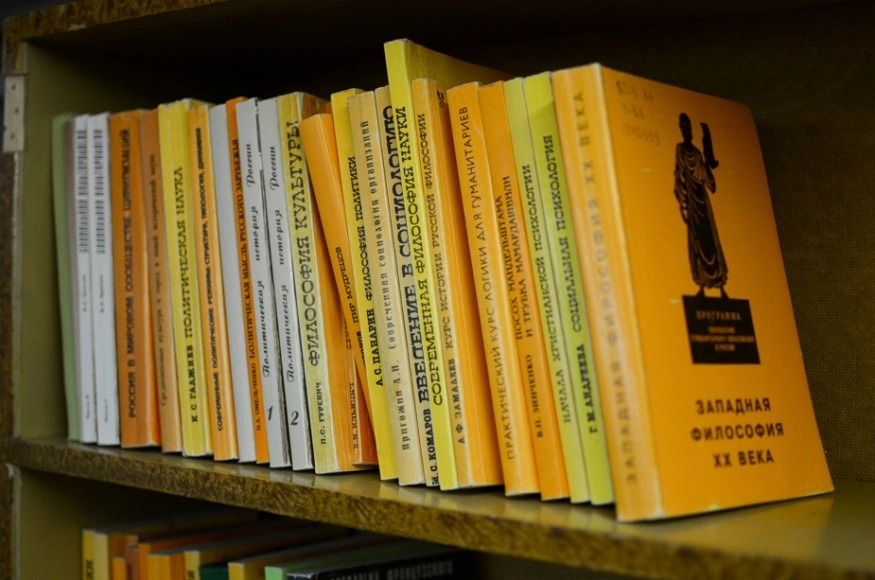
Another notable Soros-funded initiative in Russia was the Pushkin Library program. Starting from 1998, it purchased contemporary books for hundreds of Russian libraries while also supporting numerous independent publishing houses.
Soros also funded innovative and experimental initiatives in Russia — like the introduction of harm reduction programs, which sought to replace the traditionally punitive approach to drug use and the spread of HIV. Under this model, people did not have to stop using drugs before receiving assistance — a radical idea in Russia at the time. Fear of punitive institutions such as state narcology clinics, as well as criminal and administrative penalties, discouraged drug users from seeking help, even as HIV was spreading rapidly within this population. Organizations supported by Soros distributed sterile needles and syringes, condoms, provided anonymous HIV testing, and disseminated information about safer drug use. By 2005, these programs were operating in 38 Russian cities.
Beginning in 1998, Soros’s foundations allocated more than $12.5 million to the diagnosis and treatment of multidrug-resistant tuberculosis, which was spreading through Russia’s overcrowded prisons and penal colonies. According to the foundation, one in four inmates was infected with tuberculosis at the time. Research made possible by Soros-funded programs helped reveal the true scale of antibiotic resistance to the world and contributed to the launch of a global strategy to combat tuberculosis.
According to the Soros’ foundation, one in four Russian inmates was infected with tuberculosis around the turn of the millennium
Although Soros’s foundations are now portrayed by Russian propaganda primarily as institutions that finance “liberal” media outlets and NGOs, those recipients were largely a later development. The overwhelming share of the money Soros directed to Russia in the 1990s went toward supporting apolitical education and scientific research, as well as to addressing the severe social and public health crises the country faced during that period.
An overall assessment of the actual work carried out by Soros’s foundations shows that, while they support a wide variety of projects in different countries, they are not a secret command center through which a shadow government controls the world. That image is the product of conspiracy theories rooted in longstanding antisemitism, distrust of elites, and right-wing propaganda being disseminated from a few specific sources spread around the globe.