While the U.S. and Russia remain bogged down in their wars of choice, China's formal. neutrality has allowed it to benefit from the situation, hosting Trump, Putin, and various European leaders in Beijing. Balancing between the opposing sides in Ukraine and the Middle East, China is doing everything it can to avoid direct involvement while continuing to provide measured support to its authoritarian partners. While presenting itself as a peacemaker, China is in fact not particularly interested in establishing any peace that would deprive it of its leverage.
As early as 2017, Chinese leader Xi Jinping described the state of affairs in the world as a period of “changes unseen in a century.” Since then, the international order has faced a series of serious challenges, from the war in Ukraine to the protracted conflict in the Middle East and the military confrontation between Iran and the U.S. All of these upheavals have one thing in common: Chinese involvement — not as a direct participant, but as an interested party nevertheless.
The forms of this involvement can vary, from indirect support for one side to mediation efforts in disputes between countries friendly to Beijing. In Western analytical circles, such behavior is often described as opportunistic – aimed at capitalizing on chaos.
Yet viewing all of Beijing’s moves through this lens would be an oversimplification. China’s responses do indeed vary depending on how strongly its key interests are affected, the level of risk involved, and the opportunities that arise. Protecting national interests while maintaining relations with all sides is not a neutral position; it is a deliberate strategy in which the long-term strengthening of China’s position always takes precedence over short-term gains.
What drives Beijing
Until the mid-2010s, China and its position on international conflicts were noticeably more restrained. Before Xi Jinping came to power, the foreign policy of the People’s Republic of China was cautious and even reactive. This approach is often described using the well-known dictum of Deng Xiaoping: “Hide your capabilities and bide your time.” For nearly three decades, Beijing deliberately prioritized economic development over geopolitical ambitions, avoided unnecessary friction with the West, and avoided taking on the role of arbiter in other countries’ disputes.
The shift began after Xi took the helm of the country in 2012–2013. Within the Chinese leadership, there was growing discussion that Beijing's international status no longer corresponded to its dramatically increased economic power.
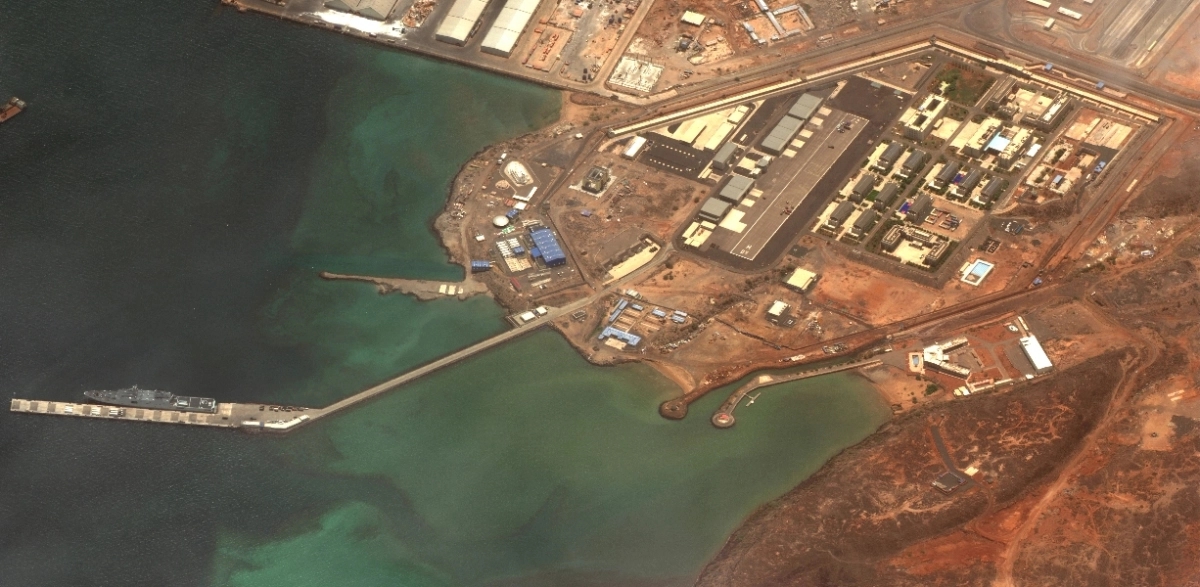
Foreign policy therefore became more assertive. China launched global initiatives, above all the Belt and Road Initiative, established its first overseas military base in Djibouti, and, most importantly, became more willing to defend its own interests. This meant not only greater involvement in global affairs but also an attempt to gradually reshape the international order.
China’s behavior in international conflicts is determined above all by a hierarchy of interests. These can broadly be divided into two groups. The first consists of core interests. When a conflict touches on them, compromises are effectively off the table, and Beijing’s actions become significantly more assertive. These absolute priorities include the country’s territorial integrity (including the Taiwan issue), economic development, and the stability of the political system.
When secondary interests are at stake, China’s approach can become more pragmatic. If a crisis does not threaten the country’s vital interests, Beijing can use it to strengthen its image as a responsible international player and expand its influence. Moreover, participation in such processes allows China to promote its own vision of international relations and present an alternative to Western approaches to conflict resolution.
When a crisis does not threaten the country’s vital interests, Beijing uses it to strengthen its image as a responsible international player
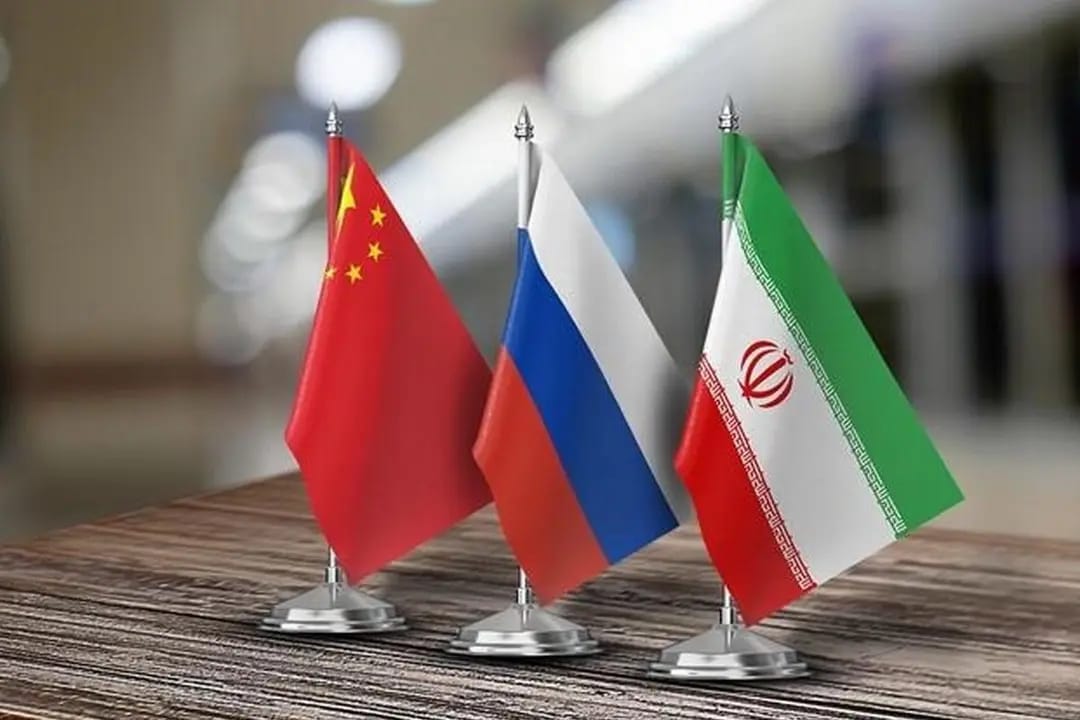
According to political scientist Rush Doshi, China pursues a long-term strategy in international politics aimed at displacing the United States from the regional and global. Ultimately, Beijing seeks to become the power that shapes the world’s destiny. Similarly, international relations scholar Oriana Skylar Mastro argues that China uses its “agents of chaos” – Iran, Russia, and North Korea – to create problems for the U.S. and its allies. In her view, these actions weaken Washington's power by diverting its attention and resources.
However, China rarely opts for direct confrontation with the West. The logic behind its foreign policy is best described by the Chinese concept of relationality, which contrasts with the emphasis that the Western school of international relations places on the rational calculations of individual states and their national interests. According to relationality proponent Qin Yaqing, China views the world not through the prism of individual countries’ interests but through the relationships that are constantly evolving among the participants in global politics. From the Chinese perspective, relations between states should be maintained despite disagreements. When conflicts arise, they should be contained in order to minimize the damage to those relationships.
Closely linked to relationality is another important concept in Chinese foreign policy: the principle of peaceful coexistence. Formulated by Chinese Premier Zhou Enlai as early as 1954, this principle includes mutual respect for sovereignty and territorial integrity, mutual non-aggression, noninterference in internal affairs, equality and mutual benefit, and peaceful coexistence.
Beijing invokes these principles when commenting on international conflicts as well. In doing so, China demonstrates its willingness not to intervene directly in other countries’ disputes while at the same time demanding the same treatment for itself. This approach allows it to maintain relations with all sides even in tense situations.
Yet it would be inaccurate to portray Chinese foreign policy exclusively in pacifist terms. Since the founding of the People’s Republic of China in 1949, there have been numerous instances when the principles of respect for sovereignty, territorial integrity, and non-aggression gave way to military force. This was the case, for example, during the invasion of Vietnam in 1979 and the armed clashes with India along the disputed border in 1962. During the Maoist period, Beijing also actively interfered in the internal affairs of other countries, supporting communist insurgencies in the so-called Third World.
After the launch of the reform and opening-up policy in the late 1970s, the Chinese authorities no longer took such overtly adventurous steps, instead favoring gray-zone tactics, economic pressure, and diplomacy. Strategically, if China were to behave the way it alleges the U.S. does, Beijing would lose an important advantage: its image as a restrained and “constructive” player. For this reason, China generally adheres to the fundamental principles of its foreign policy, but it is nevertheless prepared to selectively depart from them when its core interests are threatened.
This combination of factors – the primacy of interests, a focus on relationships, and a desire to play a greater role in global affairs – allows China to take a flexible approach to conflicts. Chinese diplomatic strategy is thus aimed at building the desired type of relations with other countries while strengthening China’s image as a defender of peace. Beijing does not always succeed in this, however, and calls for peace are sometimes replaced by shows of force.
What kind of China are you today?
In responding to different crises, China actively adjusts its role and chooses the strategy it considers most appropriate. These roles can broadly be divided into four types: the coexisting titan, the uncompromising master, the wise judge, and the advocate of “everything good.”
Chinese diplomacy adopts the first role in its relations with the U.S. Although Washington and Beijing are not engaged in an armed conflict, their strategic rivalry is one of the major potential conflicts of the 21st century.
Even under the Biden administration, the U.S. National Security Strategy described China as its main long-term competitor. China, for its part, also acknowledges that its relationship with the United States is the most important in the world and that it needs to be managed carefully to avoid a crisis.
The contentious nature of the relationship stems from the fact that China poses a threat to the U.S. in virtually every key sphere. The rivalry between the two powers encompasses semiconductors, trade, the military sphere, technological development, as well as the struggle for influence around the world.
As a rising great power, China has its own vision of the future world order. In Beijing’s view, the existing international system should not be dismantled but reformed along multipolar lines. In the model of the world order that China openly advocates, it does not seek the emergence of a single hegemon but instead says it wants to create an order based on dialogue. Within this framework, the U.S. still has an important role, but in the long term Beijing hopes to secure Washington’s recognition of a multipolar world, respect for its “red lines,” and fairer competition.
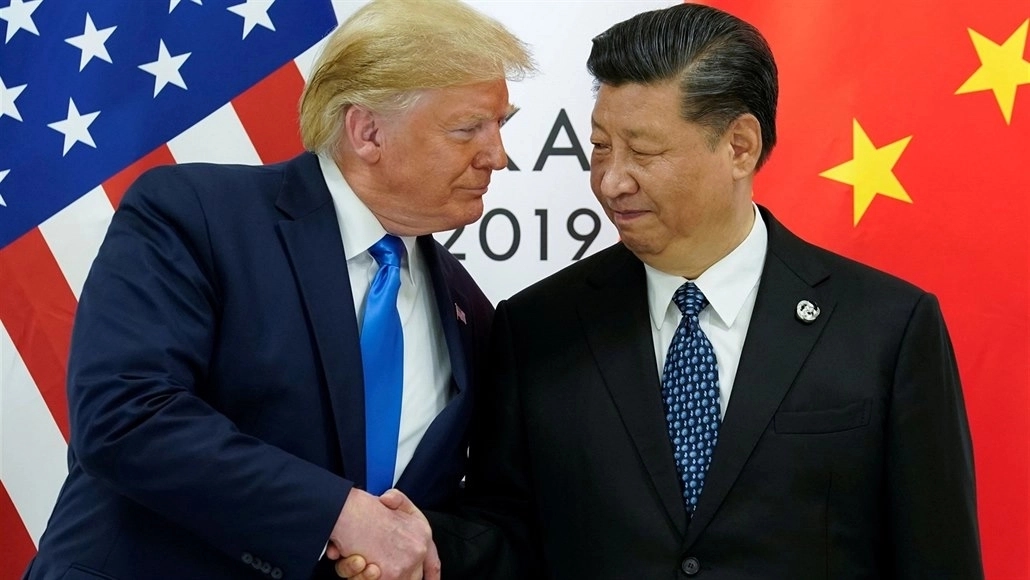
China’s strategy is aimed at preventing open conflict, which is why Xi has consistently advocated building a “new type of great-power relations.” The idea is to acknowledge the differences between the two countries and continue competing while maintaining direct, high-level dialogue in the political and military spheres.
When conflict cannot be avoided, China responds to pressure with symmetrical measures. For example, during the latest tariff war of Donald Trump’s second presidential term, Beijing not only responded to U.S. tariffs with tariffs of its own, but also restricted exports of rare earth minerals. Even amid intense rivalry, the PRC seeks less to gain a decisive advantage than to preserve the status quo by keeping the competition within reasonable limits.
However, when disputes directly affect China’s core interests — territorial integrity, sovereignty, and national security — Beijing’s pragmatism takes a back seat. Geographically, most of these interests are concentrated in East Asia, a region where China expects to become the dominant power.
When it comes to territorial disputes, rhetoric about mutual benefit gives way to assertive and forceful action, as is most clearly evidenced in the case of Taiwan (and the debate over a possible Chinese attempt to forcibly annex the island by 2027). China insists that it does not want an escalation of the conflict over the island, but it is also unwilling to tolerate manifestations of political support for the democratic authorities in Taipei. Rather than openly seeking to alter the status quo in the Taiwan Strait, Beijing actively uses “gray-zone” tactics that include expanding the area of its naval exercises, conducting regular flights by military aircraft, and patrolling the waters around the island. This allows China to deter Taiwan’s allies from becoming involved lest they cross the threshold into direct armed confrontation.
When it comes to territorial disputes, rhetoric about mutual benefit gives way to assertive and forceful action
China responds similarly to other challenges of this kind. For example, Beijing often answers with forceful measures to what it considers unfriendly moves by Japan. In November 2025, when Tokyo's newly appointed Prime Minister Sanae Takaichi described a possible attack on Taiwan as an existential threat to Japan itself, China’s reaction was swift. Japan was hit by a barrage of restrictive measures, including the suspension of imports of Japanese seafood and the cancellation of flights. In this way, China demonstrates that any actions it considers to be an infringement on its sovereign interests will be met with the strongest possible response.
China also participates in conflicts as a mediator. This usually occurs in situations where Beijing has significant economic interests, the U.S. has a relatively weak presence, and the risk of being drawn into armed confrontation is minimal. In such circumstances, Beijing seeks to maintain an equidistant position from the conflicting parties while preserving working relations with each side until an agreement is reached.
One notable success of Chinese diplomacy was the normalization of relations between Saudi Arabia and Iran in 2023. Thanks to Chinese mediation, on March 10 of that year the two sides signed a joint statement in which they pledged, among other things, to restore diplomatic relations.
It was not by chance that China achieved this success. The PRC buys substantial volumes of oil from both countries and is a particularly important oil export market for Iran. Second, Beijing maintains good relations with both Riyadh and Tehran, whereas the U.S. could not credibly claim the role of a neutral mediator because of its decades-long confrontation with Iran. The combination of these factors enabled China to mediate in a distant conflict while simultaneously strengthening its image as a peace-loving power.
However, the latest escalation of the Middle East conflict – between Iran on one side and the U.S. and Israel on the other – demonstrated the limitations of China’s peacemaking capacity. After the armed conflict in Iran entered a hot phase in late February, China’s Foreign Ministry condemned the actions of the U.S. and Israel and expressed concern over the developments. At the same time, Zhai Jun, the Chinese government’s special envoy for Middle Eastern affairs, engaged in shuttle diplomacy, visiting regional capitals in an attempt to maintain contact with all its partners.
As the conflict dragged on, Beijing again called on the sides to resolve their differences as soon as possible and return to dialogue. The results of China’s 2023 efforts did not go to waste: Iran and Saudi Arabia maintained diplomatic relations despite U.S. strikes against Iran launched from Saudi territory.
In practice, however, this was the extent of China’s role in the conflict. Beijing’s actions demonstrated that Chinese diplomacy can help improve relations only when the parties themselves are willing to do so. In a hot conflict where Beijing lacks coercive tools comparable to those available to Washington, China’s peacemaking efforts prove ineffective.
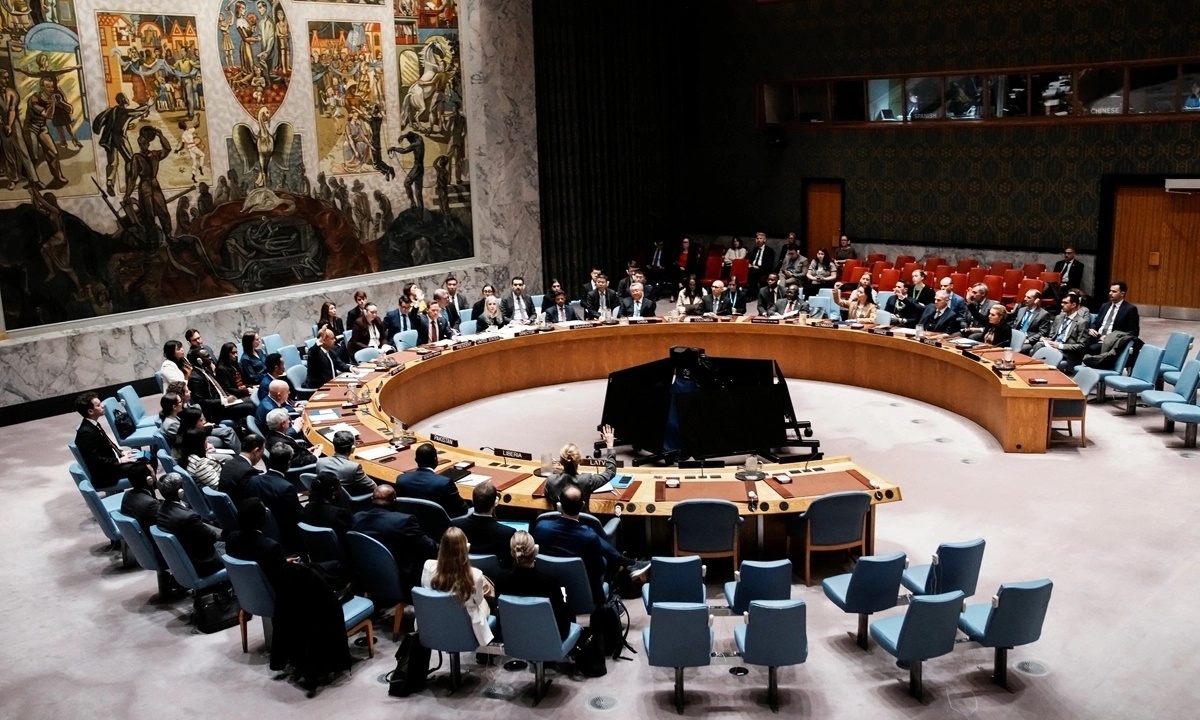
There is, however, a fourth role China plays in international conflicts, one that has been most clearly manifested in its position on the war in Ukraine. After February 24, 2022, Beijing found itself in a difficult position. On the one hand, its key economic partners in the West expected China to pressure the Kremlin and work to stop the war. On the other hand, there is Russia, which Beijing needs as a counterweight in its strategic confrontation with the West.
To preserve its image as a constructive player, China had to adopt a position that many researchers describe as pro-Russian neutrality. Beijing continued to develop economic ties with Moscow, providing Moscow with dual-use goods and assistance in circumventing some sanctions. Formally, China does not supply Russia with lethal weapons, and in its official statements it continues to emphasize the importance of the principle of respect for territorial integrity – a message aimed at Western audiences. In reality, however, military cooperation with Russia is far broader than officially acknowledged.
At the same time, the war in Ukraine remains fairly remote from China’s vital interests. Although both Russia and Ukraine are important partners for China, it has little reason to intervene directly in the conflict. That is why Beijing’s policy on the issue remains highly abstract. In a peace plan published in February 2023, China called for a ceasefire and the start of negotiations, but offered no concrete measures for ending the war.
This once again shows that Beijing has no desire to act as the world’s policeman, certainly not when it comes to faraway conflicts that have little bearing on its interests. Instead, in such conflicts, China balances between the interests of the various parties, makes peace proposals largely for the sake of appearances, and waits for an opportunity to normalize relations and further develop ties.
China’s involvement in the war between Iran and the U.S. has taken on features broadly similar to its position on the conflict in Ukraine. According to media reports, Beijing is supplying Iran with dual-use goods, intelligence and satellite imagery, and, according to some reports, is also making commercial arms shipments. The Chinese side, however, denies all allegations of any involvement in military operations.
As in the case of Russia, Beijing has no interest in the fall of Iran’s regime – an important oil supplier – and is therefore prepared to support the combat capability of Iranian forces to some extent. However, this assistance is provided in ways that preserve as much room as possible for plausible deniability.
More than just calculation
In practice, Beijing’s involvement in conflicts does not always lead to success. By trying to balance between the opposing sides in the war in Ukraine, China’s close ties with Russia have in one way or another undermined the trust of Western countries. Although China’s peacemaking efforts have produced some successes, they are typically undertaken reluctantly. Meanwhile, attempts to impose its preferred order in the Taiwan Strait or the South China Sea encourage its rivals to strengthen their own military and political coordination with the U.S.
Importantly, China’s strategy in different conflicts is not driven by material gain alone. Whenever fighting breaks out anywhere in the world today, the international community inevitably asks: what will China gain from it? The answer is most often sought in economic or geopolitical terms. However, if Beijing’s main objective truly were to maximize the benefits it derives from other countries’ conflicts, its actions would be far more aggressive.
For example, it would use crises to resolve disputes along its borders by force, or else impose more favorable terms of cooperation on Russia and Iran, both of which are already dependent on China to some extent. Yet this does not happen.
For Beijing, involvement in international conflicts is neither an end in itself nor a means of scoring political points. Moreover, when it comes to conflicts that are distant and have little bearing on its interests, China’s leadership seeks to distance itself by limiting its actions to calls for peace. By playing different roles depending on the situation, China is pursuing broader goals: strengthening its power, pushing for changes to the international order, and turning itself into a recognized center of influence.
China has ambitious goals: to strengthen its power, reshape the international order, and turn itself into a recognized center of power
In the view of China’s ruling elite, the desired global order has several distinctive features. First, there should be no single hegemon in the world, and international relations should be “democratized.” Second, great powers must respect each other’s sovereignty and “red lines,” recognize the legitimacy of different political systems (rather than just liberal democracy), and build relations on the basis of managed competition rather than direct confrontation. Third, in the future world order envisioned by Beijing, greater weight should be given not only to international organizations but also to countries of the Global South.
Judging by the statements and actions of the Chinese leadership, the transition to such an order should take place gradually and relatively smoothly, without immediately undermining the existing system. That is why maximizing the benefits of each individual conflict is not a priority. Instead, China’s strategy continues to put long-term relationships and the protection of its interests first – a foundation whose returns will become evident in the future.